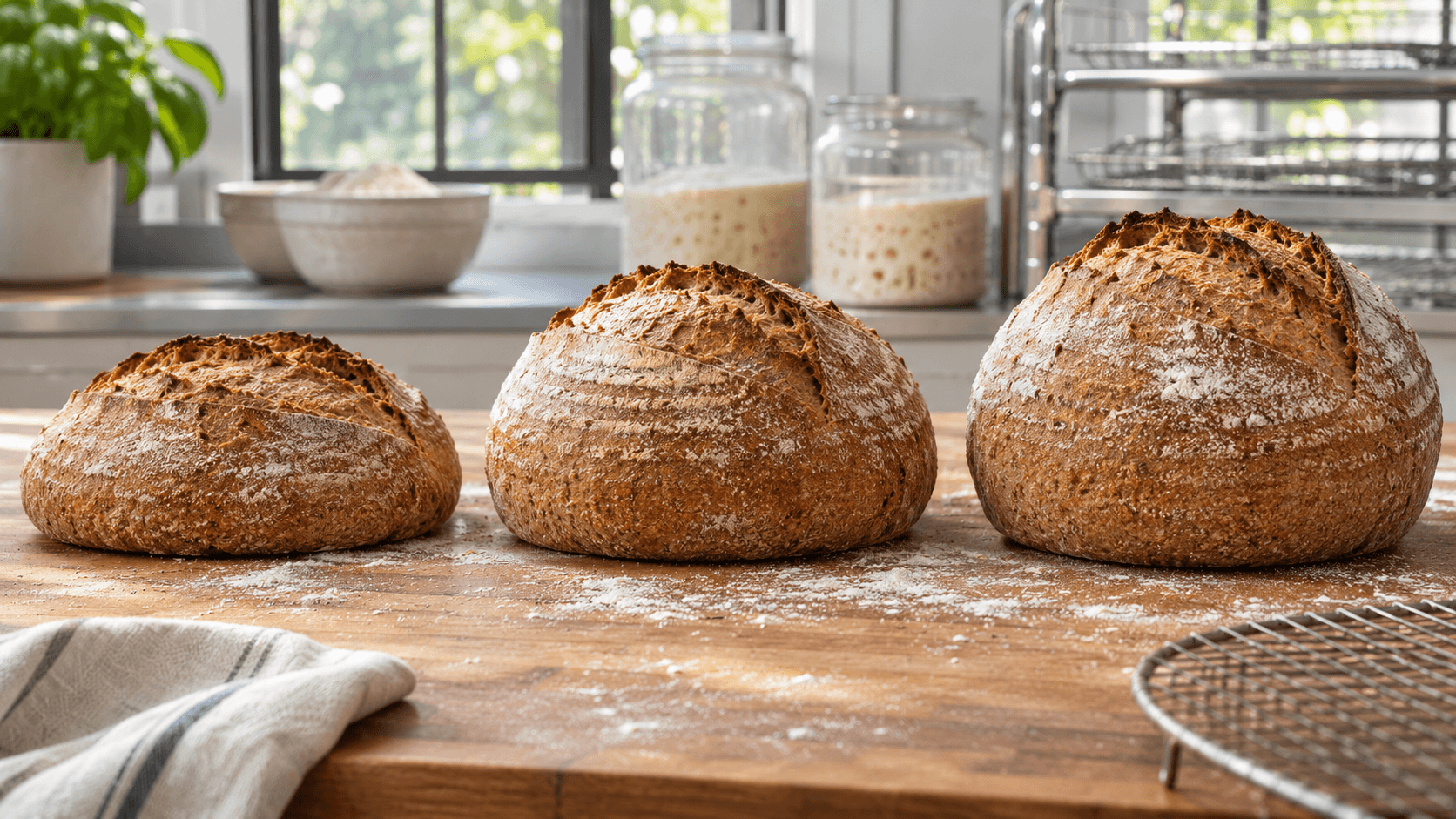
The pairing that made the biggest loaf was not the pairing that best slowed staling. A new whole-wheat sourdough study gives home bakers a useful reason to define “better bread” before changing a starter.
Researchers compared selected yeast and lactic-acid-bacteria cultures. Their results point toward choosing a culture for a particular goal, rather than assuming more microbes will improve everything.
Use the findings to sharpen your next baking experiment. Start by deciding whether volume, softness or flavor matters most to you.
At a Glance
|
What the culture names mean
The experimental cultures were Saccharomyces cerevisiae Y1, Weissella cibaria HN5, and Pediococcus pentosaceus HN14. Six systems tested them separately and together. The researchers also reported changes in acidity, dough structure, fiber measurements and aroma.
A strain code matters. A species name alone does not establish that a culture in your kitchen will behave like the named research strain. The review on selecting sourdough starter cultures explains why strain characteristics, interactions, and processing conditions belong together when designing fermentation.
For a home baker, that distinction changes the question. Instead of asking where to buy any bacterium with a matching name, ask what you can actually control and measure in the dough you already make.
This is a controlled bread-quality experiment, not a recipe for identifying the organisms in your jar. Neither a strong rise nor a tangy smell tells you that your starter contains HN5 or HN14. |
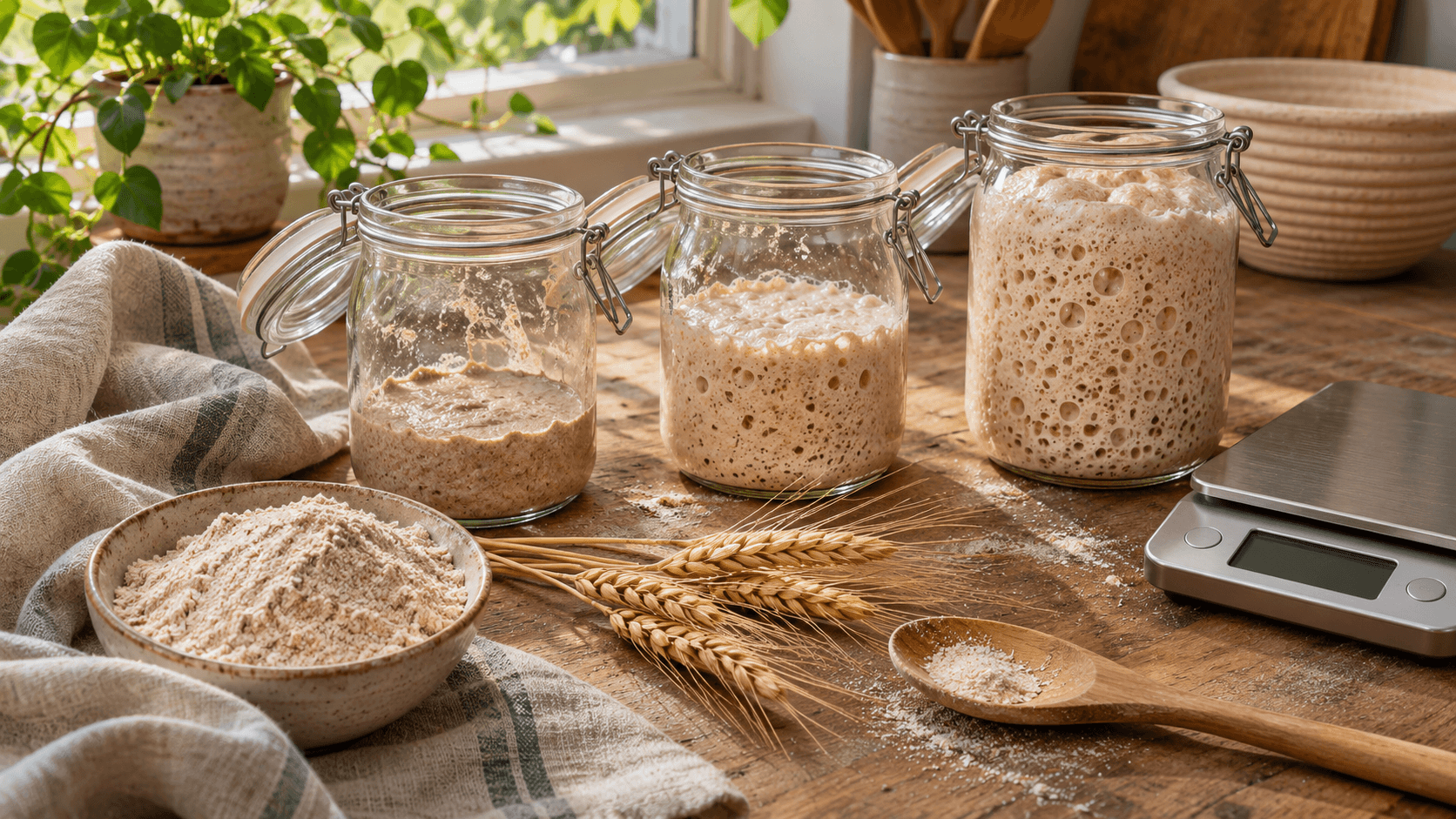 AI generated photo for American Sourdough Association. |
Choose the bread result you want
“Better” is a surprisingly slippery baking instruction. A tall sandwich loaf, a moist slice on the second morning and an assertively flavored toast loaf can represent different successes. Write down your priority before making a change.
These are practical observation tools proposed here, not the study’s laboratory protocol. A kitchen comparison cannot reproduce a published instrumental measurement simply by borrowing its label.
Keep staling separate from food safety. A texture result does not establish a safe storage period. The publisher’s abstract reports bread-quality outcomes; it does not provide a household guarantee that bread remains suitable to eat for seven days.
The broader starter-selection literature also treats fermentation as a system. That is a useful reason to resist changing culture, flour and temperature simultaneously when you want an interpretable result. |
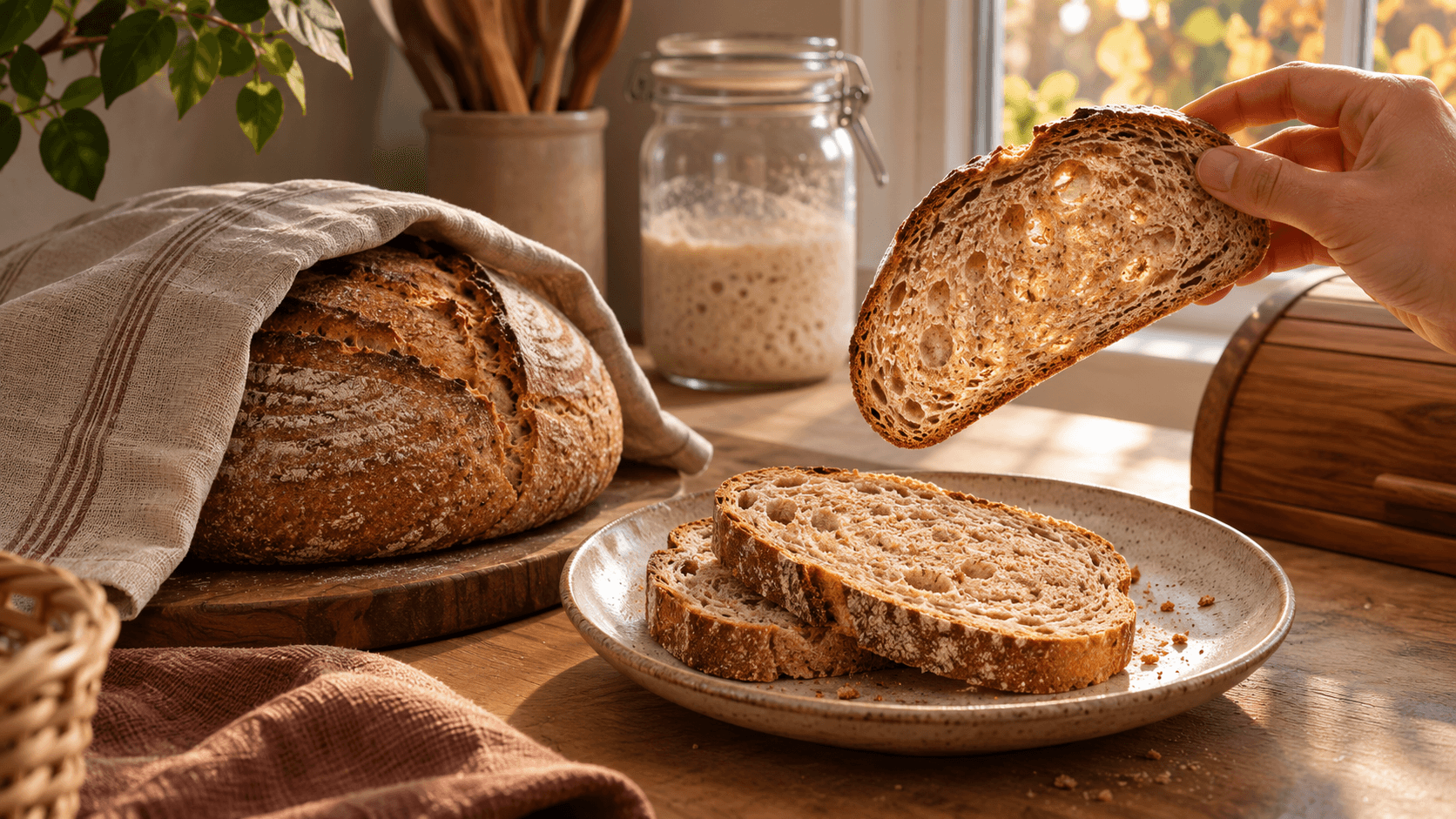 AI generated photo for American Sourdough Association. |
A useful whole-wheat comparison at home
Start with a formula you can repeat. King Arthur’s whole-wheat sourdough sandwich loaf is one documented option, but note that it contains both ripe starter and instant yeast. If you choose it, keep that yeast addition consistent; it is a recipe choice, not a substitute for the study cultures.
Change one variable at a time. For example, compare your usual final starter feeding with a whole-wheat final feeding while keeping the rest of your loaf formula steady. King Arthur’s maintenance guide discusses using whole grain for that final build. This is a home-baking exercise, not a recreation of the research.
Photographs and short notes are enough. The goal is to learn whether a change helps your bread in your kitchen, without claiming to know which microorganism caused it. |
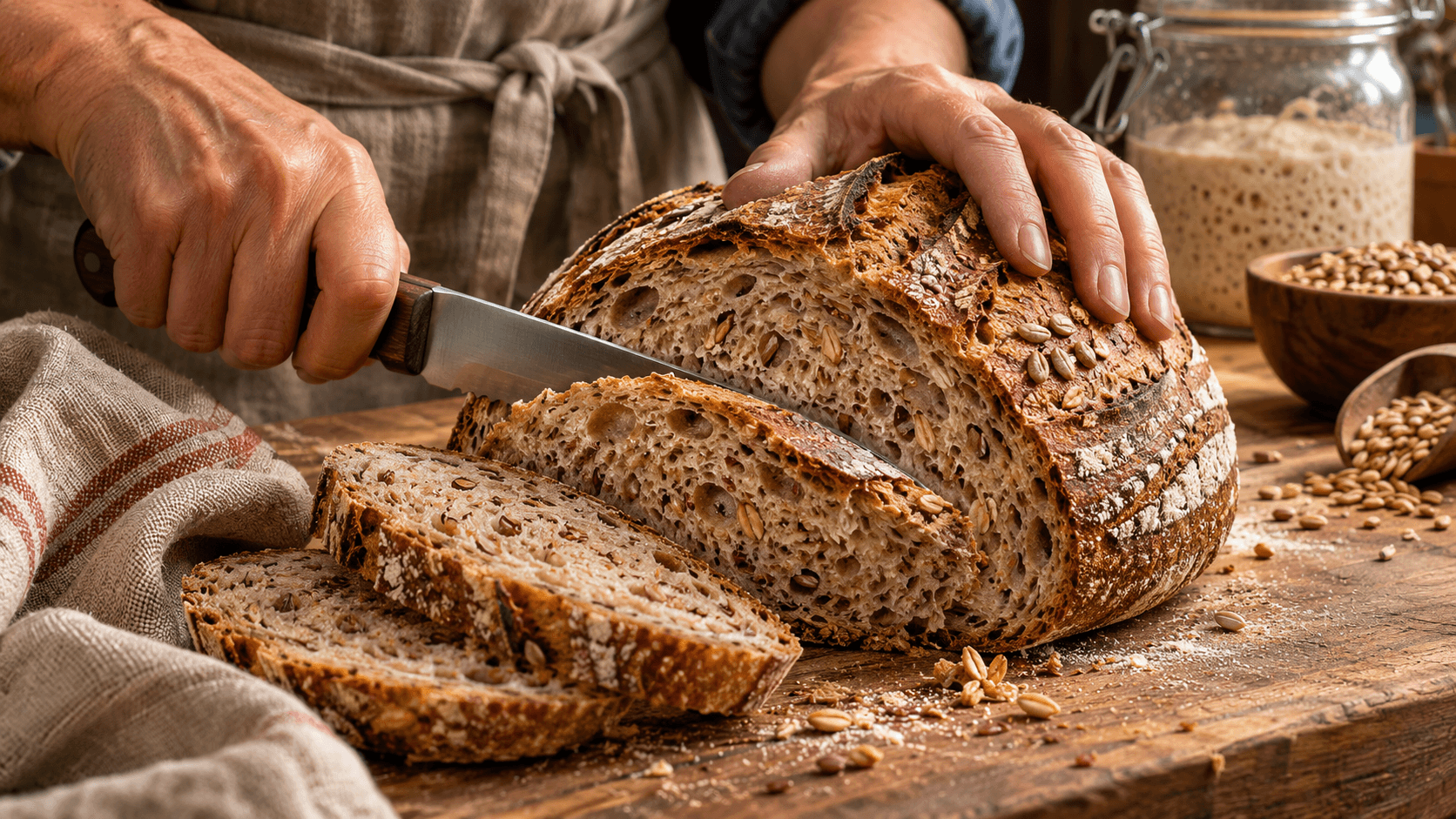 AI generated photo for American Sourdough Association. |
Keep starter care consistent
If you bake often, a countertop routine may fit your week. For occasional baking, refrigeration can reduce maintenance. King Arthur’s current feeding instructions describe daily countertop feeding and weekly refrigerated maintenance, with additional room-temperature feeds when preparing a chilled starter to bake.
Those are general routines to adapt to your culture and conditions. A warmer kitchen or a different feeding ratio can change when a starter becomes ready. Keep your maintenance approach steady during a loaf comparison so it does not become another moving part.
A repeatable routine is more useful than a borrowed laboratory target. Save the recipe you used and note any departure from it; otherwise, a successful loaf can be surprisingly hard to make again.
The Takeaway
The new study supports a specific lesson: different culture pairings can favor different bread qualities. For American Sourdough Association readers, the practical next step is to name one baking goal, follow a reliable formula, and compare results carefully.
You do not need to replace a dependable starter because a research pairing performed well. Give your next bake a clear question and enough consistency to produce a useful answer. |
29 Comments
Join the conversation
I plan to bake two small whole-wheat loaves and compare them over several days. I cannot match these cultures, but I can test what matters to me.
The three-strain result made me smile because I am always tempted to add one more thing to a recipe. Sometimes simpler really does work.
I am a little cautious about changing my starter based on one study. Still, the split between loaf size and staling is a useful takeaway.
For whole-wheat sandwich bread, softness after a few days would be my priority. Y1 + HN5 sounds more useful to me than the volume winner.
I would like to see what the seven-day loaves looked like when sliced. A staling measurement is helpful, but I also want to see the crumb.
The home-baker advice is sensible, even if I cannot recreate the exact cultures. Picking volume or softness before I start would improve my notes.
Fatima S.Writing down the goal first is smart. I keep notes on rise time but always forget to check how the loaf feels the next day.
I had assumed the culture with the best rise would also keep the bread softer. The different winners make this worth a closer look.
My family finishes a loaf in two days, so the slower-staling pairing may not matter much here. I would probably try for the bigger loaf.
Joanne L.Same at our house. By day two we are usually down to the heels, so I would pick the bigger loaf too.
The Y1 + HN14 volume number gives the comparison some weight. I would like to know how it stacked up against an ordinary whole-wheat starter.
I save a few slices from each bake to check the next day. After reading about the seven-day test, I might keep checking longer.
No clear gain from the three-strain combination is a good reminder to keep my baking experiments simple. One change at a time is plenty.
Omar H.Exactly. When I change two things at once, I can never tell what actually helped.
I wish there were more about flavor here. Volume and staling are easy to compare, but flavor would decide which culture I wanted to keep.
The point about defining better bread first is fair. I have been chasing a tall whole-wheat loaf without thinking about how it tastes on day two.
I would still choose the higher-volume pairing for a loaf meant to be eaten the same day. Staling matters less when everyone is waiting for a slice.
Can home bakers actually get these specific cultures? The comparison is interesting, though I am not sure how to apply Y1 + HN14 to my starter.
I appreciate the focus on whole-wheat sourdough. It is the bread I bake most, and getting both a good rise and a soft crumb is tricky.
A bigger loaf is nice for sandwiches, but I would rather have slices that stay soft. The Y1 + HN5 result fits how we eat bread.
This gives me a better way to compare two loaves. I tend to change the flour and starter together, then have no idea what helped.
I am curious whether the Y1 + HN5 loaf tasted different from the volume leader. Softness matters to me, but so does that sourdough flavor.
George PatelI wondered about the flavor too. A softer loaf would be nice, but I would miss the tang if it changed much.
Seven days is a helpful window for measuring staling. My whole-wheat bread usually feels different by day three, so that result caught my attention.
The three-strain mix not showing a clear improvement surprised me. I would have guessed adding another culture would help at least one measure.
I like the advice to choose one goal before changing a starter. My next loaf will be a softness test instead of another attempt at more rise.
The 3.04 mL/g figure for Y1 + HN14 is interesting, but I wonder how noticeable that extra volume would be in a home oven.
I would pick Y1 + HN5 if it keeps a whole-wheat loaf pleasant for seven days. A little less height seems like a fair trade.
The difference between the biggest loaf and the slowest staling is useful to know. I usually judge my sourdough on baking day, not later in the week.