

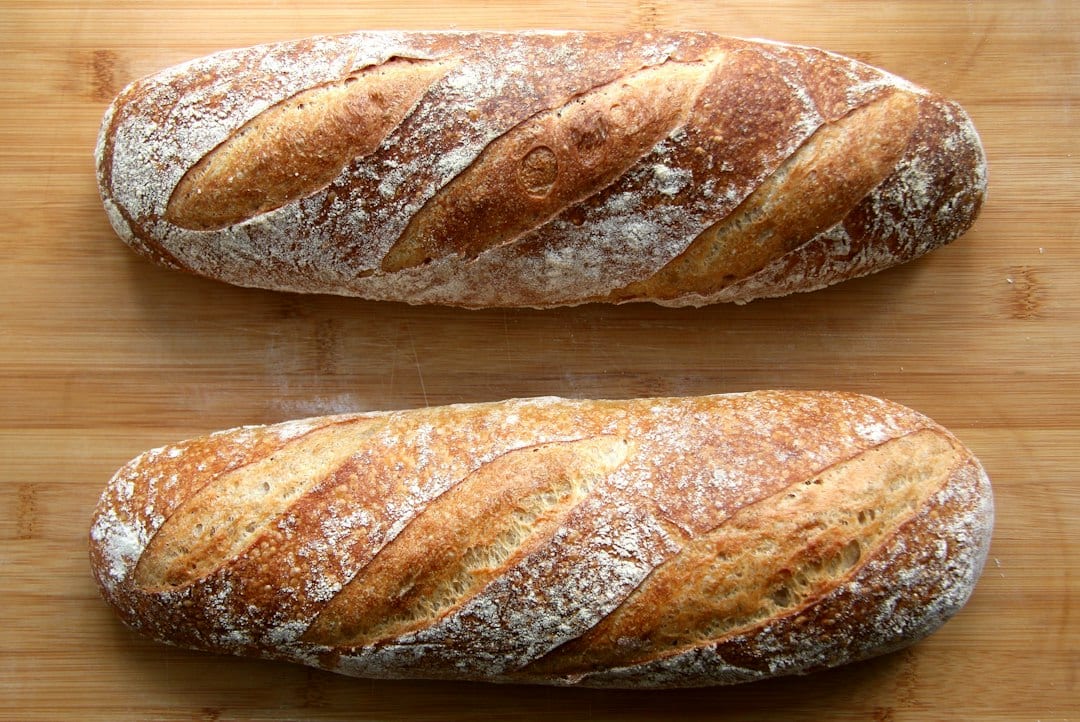
Your starter is never “just sitting there.” Temperature is choosing the pace of its fermentation and, over repeated feeds, can help shape the microbial community behind it. A new study refreshed spontaneous sourdough at 8°C, 15°C, and 25°C and found different maturation speeds, microbial patterns, and bread results. That makes temperature a useful home-baking variable, not merely background weather.
Do not chase the study’s coldest number as a universal answer. Use it to run a calmer, more informative test in your own kitchen: keep the formula steady, change one temperature condition, and take notes.
At a Glance
Temperature is part of the formula
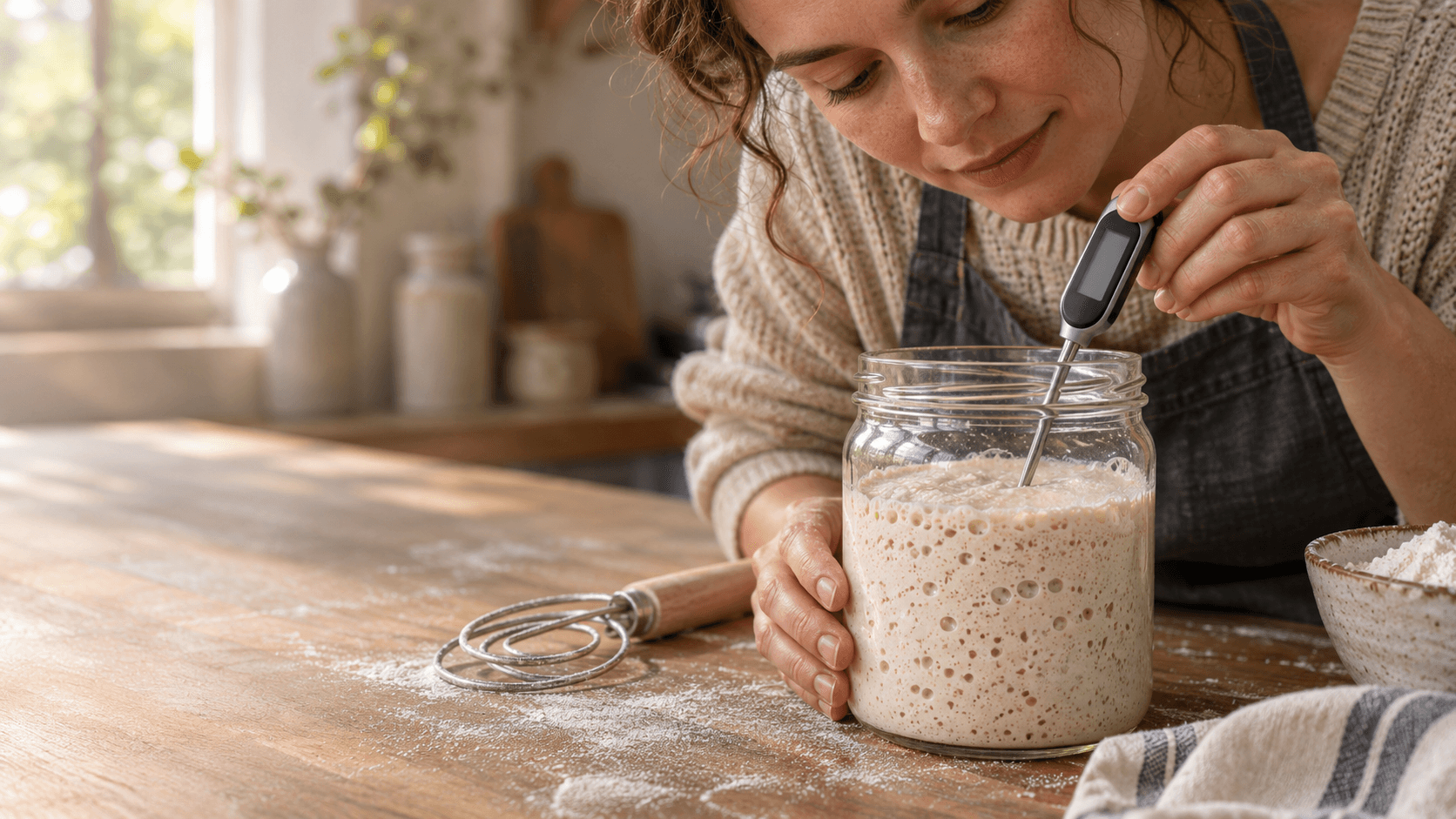
Flour, water, inoculation, hydration, feed ratio, and temperature work as a system. A starter in a colder corner does not follow the same clock as the same culture on a warm counter. |
 AI generated photo for American Sourdough Association. |
What the researchers changed
The team used repeated backslopping: a portion of mature sourdough was carried into fresh flour and water through multiple cycles. That matters because a starter’s long-term behavior comes from repeated conditions, not one unusually warm afternoon.
At 8°C, the culture matured more slowly. After repeated cycles, the study associated that condition with more Latilactobacillus and Wickerhamomyces; Pediococcus remained dominant in the 15°C and 25°C conditions.
Repeated conditions can select for different microbial patterns. That is a useful idea for a home baker, not a reason to identify microbes in a jar.
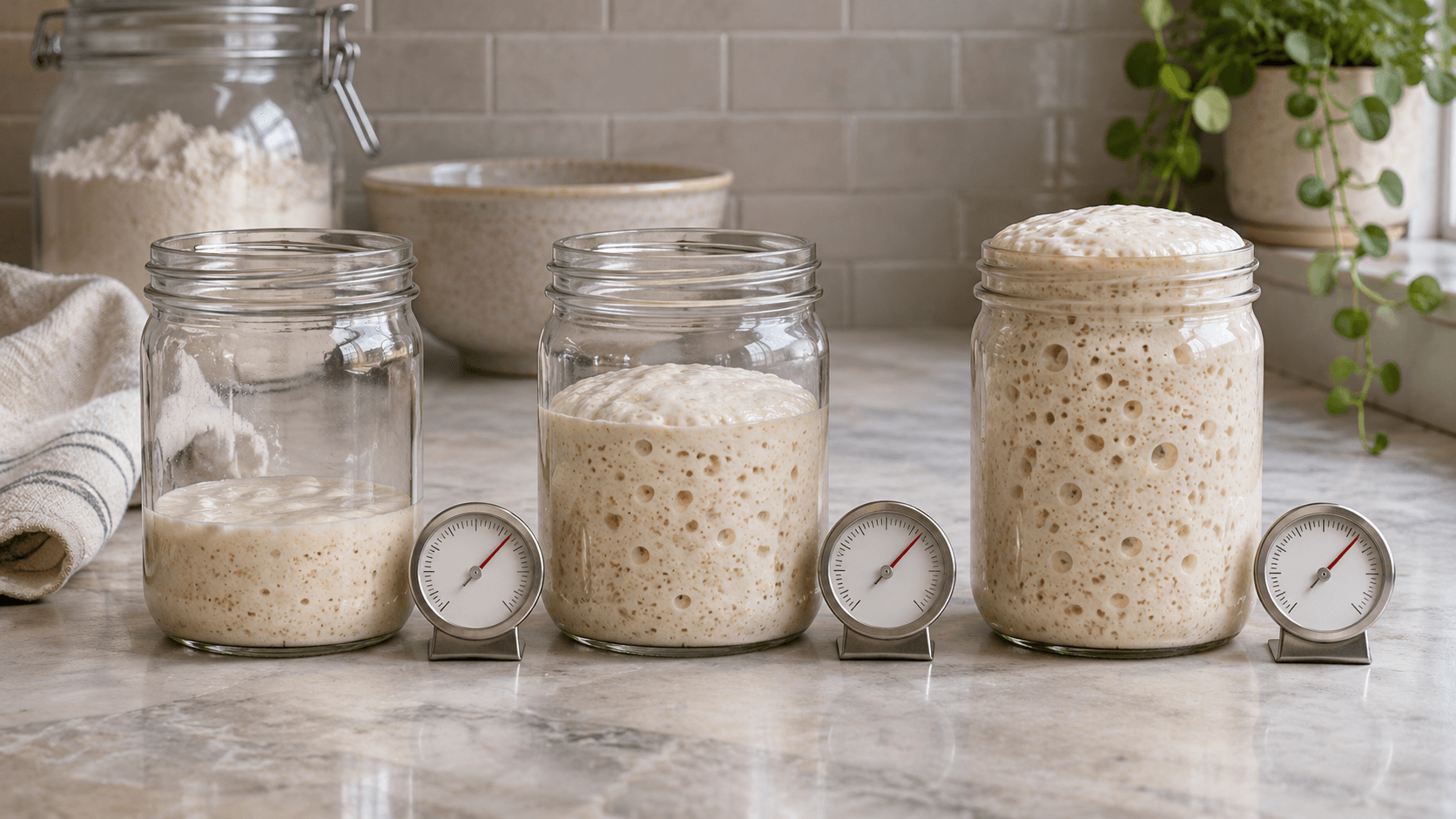
The article reports approximate first-cycle times to its pH 4.0 maturity point of 8 hours at 25°C, 26 hours at 15°C and 120 hours at 8°C. See the publisher’s abstract for the experimental detail.
Those intervals are not a household target. They show why a colder routine can look quiet long after a warm-counter starter would have peaked. |
 AI generated photo for American Sourdough Association. |
What changed in the bread
The 8°C-adapted culture produced the study’s highest reported specific volume, 4.45 mL/g, and a sensory score of 88.71. The 15°C condition led the reported measurements for in vitro protein digestibility and total free amino acids.
The researchers also identified different aroma-active compounds across breads. Their findings connect temperature, microbial succession, and bread traits, but they do not prove one “best” temperature for every starter or loaf.
Your flour, starter age, hydration, dough temperature, and baking method are all different variables. Treat the findings as a guide for better questions, not a shortcut to identical bread.
Related research on flour and feeding schedules reinforces the same broad lesson: a starter’s ecosystem responds to more than one kitchen choice.
Pick the goal before changing the temperature
|
 AI generated photo for American Sourdough Association. |
How to test temperature at home
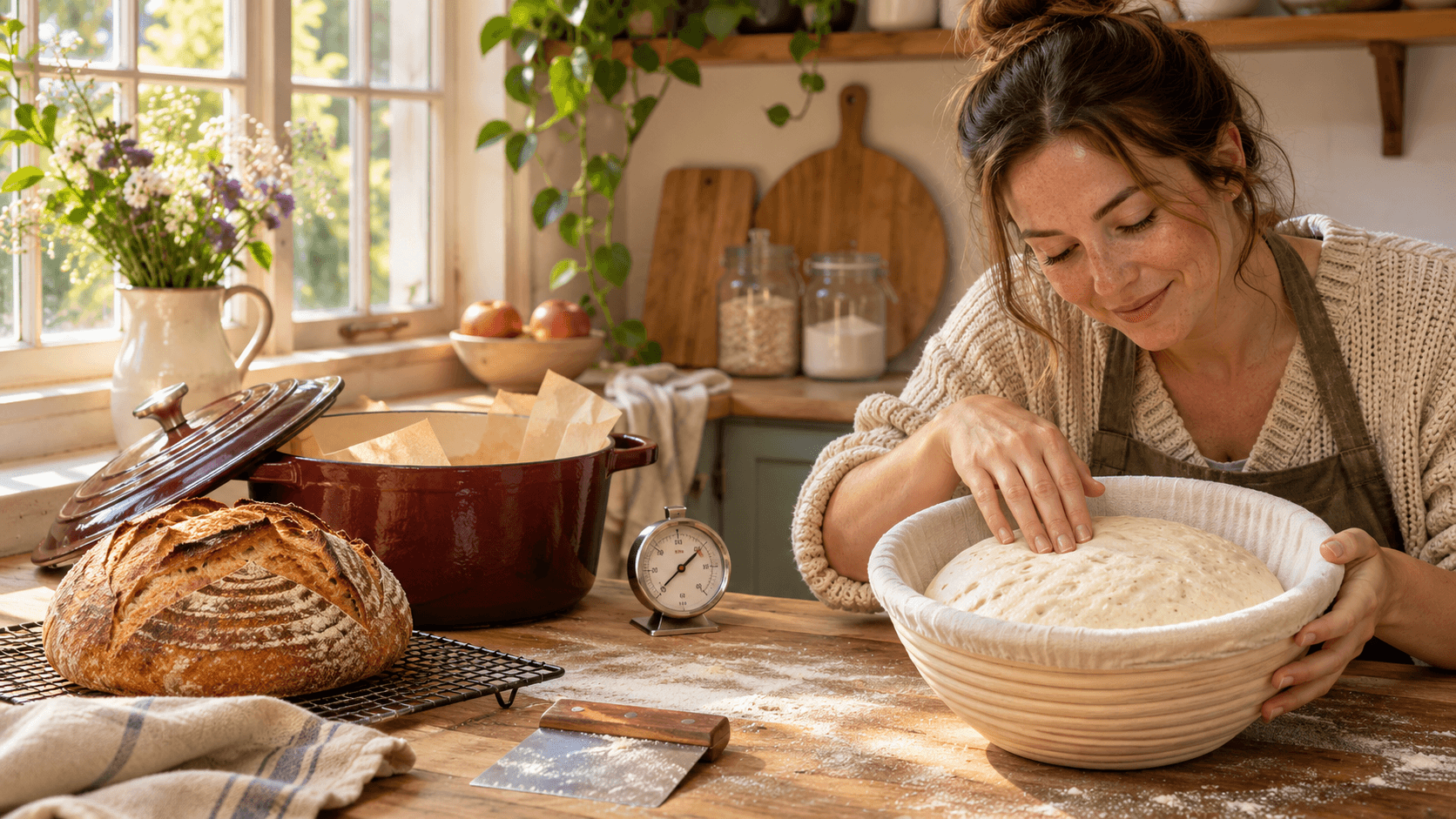
Hold the formula steady and compare one slightly warmer routine with one slightly cooler routine over several feeds. Do not change flour, hydration, vessel, feed ratio, and temperature all at once; the result will not teach you much.
Slow does not always mean weak. A cooler starter may simply need more time. Use the clock as a reference, then let physical fermentation cues make the final call.
The large HealthFerm citizen-science project found wide variation in real-world sourdough habits. That is a helpful reminder that your kitchen is its own system. |
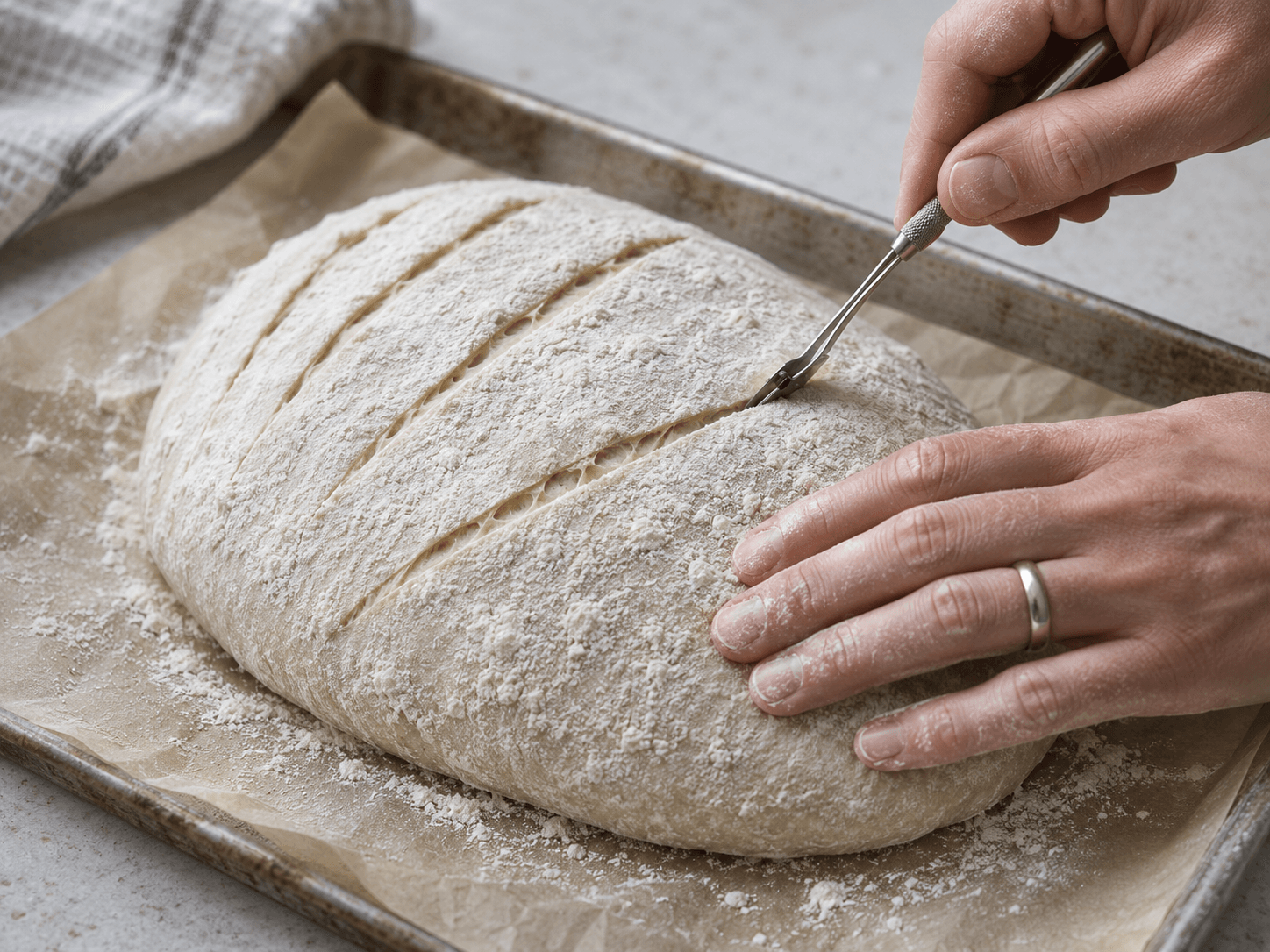 AI generated photo for American Sourdough Association. |
Use temperature with intention
Temperature is one lever, not a verdict on starter quality. A cool routine may buy you time; a warmer routine may bring activity forward. The right choice depends on your schedule, starter, flour and the loaf you want to make.
Good sourdough decisions come from repeatable observations, not a single impressive bake. Give a change enough cycles to reveal a pattern, then adjust only the next variable that matters.
The Bottom Line
The new research shows that repeated fermentation temperatures can shape a spontaneous sourdough culture and correlate with different bread outcomes. It does not make 8°C or 15°C a universal prescription for a home kitchen.
Start with your normal routine. Use a simple starter log, compare a modestly cooler or warmer condition, and watch the full pattern: rise, peak, aroma, dough handling and baked loaf.
The most useful temperature is the one you can repeat, understand and adjust with intention. |
31 Comments
Join the conversation
This gives me a manageable experiment instead of another perfect starter rule. I can compare peak times in a cool cupboard and on the counter.
Fatima H.That sounds like a good test. Will you use the same feed ratio for both jars?
Does the 8°C result include the extra time needed to mature the starter? Loaf volume is appealing, but timing matters for a weekend bake.
The aroma notes could be especially helpful when the starter looks similar after different feeds. I am going to add that to my baking notebook.
I have been changing my feed ratio whenever my starter slows down. Maybe I should check the temperature first and leave the ratio alone for a week.
I appreciate that the coldest setting is not presented as the answer for everyone. A good loaf has to fit the time I actually have to bake.
Keeping one temperature condition through repeated feeds sounds harder than it first appears at home. I might start by comparing two consistent spots in my kitchen.
The advice to watch dough feel matters to me. My starter can look active in the jar while the actual dough still takes ages to rise.
I wonder whether the same pattern would hold with whole wheat flour. That is what I use for feeds, and it behaves differently from white flour already.
I have had starters peak at completely different times in winter and summer. A simple temperature log might save me from blaming the flour every time.
The 15°C digestibility result caught my eye, though I would be careful about drawing health conclusions from an in vitro measurement. The baking comparison is still useful.
It helps to see temperature treated as part of the formula. I measure flour and water carefully, then let the room temperature be a complete guess.
I keep my jar near the stove without thinking about it. Moving it to another part of the kitchen might be an easy first test.
The highest loaf volume coming from the coldest condition is unexpected. I would still want to compare the flavor before changing how I feed my starter.
My starter rises nicely on a warm counter, but the dough sometimes feels harder to handle. I may try a cooler spot and write down what happens.
The difference between 8°C and 25°C is pretty big. I appreciate the advice to change one condition at a time instead of overhauling my whole routine.
I would love to know how many refreshes it took before the bread results changed. My starter only spends a day or two in the fridge between bakes.
Mark EllisonI wondered that too. A day or two in the fridge sounds pretty different from repeated feeds at 8°C.
A small test in my own kitchen seems more useful than aiming for exactly 8°C. I cannot keep a spot at that temperature reliably anyway.
I had assumed a colder starter simply meant waiting longer. The possibility that repeated feeds change the culture gives me something new to watch for.
Taking notes on aroma is a good suggestion. Rise is easy to see, but I tend to forget how the starter smelled before a good bake.
The 15°C finding is interesting, especially the free amino acids. I would be curious whether anyone could taste a difference in bread made at that temperature.
My kitchen counter gets much warmer in the afternoon. This explains why a morning feed and an evening feed can behave so differently.
I like that the 8°C loaf result comes with a warning. One flour and one feeding routine cannot tell every home baker where to keep a starter.
Recording peak time sounds simple enough to try this week. I usually feed my starter by habit and then wonder why the dough feels different.
Nina PatelI write the feed time on a piece of tape on the jar now. Otherwise I always miss the peak and end up guessing.
I appreciate the reminder to keep the flour and feed ratio steady while testing temperature. Otherwise I would have no idea what actually changed my starter.
Changing one variable at a time is the golden rule of baking experiments. Keep your usual flour and ratio locked in, and let the warmer fridge spot do the talking. Good luck with the test—I'd love to hear how it goes!
The 8°C result surprised me. My starter barely moves in the fridge, so I would like to see how long each batch took to mature.
Thanks so much for reading! Standard fridges sit around 4°C, which pretty much puts your starter to sleep, so bumping up to 8°C makes a huge difference. It doesn't stop fermentation—it just puts it in slow motion!
Dave ThompsonSame here. My fridge is colder than 8°C, which might explain some of that. I'd like to see the maturation times too.