Local news for American sourdough
Latest News

The latest from American sourdough.

The latest from American Sourdough Association.

🥖 Five Holiday Bakes From Your Discard Jar

Put healthy sourdough discard to work with five festive baking ideas.
Conny Jo

Conny Jo

Nov 27, 2026
🥖 Five Holiday Bakes From Your Discard Jar

Your sourdough discard jar could be the beginning of some of your favorite holiday bakes. Instead of throwing away the excess from routine starter feedings, try five recipes designed to make use of unfed starter from a healthy, established culture. Chocolate discard cookies make a welcome addition to a cookie box, and portioning the dough ahead can simplify busy baking days. Rosemary crackers offer a savory snack for a cheese board, while buttery biscuits are a comforting choice for breakfast or a bowl of soup. Sourdough pie crust brings fermented flavor to both sweet and savory fillings, and cinnamon crumb cake makes an inviting centerpiece for a relaxed holiday morning. The guide explains how discard contributes flour and water to a recipe, why it cannot always replace ripe starter, and how careful weighing and handling can improve results. It also covers practical storage and safety: refrigerate healthy discard when not using it immediately, avoid saving discard from an immature starter, and throw away contaminated material. Mold, pink or orange streaks and a putrid odor are warning signs. Choose a tested recipe that fits your schedule and try it before a holiday gathering. There is no need to create extra discard just to bake with it. Make the most of what you already have.
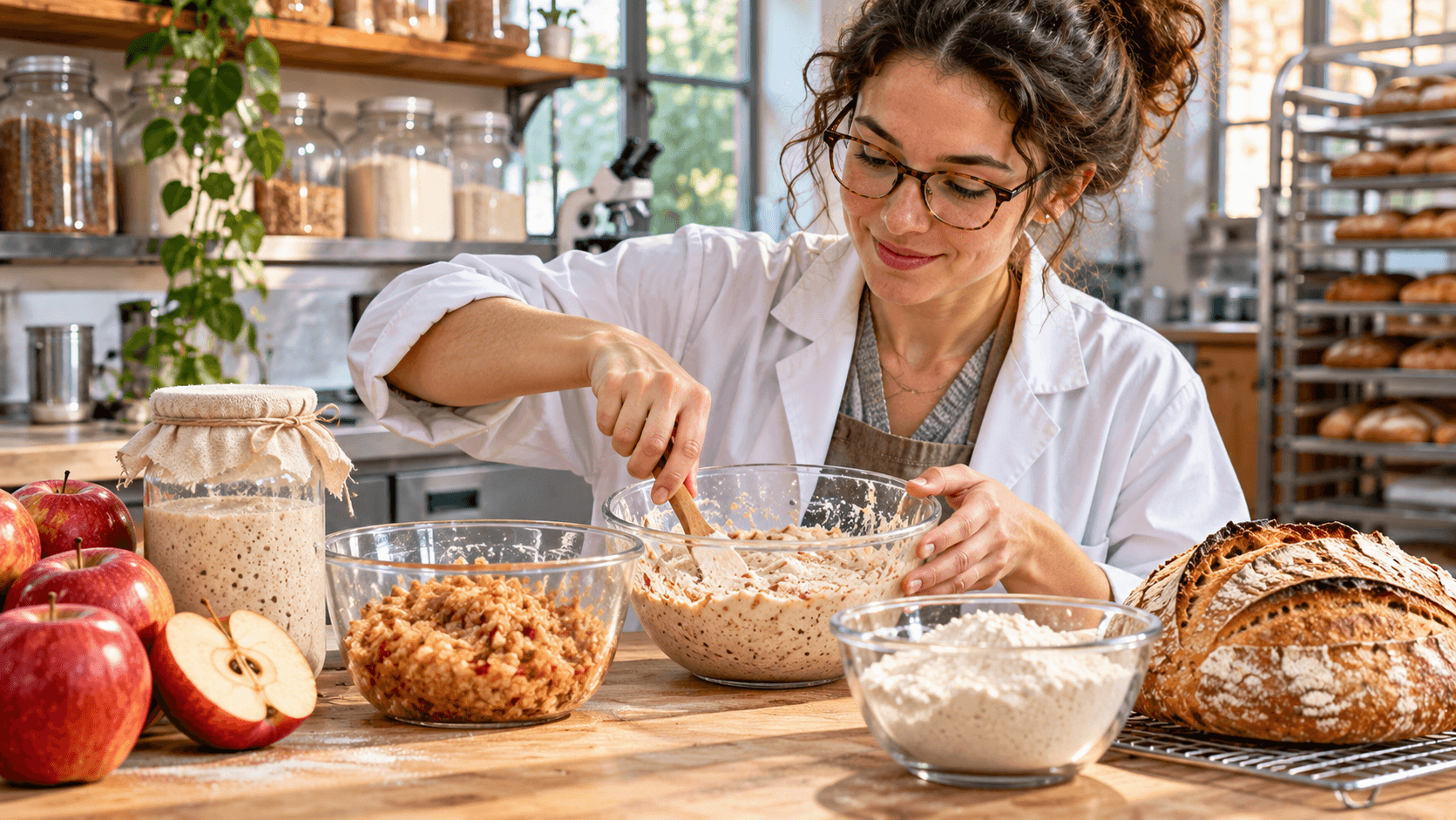
 

Why Starters Smell Different: A Practical Sourdough Comparison

A simple two-jar experiment for curious home bakers.

Conny Jo

Conny Jo

Nov 26, 2026
Why Starters Smell Different: A Practical Sourdough Comparison

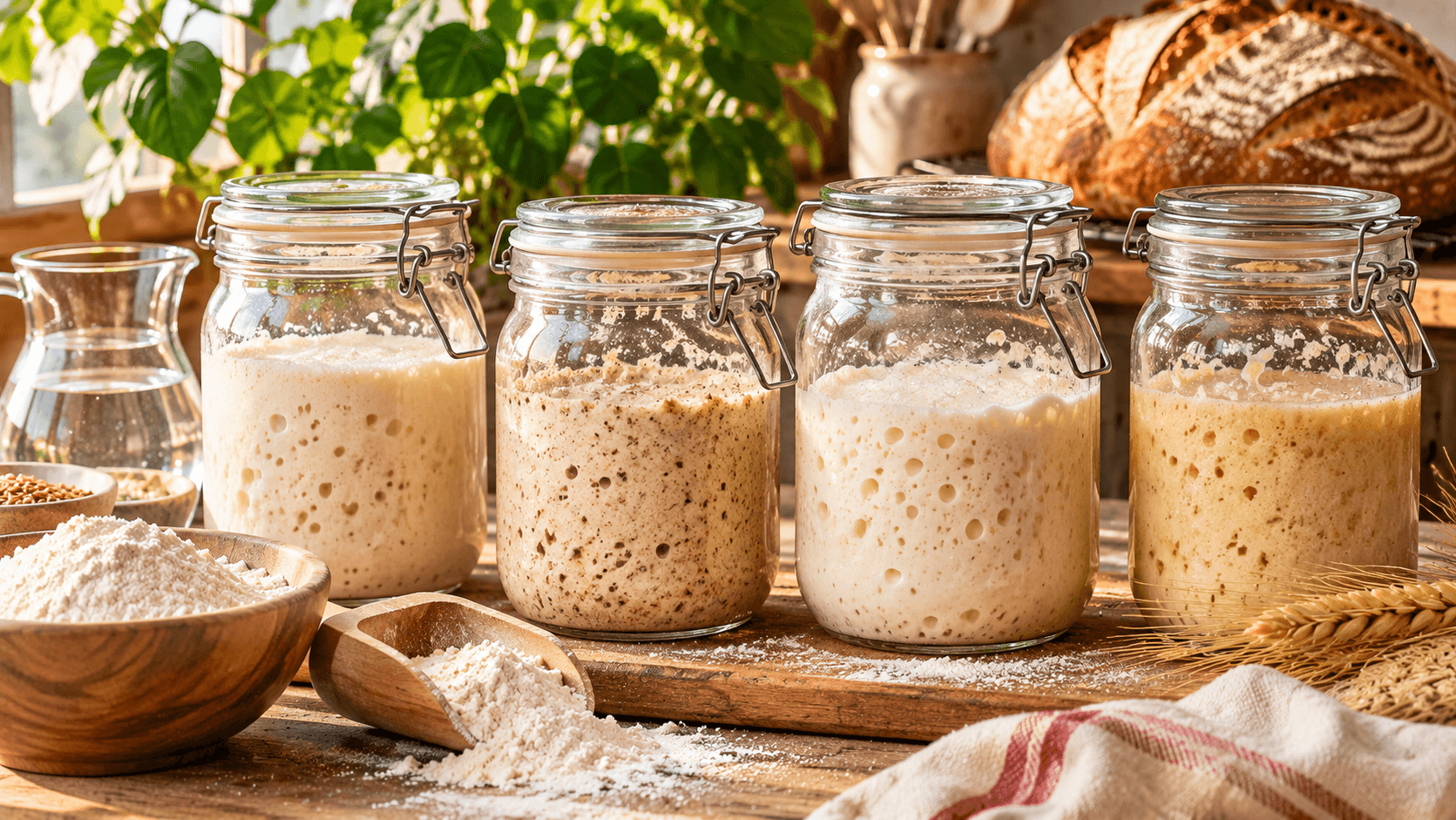
Two sourdough starters can develop noticeably different aromas, even when they begin with the same mature culture. Flour, fermentation stage and feeding conditions can influence the way a starter smells. Rather than trying to identify microbes by scent, home bakers can learn more from a simple side-by-side comparison.

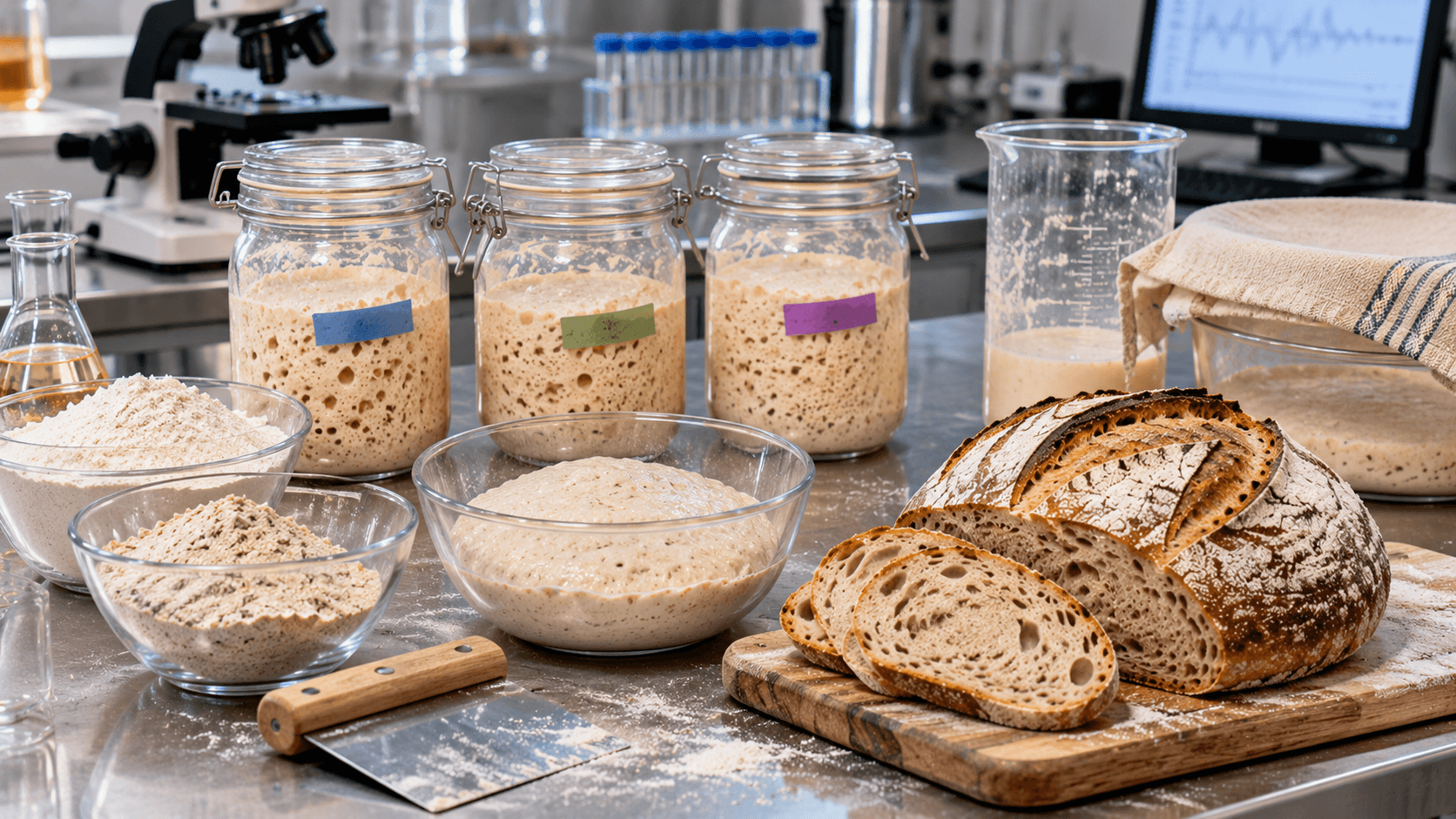
Keep a separate backup of your healthy starter and prepare two clean jars. Feed each with 10 grams of starter, 20 grams of water and 20 grams of flour. Use white bread flour in one jar and whole wheat flour in the other, keeping the water, feeding ratio and room temperature consistent.

Record the starting level, feeding time, temperature, bubbles, rise and aroma. Observe both jars at similar fermentation stages as well as at matching clock times, because one culture may mature before the other. Repeat the comparison if both remain healthy, and look for patterns rather than treating a single observation as a definitive result.

When moving on to a bread comparison, use a familiar recipe and evaluate the cooled loaf independently of the starter's scent. Discard any culture showing mold or unusual pink or orange discoloration. This practical kitchen exercise helps bakers build confidence in their own feeding routine without relying on smell as a test of microbial identity or food safety.

Can Apple Pomace Become a Useful Sourdough Ingredient?

Explore apple pomace sourdough research, its reported mold-free shelf-life benefits, loaf volume and crumb trade-offs, and practical lessons for home bakers.

Conny Jo

Conny Jo

Nov 25, 2026
Can Apple Pomace Become a Useful Sourdough Ingredient?

Could leftovers from apple juice production become a useful bread ingredient? An October 20 study in European Food Research and Technology explores apple pomace fermented into a type III sourdough ingredient.

The research paper compares fermented and unfermented additions in wheat bread. The reported results suggest longer mold-free shelf life alongside smaller loaves and firmer crumb, particularly at the higher replacement level. It is an interesting example of how improving one bread characteristic can create challenges elsewhere.

For home bakers, the useful lesson is to decide which results matter most before changing a recipe. A soft sandwich loaf, a sturdy slice for toast and a loaf designed around reducing waste may have different requirements.

Keep a familiar formula as your baseline, weigh ingredients and record dough handling, rise and cooled crumb. Use established sourdough guidance to troubleshoot ordinary dough development rather than treating a research formula as a household recipe.

The experiment does not establish a safe home storage period or justify using untreated apple scraps. Look for a validated recipe and a specified food-grade ingredient before attempting this kind of bake.

Apple pomace may offer a promising direction for ingredient upcycling. For now, judge preservation, loaf volume and texture separately, keeping the bread you actually enjoy eating at the center of your decisions.

Can Sourdough Cultures Help Dough Survive Freezing?

What selected sourdough cultures may mean for frozen dough and home baking.

Conny Jo

Conny Jo

Nov 24, 2026
Can Sourdough Cultures Help Dough Survive Freezing?

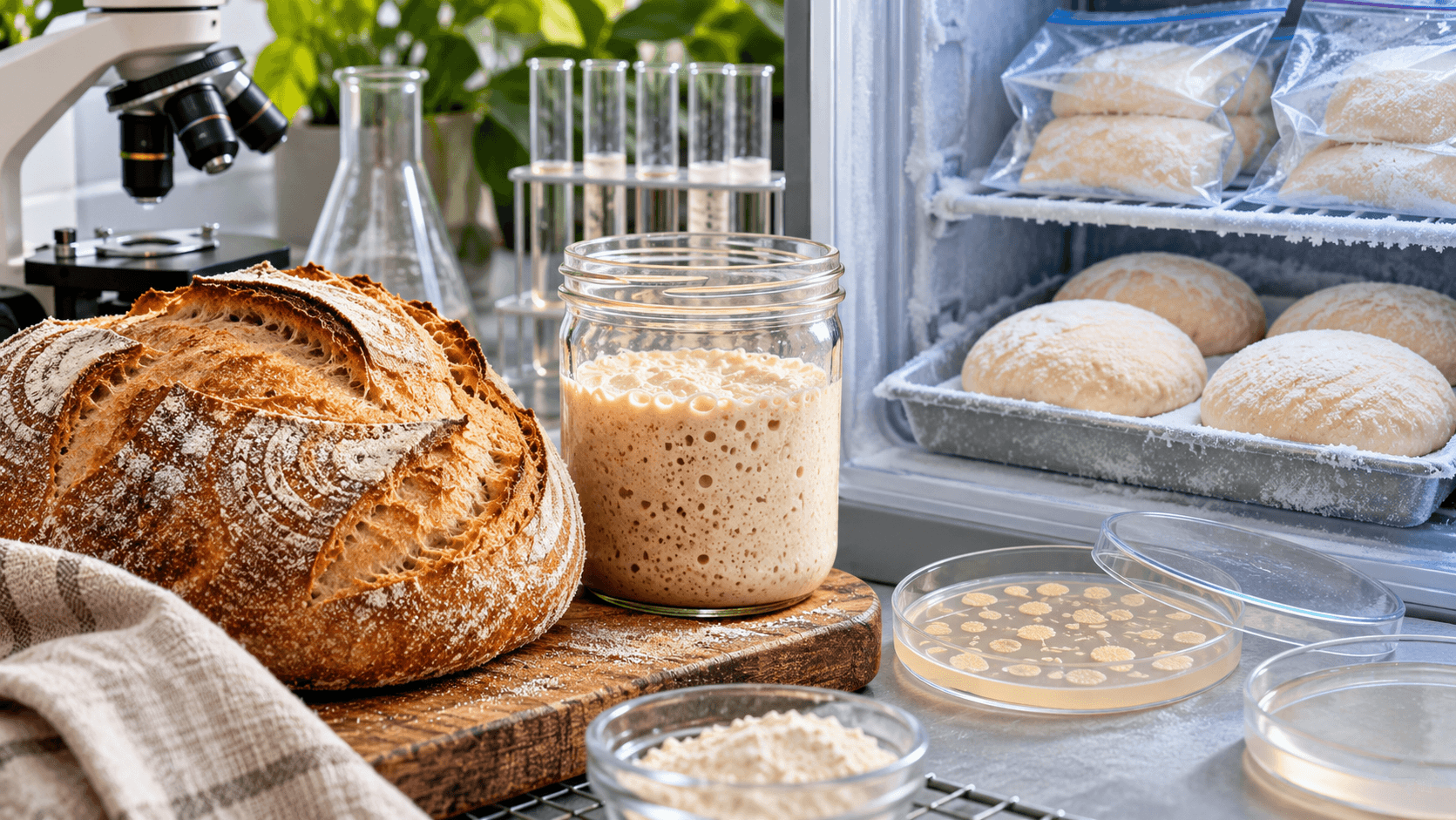
Can sourdough fermentation help bread dough withstand frozen storage? A study published online November 1, 2026, in Food Research International compared selected lactic acid bacteria cultures, including Lacticaseibacillus paracasei X11, under controlled conditions. The reported results suggest that this particular culture helped preserve yeast viability, dough structure and finished bread quality after frozen storage. The test included 28 days at minus 18 degrees Celsius.

For home bakers, the research offers an interesting explanation for why dough can behave differently after thawing. Freezing can stress yeast and alter the dough network, potentially affecting fermentation, gas retention, loaf volume and crumb texture. However, a laboratory culture is not interchangeable with every homemade starter, and the study does not establish a universal freezer routine.

The article explains the difference between freezing raw dough and storing baked bread, and offers a small-batch comparison plan for bakers who want to experiment. Readers are encouraged to record ingredients, starter activity, storage duration, thawing conditions and finished loaf characteristics while keeping other variables consistent.

Practical baking references and links to the research help readers distinguish laboratory findings from everyday advice. The takeaway is to start with a reliable recipe, test storage on a small scale and judge success by the bread that actually reaches the table.

Why Does Sourdough Smell So Good? New Research Explores Fermentation Aroma

From fruity starter notes to fragrant crust, explore the science and try a simple aroma experiment in your kitchen.

Conny Jo

Conny Jo

Nov 23, 2026
Why Does Sourdough Smell So Good? New Research Explores Fermentation Aroma

Why does a ripe sourdough starter smell fruity, tangy or gently yeasty? New research into traditional Chinese sourdough used for steamed pastries offers a closer look at the microbial activity and volatile compounds that contribute to fermentation aroma.

The study reports 109 detected volatile compounds, including 11 key aroma-active compounds, and associations involving 25 potential flavor-producing microorganisms. These findings help illustrate the complexity of fermented dough, but they do not establish a universal recipe for better-smelling home-baked bread or prove that a single microorganism produces a predictable flavor.

Our baker-friendly guide explains how starter aroma can change from feeding through peak activity and beyond. It also distinguishes fermentation aromas from the additional scents produced when bread browns in the oven.

For a practical experiment, try feeding two small portions of the same healthy starter with identical flour, water and ratios, then keeping them at slightly different suitable room temperatures. Record their rise, bubbles, aroma and time to peak. Comparing equivalent fermentation stages can help reveal whether a difference reflects temperature or simply the maturity of the culture.

The article also covers safe starter handling, warning signs of contamination and useful observations for a baker's notebook. Never taste raw starter or dough, and discard cultures showing mold or unusual pink or orange discoloration. The takeaway is simple: aroma is a useful clue, but combine it with rise, timing, temperature and finished bread quality.

🥖 Homemade vs. Store-Bought Sourdough: Which Is Healthier?

The surprising answer depends on flour, fiber, salt and fermentation—not simply where your bread was baked.

Conny Jo

Conny Jo

Nov 20, 2026
🥖 Homemade vs. Store-Bought Sourdough: Which Is Healthier?

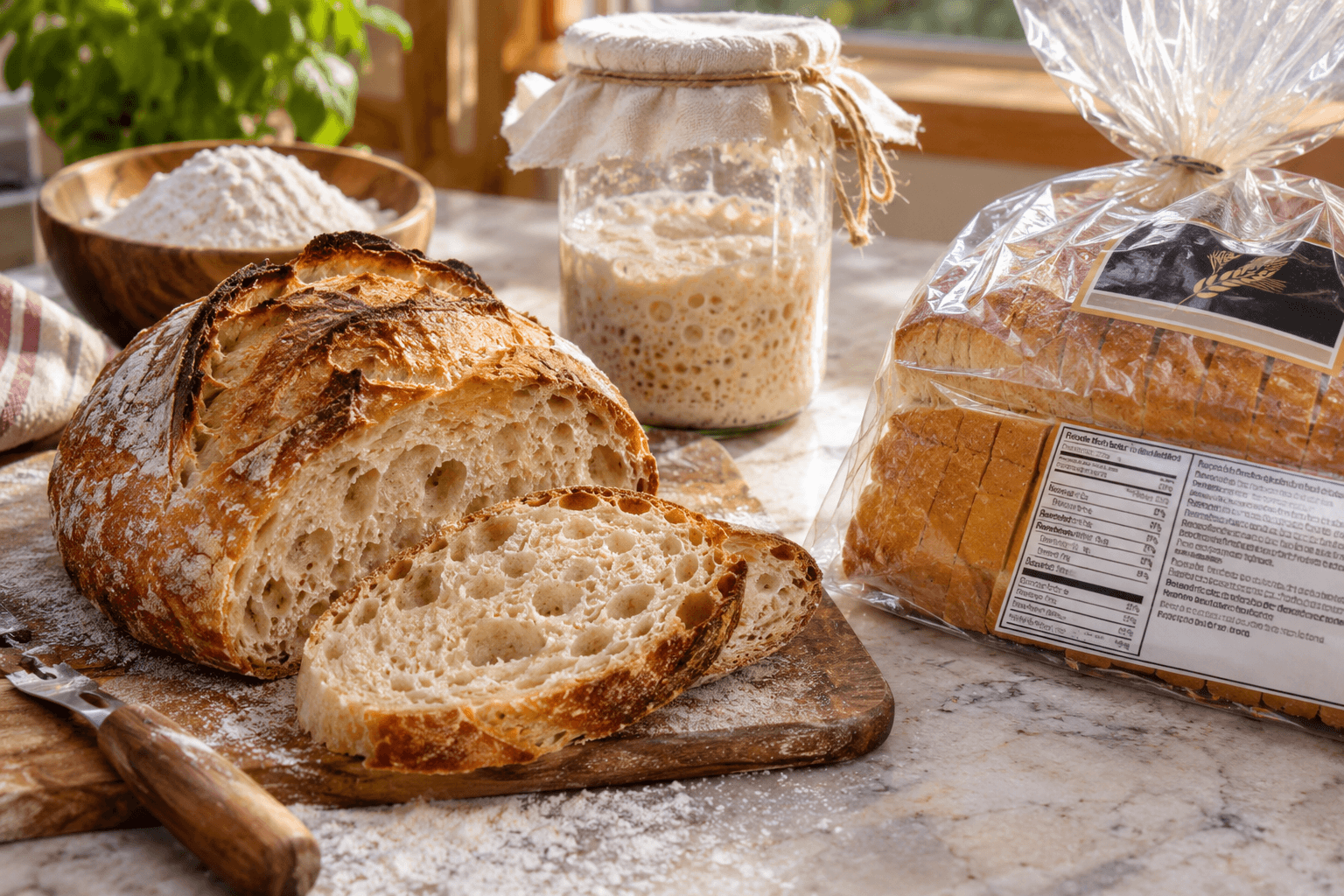
Is a homemade sourdough loaf actually healthier than a store-bought one? The answer depends less on where it was baked and more on the flour, fiber, salt, ingredients and serving size. Homemade bread gives bakers control over the recipe and fermentation process, but that does not automatically make it more nutritious.


Whole grains are a major factor. A packaged whole-wheat loaf may contain more fiber than a beautiful homemade loaf made mostly with refined white flour. Nutrition Facts labels make it easier to compare fiber and sodium in commercial bread, while home bakers can track the ingredients and weights in their own formulas.


Fermentation deserves a closer look too. Sourdough microbes can change grain compounds, and some studies suggest fermentation reduces phytate under certain conditions. That does not prove every sourdough loaf delivers greater mineral benefits. Research on blood sugar response is also mixed, so sourdough should not be marketed as a guaranteed way to prevent glucose spikes.


The article also addresses a crucial safety issue: ordinary wheat sourdough still contains gluten and is not safe for people with celiac disease. A long rise is not a substitute for verified gluten-free ingredients and handling.


For a useful comparison, weigh similar portions and look at whole-grain content, fiber, sodium, added ingredients and fermentation methods. Homemade sourdough can be a satisfying choice, but a good nutritional decision starts with the actual loaf—not the homemade label.

Why Is Your Sourdough Gummy? 7 Mistakes That Could Be Ruining Your Crumb

A gummy sourdough center? Learn seven causes and practical fixes for better fermentation, stronger dough, complete baking and cleaner slices.

Conny Jo

Conny Jo

Nov 19, 2026
Why Is Your Sourdough Gummy? 7 Mistakes That Could Be Ruining Your Crumb

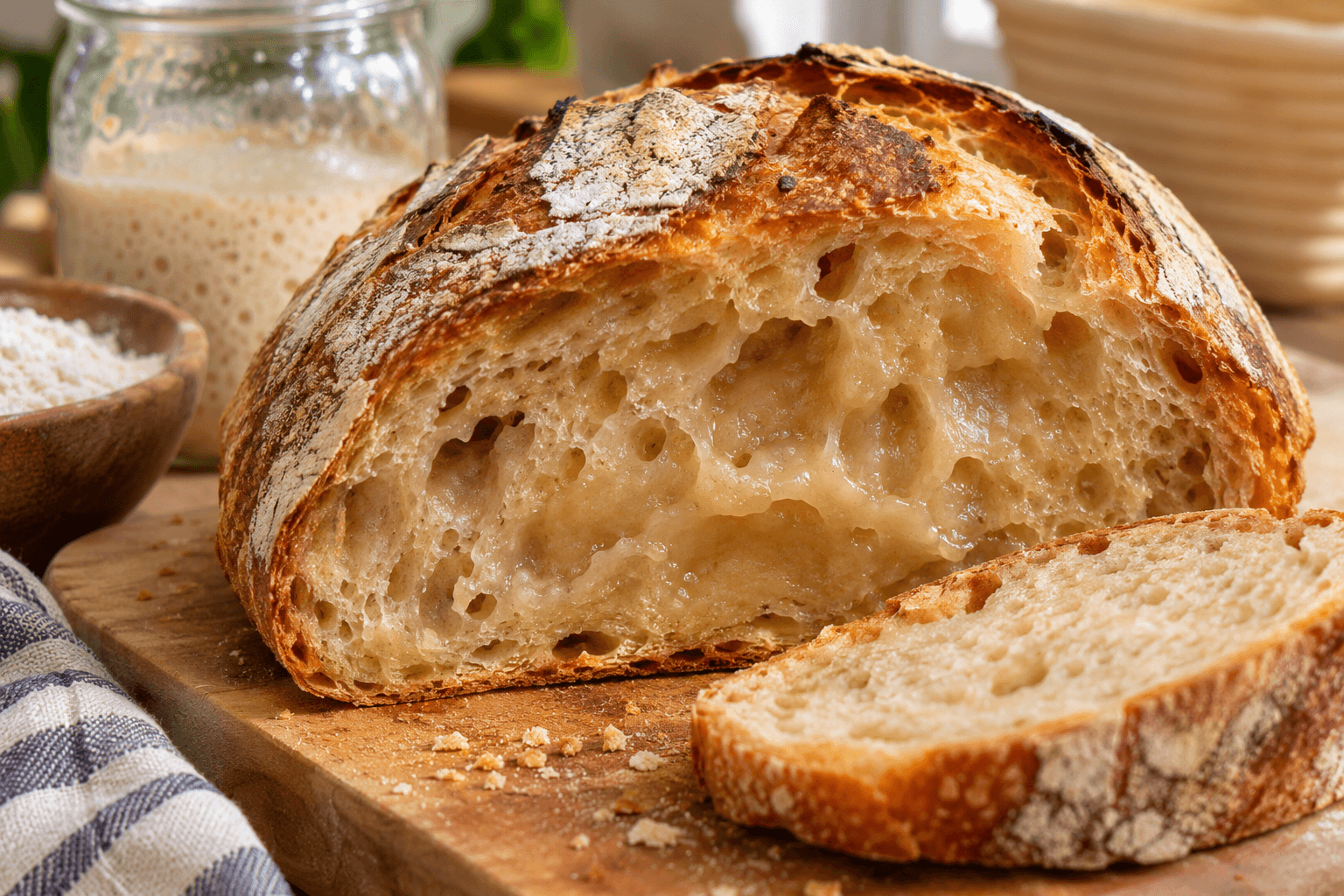
Why does a sourdough loaf look beautiful on the outside but turn out gummy when sliced? A sticky, dense crumb is frustrating, especially after hours of mixing, folding and waiting. The answer is rarely one universal mistake. This American Sourdough Association guide walks through seven common causes and the clues that help distinguish them.

Start with fermentation. Dough that has not developed enough gas may bake with a tight center and irregular tunnels. A weak starter can make timing unpredictable, while overproofing can leave the loaf slack and unable to hold its shape. Hydration matters too: adding more water than your flour and technique can support may make the dough hard to handle. Poor gluten development can produce a similarly compact crumb.

The oven and cooling rack also deserve attention. A dark crust does not always mean the center has baked completely, and slicing a hot loaf can make its interior seem stickier than it really is. The guide includes a quick crumb-diagnosis checklist and practical adjustments for each issue.

Most importantly, it encourages a controlled approach: keep notes on starter activity, dough temperature, rise, flour, hydration and bake time. Change one variable at a time. That way, your next loaf becomes a useful experiment rather than another guessing game.

Can Kombucha Make a Sourdough Starter in Five Days?

The 2026 KOMBREAD study tested kombucha-seeded sourdough, finding comparable bread quality and important limits for home bakers.

Conny Jo

Conny Jo

Nov 18, 2026
Can Kombucha Make a Sourdough Starter in Five Days?

A 2026 study suggests kombucha can do more than ferment sweetened tea: under controlled conditions, it can help establish a sourdough starter. Researchers behind the KOMBREAD paper, published September 30 in Food Science & Nutrition, developed a kombucha-inoculated sourdough that reached technological maturity in five days.

The method was more involved than adding bottled kombucha to bread dough. Researchers used liquid kombucha from a maintained culture to inoculate wheat flour, then refreshed the developing starter with flour and water over several days. The culture developed microbes capable of supporting breadmaking.

The resulting bread compared favorably with a traditional sourdough control. Loaf volume, crumb structure, texture and staling behavior were broadly similar. Preliminary sensory testing also showed good acceptance.

Researchers also measured higher total phenolic content and antioxidant activity in the kombucha bread. The difference may reflect tea-derived compounds carried into the dough. Importantly, laboratory antioxidant tests do not demonstrate better health outcomes for people who eat the bread.

The study had limitations. Traditional control loaves came from one dough batch, sensory testing involved untrained panelists, and the microbial analysis did not fully identify all organisms.

For home bakers, the useful lesson is to keep a reliable mature starter as a control, document flour, feeding ratios and temperature, and compare rise, crumb and flavor. The published method is a research protocol, not a guarantee that any commercial kombucha will produce a dependable starter in five days.

Does Finer Flour Make Better Sourdough? The Study's Answer

A 2026 study links finer whole-wheat flour with softer, larger loaves—but fermentation and wheat type change the outcome.

Conny Jo

Conny Jo

Nov 17, 2026
Does Finer Flour Make Better Sourdough? The Study's Answer

Does finer whole-wheat flour produce better sourdough? A study published October 15, 2026, in LWT suggests that reducing flour particle size can improve loaf volume and softness, but the results depend on wheat type and fermentation time.

Researchers tested hard red spring, hard red winter and hard white wheat, including selected 50:50 blends. They stone-milled grain at three gap settings and compared sourdough breads fermented for 12 and 24 hours. Across the study's conditions, smaller particles were associated with a 13.48% increase in bread volume and a 23.23% reduction in hardness.

The longer fermentation brought a trade-off. At 24 hours, the researchers reported a 4.12% decrease in volume and a 10.98% increase in hardness, even as organic acids contributed more aroma. Hard white wheat and a hard red spring–hard white blend performed particularly well with finer flour and the 12-hour fermentation. The blend also showed better tolerance for the longer fermentation.

For home bakers, these figures are not guaranteed improvements. Starter strength, hydration, temperature and shaping all influence a loaf. The study instead offers a useful principle: flour grind, wheat class and fermentation should be considered together.

A simple kitchen experiment can help. Bake two small loaves using different whole-wheat grinds while keeping the recipe, starter and temperature consistent. Record dough handling, rise, loaf height, crumb softness and flavor.

The takeaway: finer milling may help, but fermentation still matters.

Can Sourdough Cultures Change Protein Digestibility? A 2026 Study Explained

Selected sourdough cultures produced comparable lab nutrition results but different aroma compounds. Here's what bakers can take away.

Conny Jo

Conny Jo

Nov 16, 2026
Can Sourdough Cultures Change Protein Digestibility? A 2026 Study Explained

Can the bacteria living in your sourdough starter change more than the flavor of your bread? A 2026 Food Chemistry study suggests they can. Breads made with a carefully selected mix of lactic acid bacteria showed laboratory protein-digestibility results within the range of conventional sourdough, even though the tested process used a shorter fermentation.

The same general pattern appeared in other measurements, including amino-acid composition, protein-quality indices and predicted glycemic index. That means the specially cultured breads were comparable in those laboratory tests—not proven healthier or easier for people to digest.

Where the loaves stood apart was aroma chemistry. The selected cultures produced a different mix of compounds linked to bread's smell, including acetic acid and certain alcohols. Different doesn't necessarily mean better tasting, but it does show how the microbes doing the fermenting can shape the finished loaf.

The researchers compared six sourdough breads prepared with different fermentation approaches, some with an added protein-breaking enzyme, alongside baker's yeast bread. They did not test digestion or blood-glucose responses in people.

For home bakers, there's no need to hunt for a laboratory-designed starter. Instead, try paying closer attention to your own routine. Keep the flour and recipe consistent, change one fermentation variable at a time, and note the rise, aroma, crumb and flavor.

The practical takeaway is that your starter's microbial community matters, but a long ferment or tangy flavor alone doesn't prove a nutritional benefit. Enjoy learning how your starter behaves—and be careful about turning laboratory findings into health promises.

New Rye Sourdough Study Tests 48, 96 and 144 Hours of Fridge Storage

Six-day refrigerated rye starter produced the lowest taste rating, while key loaf measurements stayed stable. What bakers can try.

Conny Jo

Conny Jo

Nov 16, 2026
New Rye Sourdough Study Tests 48, 96 and 144 Hours of Fridge Storage

How long can a rye sourdough starter rest in the fridge before the bread tastes different? A 2026 Foods study compared starters refrigerated at 4°C for two, four and six days. The most interesting result was a flavor trade-off: bread made with the six-day starter received the lowest taste-acceptability rating, even though several physical bread measurements stayed stable.

Across the tested batches, bread volume, crumb moisture, yield and baking loss were not adversely affected. Meanwhile, the starter's acidity and fermentation compounds changed during cold storage, including an increase in ethanol. Changes in mature sourdough did not mirror every change seen in the refrigerated starter.

The researchers highlighted four days as a useful reference point for the particular rye sourdough system studied. That isn't a universal deadline for every starter, and it doesn't mean a six-day-old culture must be discarded.

For home bakers, try comparing starter portions refrigerated for two, four and six days. Use the same flour, hydration, feeding ratio and dough method. Record the refrigerator temperature and note starter aroma, loaf rise, crumb and—most importantly—taste.

Repeat the comparison if you notice a difference. Remember that a baking-quality experiment is not a safety test: discard starter with mold or suspicious discoloration.

The takeaway: a rye loaf can look good while its flavor changes. Let careful baking notes help shape your routine.

Whole-wheat sourdough: choose the result before changing the culture

A new culture-pairing study, explained for home bakers.

Conny Jo

Conny Jo

Nov 12, 2026
Whole-wheat sourdough: choose the result before changing the culture

A new whole-wheat sourdough study gives bakers a useful question: which quality are you trying to improve? The pairing with the greatest loaf volume differed from the pairing that slowed staling most, and adding a third strain brought no clear extra benefit.

The Food Bioscience paper examines selected cultures under experimental conditions. It does not identify the microbes in a home starter or promise matching results from an ordinary feeding change.

Our guide translates that distinction into a practical baking approach. Choose one goal before mixing: a taller loaf, a crumb you prefer, or flavor that suits your table. Give that goal a consistent way to be judged.

Then keep the formula and process steady. Record ingredient weights, dough temperature, fermentation observations and the finished loaf. Repeat a comparison before treating one result as a reliable pattern.

The article links a documented whole-wheat sourdough recipe and explains that its instant yeast addition must be kept consistent. It also compares countertop and refrigerator starter care using published maintenance guidance.

The useful takeaway is a better experiment, rather than a shopping list of microbial names. Keep a dependable starter, choose a manageable change and make notes that help you understand the next loaf. Read the research for its specific findings while letting your own repeatable bakes guide kitchen decisions.

Beyond the Rise: What New Wholemeal Sourdough Research Reveals

A new Food Chemistry study explores molecular changes in wholemeal sourdough—and what home bakers can learn without overstating the evidence.

Conny Jo

Conny Jo

Nov 12, 2026
Beyond the Rise: What New Wholemeal Sourdough Research Reveals

What happens inside wholemeal sourdough beyond the visible rise? A 2026 Food Chemistry study used structural analysis, metabolomics and lipidomics to examine dough fermented with four selected lactic acid bacteria. Researchers reported changes in starch and protein structures, 277–326 differential metabolites and distinct lipid profiles.

The findings help explain why microbial strain and fermentation conditions matter, but they are laboratory measurements—not proof that a particular starter produces healthier bread. Related 2026 research offers promising observations about phenolic compounds, starter microbial communities and potential nutritional effects, while a small human trial underscores the need for caution when interpreting gut-health claims.

For home bakers, the most useful takeaway is practical: choose a reliable whole-wheat formula, maintain a consistent starter routine and compare one variable at a time. Record hydration, dough temperature, fermentation cues, crumb and flavor. Repeated observations can help identify which process suits your kitchen without attributing results to unmeasured molecular mechanisms.

The article explains multi-omics in plain language, links directly to scientific sources and provides a five-step two-bake comparison. It separates what researchers measured from what bakers can realistically test, making the new science accessible without overstating its implications.

Sourdough and Gut Symptoms: What a New Randomized Trial Found—and What It Did Not

A randomized trial compared sourdough and baker’s-yeast bread. What the findings may mean for bakers without turning one study into a health claim.

Conny Jo

Conny Jo

Nov 10, 2026
Sourdough and Gut Symptoms: What a New Randomized Trial Found—and What It Did Not

Researchers compared sourdough bread with baker’s-yeast bread for gut symptoms and targeted gut microbial measures.

This draft explains what is confirmed, why it matters in the home sourdough kitchen, and what readers should verify before acting.

It separates the positive development from details that remain subject to a direct check, such as specific schedules, requirements, costs or future outcomes.

Readers will find practical questions, source-linked guidance and a clear next step.

The story is designed to be useful rather than promotional: it gives neighbors context, while keeping confirmed facts distinct from reasonable expectations.

Use the randomized trial record for the latest official or reported details.

The takeaway is straightforward: celebrate the development, verify what affects your plan, and follow the next documented update.

Sourdough temperature: how to test it thoughtfully at home

A new study links repeated temperature choices to sourdough microbes and bread traits. What a home baker can actually use.

Conny Jo

Conny Jo

Nov 9, 2026
Sourdough temperature: how to test it thoughtfully at home

A new sourdough study shows that temperature can shape more than fermentation speed.

Researchers repeatedly refreshed spontaneous sourdough at 8°C, 15°C and 25°C. Over time, the conditions were associated with different microbial communities and different bread measurements.

The 8°C culture matured more slowly and produced the study’s highest reported loaf volume and sensory score. The 15°C condition led the reported measurements for in-vitro protein digestibility and free amino acids.

Those results are interesting, but they are not a command to ferment every home starter at 8°C or 15°C. The work used controlled conditions, one research process and repeated refreshment cycles—very different from a single warm afternoon in an ordinary kitchen.

For home bakers, the useful lesson is practical: temperature belongs in the formula. Track your feed ratio, flour, room temperature, peak time, rise, aroma and dough behavior before making another adjustment.

Try a modest warmer-versus-cooler comparison over several consistent feeds. Keep the rest of the routine steady and let your own starter show what it does best.

The guide also explains why a slower peak is not automatically a weak starter and why a loaf result should be judged over several comparable bakes rather than one test.

The takeaway: seek repeatable observations, not a magic number. A temperature choice is useful when it fits your schedule and gives you a pattern you can understand.

A sourdough-monitoring study, translated for home bakers

A dual test found microbial shifts in a lab sourdough model. Here is the calm, practical lesson for your starter at home.

Conny Jo

Conny Jo

Nov 9, 2026
A sourdough-monitoring study, translated for home bakers

A new sourdough-monitoring study tested a faster way to spot microbial shifts during repeated feedings.

The research team developed a dual lateral-flow assay intended to track a target sourdough bacterium and flag a competing organism. In a controlled, four-day model at 37°C, the assay and sequencing found a community shift that routine pH and total LAB counts did not make obvious.

That is meaningful research for industrial and artisanal producers seeking faster quality-control signals. It is not a retail home test, and it does not mean every active or slow starter needs laboratory scrutiny.

For home bakers, the useful lesson is observational: learn the normal pattern of your own culture. Keep notes on feed ratio, flour, room temperature, rise, peak time, aroma and texture. Those details make change easier to interpret.

The guide also explains why pH alone cannot identify the full microbial community, why flour and temperature can alter fermentation behavior, and when ordinary sluggishness differs from a visible safety concern.

It encourages a practical, low-tech approach to troubleshooting: use a clean jar, feed appropriately for your schedule, and change one variable at a time.

The takeaway: use the study as motivation for steadier starter care, not panic. Build a repeatable routine, compare your culture with its own usual behavior, and use official research as context rather than a substitute for sound kitchen judgment.

A Sourdough Schedule: a starter feeding and baking guide

What to watch, when to feed, and how to build a flexible sourdough schedule around your own routine.

Conny Jo

Conny Jo

Nov 7, 2026
A Sourdough Schedule: a starter feeding and baking guide

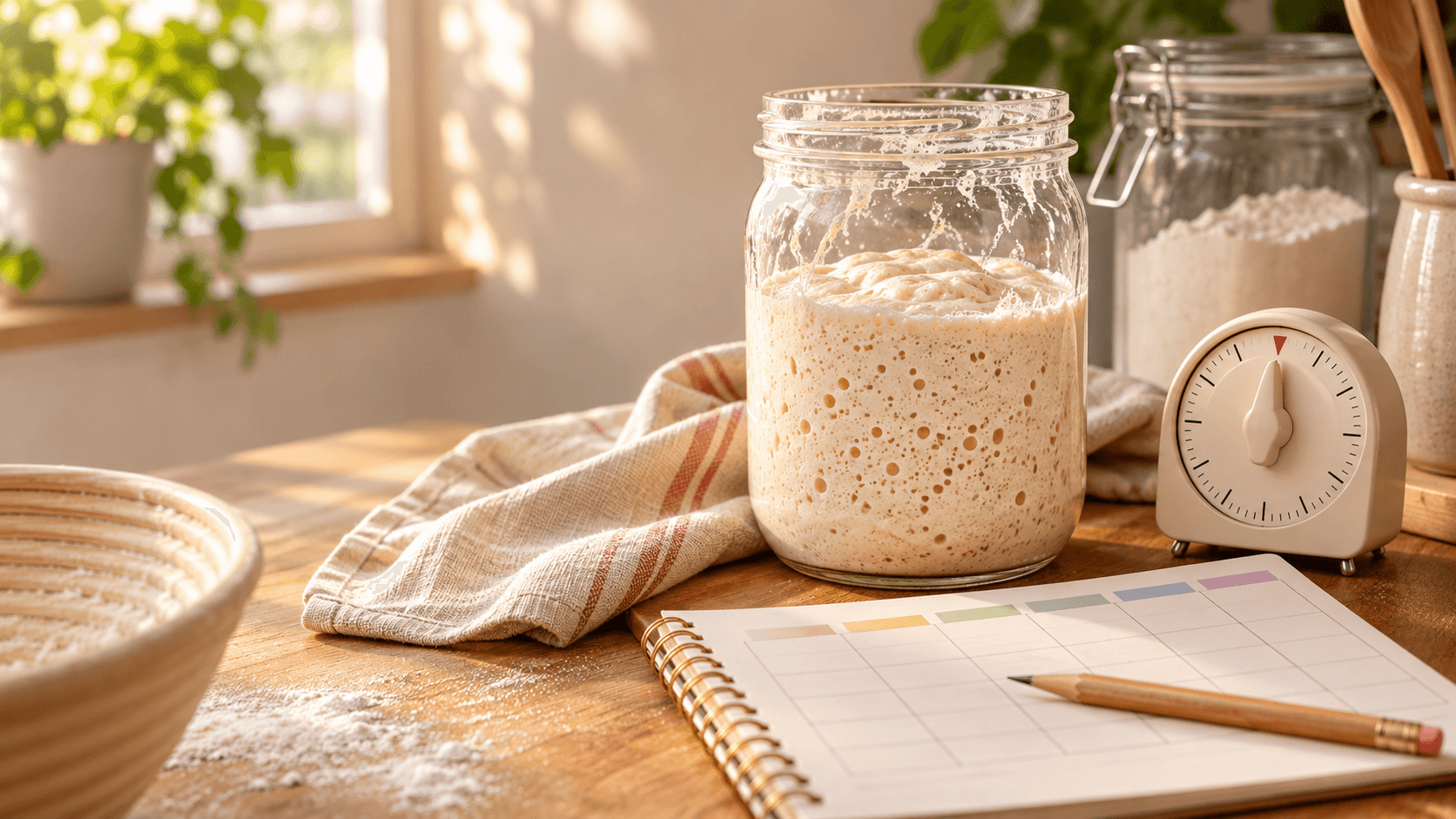
A dependable sourdough schedule starts with a realistic bake day, not a rigid feeding rule.


It is deliberately practical: readers can decide whether a warm counter or cold storage matches their current rhythm, then use a single bake to test the plan before making further changes. That makes the advice useful beyond one recipe or one weekend.


This revised guide helps home bakers choose between room-temperature maintenance and a refrigerator routine, then plan from the desired bake time backward.


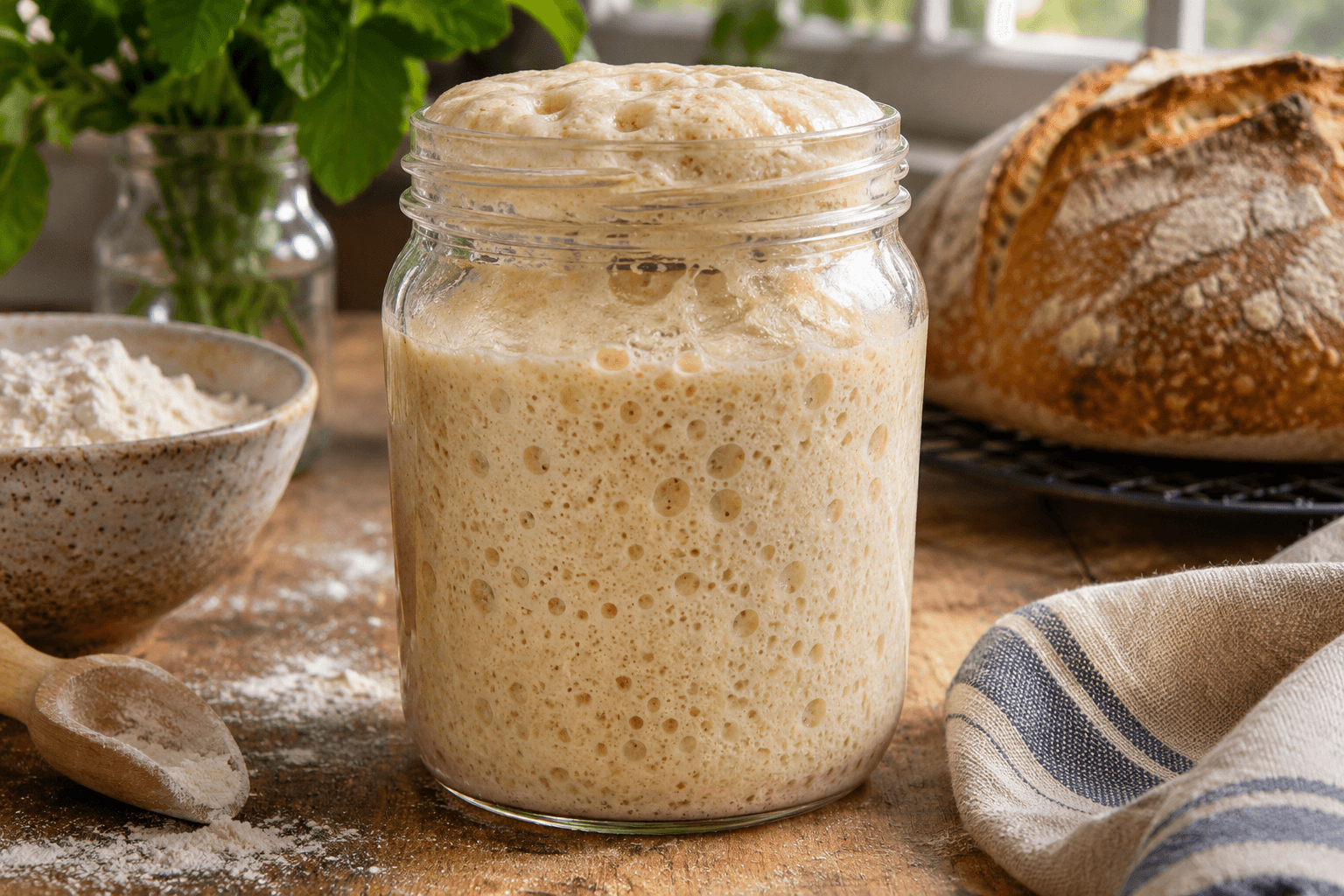
It explains why a starter is commonly most useful near its peak after feeding, how to create space with cold storage, and why the jar’s rise, bubbles, aroma, and texture still matter more than a timer alone.


Readers get a practical weekend template, plus a clear way to separate a normal maintenance feed from a larger bake build when a recipe calls for more ripe starter.


The goal is fewer surprise late-night feedings and more repeatable loaves.


The piece also encourages bakers to take simple notes on feed time, temperature, peak, mixing, shaping, and baking. Those notes turn a generic timeline into a schedule tailored to an individual culture and kitchen.


Four illustrative process images and source-linked guidance support a clear, craft-focused approach to American sourdough.

Newsletter

Never miss a story.

Get the best of American Sourdough Association in your inbox — free, no spam.

American Sourdough Association

© 2026 American Sourdough Association.

Explore American sourdough through clear writing on starters, fermentation, baking, and the loaves that result. Subscribe for a place to deepen your understanding of the craft.

© 2026 American Sourdough Association.