

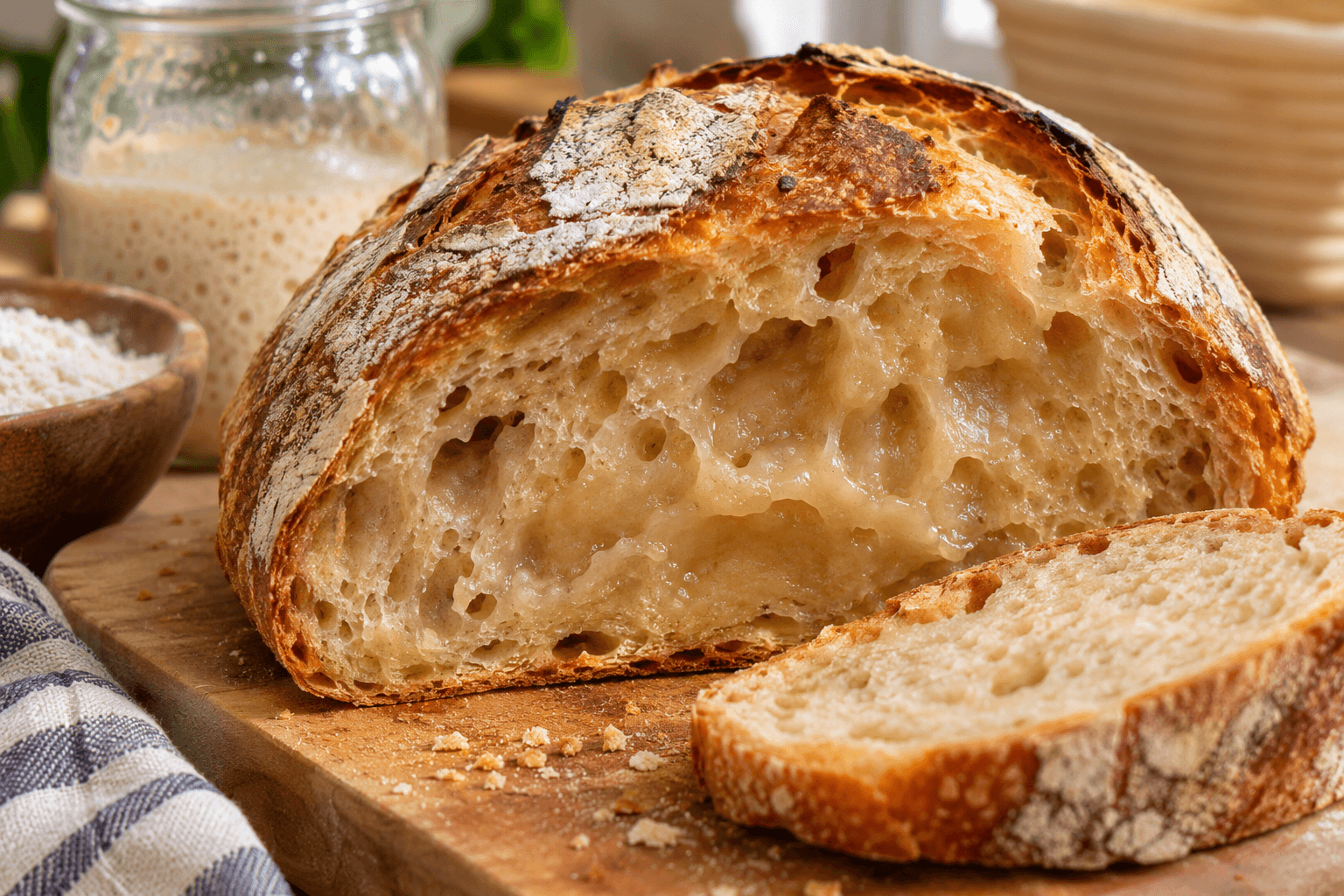
You baked a beautiful sourdough loaf, but the knife reveals a sticky, dense center. Is it underbaked, underproofed, or simply too wet? Gummy crumb has several possible causes, and the fix depends on what happened before the bread entered the oven. The best clue is not one hole or one temperature reading; it is the combination of fermentation, dough handling, baking, and cooling. Here are seven common mistakes to investigate before your next bake.
At a Glance
1. You Ended Bulk Fermentation Too Early
Underfermented dough may bake into a tight, tacky crumb with dense areas and occasional oversized tunnels. The yeast and bacteria simply have not had enough time to develop the dough's gas structure. A dough that barely rose during bulk fermentation may still expand dramatically in the oven, but that does not guarantee an even interior.
Try this: Track the dough's increase in volume, bubbles along the container walls, surface shape, and elasticity. Rather than following a fixed schedule, compare these signals with the temperature and the formula. Dough temperature strongly affects fermentation speed; a cooler kitchen may need more time.
One giant hole surrounded by dense bread is a clue, not a definitive diagnosis. Shaping problems and uneven gas distribution can create similar patterns.
2. Your Starter Wasn't Ready for the Job
A starter can bubble without being vigorous enough to leaven a loaf on schedule. A recently refrigerated culture, a starter fed inconsistently, or one used long after its peak may make fermentation slower and less predictable.
Before mixing, look for repeatable expansion after feeding, a healthy aroma, and a predictable rise-and-fall cycle. King Arthur's starter-maintenance guidance explains how consistent refreshments help establish that pattern. Do not rely on the float test alone: its result depends on trapped gas and how the sample is handled, not just microbial activity. |
 AI generated photo for American Sourdough Association. |
3. Your Dough Has More Water Than It Can Handle
High-hydration dough can produce a lovely open crumb, but it also requires flour and handling that can support the added water. If the dough spreads, sticks excessively and never develops strength, its interior may remain compressed or feel damp after baking.
Start by checking your calculation: hydration is the weight of water divided by the weight of flour, expressed as a percentage. Remember to include the flour and water contributed by your starter. A dough made with 500 g total flour and 350 g total water has 70% hydration.
Try this: Reduce hydration modestly on your next bake, perhaps by two to five percentage points, while keeping everything else unchanged. Use the same tested bread formula as a baseline before adjusting again. More water does not automatically mean better bread.
4. The Gluten Network Was Too Weak
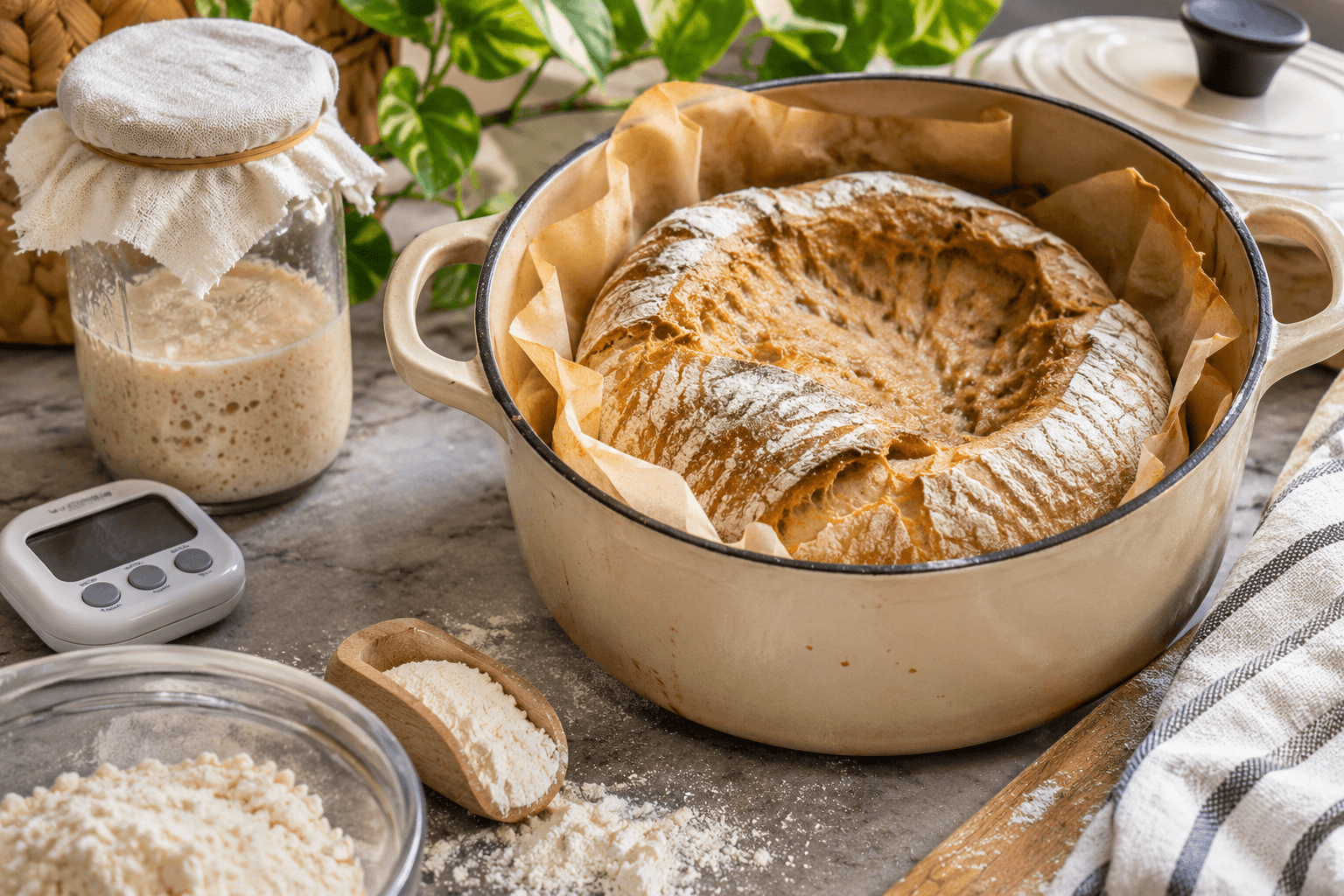
Even a well-fermented dough needs enough structure to hold gas. Inadequate mixing, too few folds for a particular recipe or rough handling late in fermentation can leave the dough fragile. A loaf may flatten and bake with a compact interior, even when the starter was active.
Build strength early with appropriate mixing and gentle folds. Watch whether the dough becomes smoother, more elastic and better able to hold its shape. Flour choice matters: whole-grain flours behave differently from refined flour because bran, germ and absorption characteristics affect the dough.
Do not keep folding indefinitely. Once dough is well developed and fermentation has advanced, aggressive handling can knock out gas and damage structure. |
 AI generated photo for American Sourdough Association. |
5. You Overproofed the Dough
Underproofing is not the only fermentation problem. Overproofed dough can lose strength as fermentation continues, making it difficult to score or transfer. It may spread rather than spring upward, leaving a compressed crumb that feels moist or pasty.
Look for a combination of clues: a very slack surface, weak shape retention, excessive expansion followed by collapse, and little oven spring. The familiar finger-poke test can be helpful, but its reliability varies with hydration, flour and whether the dough is cold.
Try this: Shorten the final proof slightly on your next attempt, or chill the dough earlier if your formula uses a cold retard. Keep temperature and timing notes so you can distinguish overproofing from weak dough development.
6. The Center Didn't Bake Long Enough
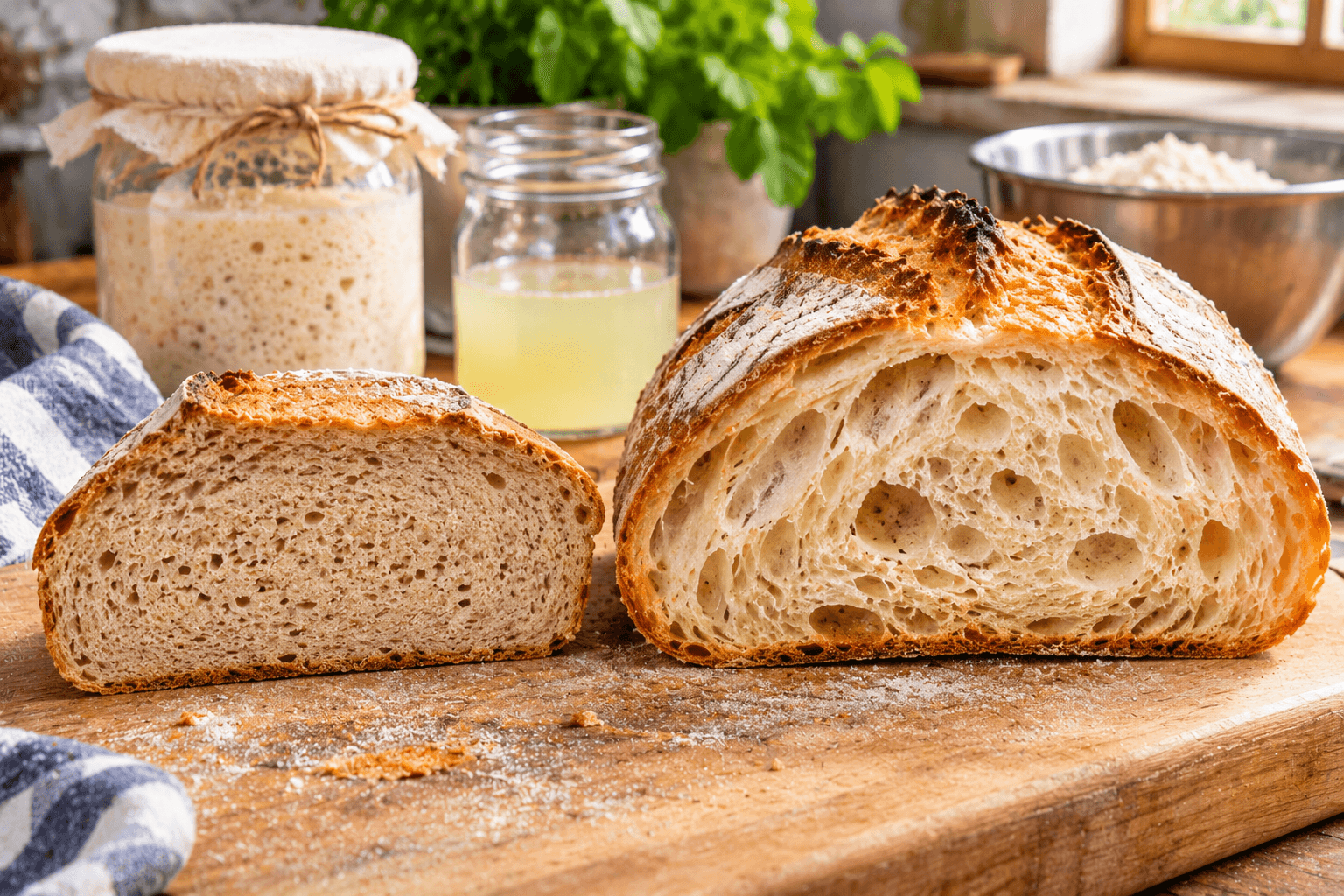
A dark crust can make bread look finished before its center is fully set. Large loaves, very wet doughs and ovens that run cooler than their settings can all complicate baking. A gummy center paired with a pale or soft lower crust may point toward insufficient baking.
Check oven preheating, the baking vessel and the loaf's actual size. A thermometer can provide another data point: King Arthur's bread-temperature guide discusses using internal temperature alongside appearance. No single temperature proves that every sourdough loaf is perfectly baked, particularly when hydration and enrichment vary.
When the crust colors too quickly, adjust heat or shielding rather than automatically removing the loaf early. Allow enough uncovered baking time for moisture to escape and the crust to develop. |
 AI generated photo for American Sourdough Association. |
7. You Sliced the Loaf While It Was Still Hot
The loaf continues changing after it leaves the oven. As steam redistributes and the crumb cools, its structure becomes easier to slice cleanly. Cutting immediately can smear the interior and make an otherwise sound loaf appear gummy.
Try this: Let the loaf cool completely on a rack before cutting, especially if it is large or high-hydration. Cooling will not repair an underbaked or underfermented loaf, but it removes one avoidable source of stickiness.
Quick Crumb-Diagnosis Guide
These patterns overlap; they are starting points for troubleshooting, not a visual laboratory test.
A Better Plan for Your Next Bake
Choose a familiar tested sourdough recipe and record starter feeding time, flour type, hydration, dough temperature, bulk rise, final proof, oven settings and cooling time. Photograph the dough before shaping and the crumb after cooling. Change just one major variable on the next loaf.
The bottom line: Gummy sourdough is a symptom, not a single mistake. A little more fermentation may help one loaf; less water, a stronger starter, a longer bake or simply more cooling time may help another. Observe the dough, document the results and let each bake teach you what to adjust. |
29 Comments
Join the conversation
Cooling time is the hardest part for me. After spending all day on a loaf, waiting longer before slicing takes real patience.
Samir K.That wait is brutal. I usually bake an extra roll so I have something to eat while the loaf cools.
Watching the dough rather than following a fixed schedule takes practice. The container-wall bubbles sound like a good clue for beginners.
I had assumed bubbles meant my starter was ready. Seeing whether it expands the same way after each feeding seems more useful.
The cooler kitchen point fits my experience exactly. My winter loaves take much longer to rise than the same dough in summer.
Excessive hydration might be my problem. I keep adding water because the dough looks dry, then struggle to shape it.
I like that shaping is mentioned as another possible cause of uneven holes. It keeps me from chasing one fix for every loaf.
Eric StoneExactly. When I get a big hole, I check my shaping notes before changing the fermentation time.
A predictable rise and fall sounds like a better starter check than just seeing bubbles. I will pay attention after the next feeding.
I would still check the bake first if the center is sticky. Fermentation matters, but my oven runs cooler than its dial says.
The surface shape and elasticity tips give me something to watch besides the clock. My kitchen temperature changes a lot through the year.
It is reassuring that a big tunnel is only a clue. I was ready to blame every hole in my bread on fermentation.
I agree about changing one variable at a time. I changed my flour and water amount together once and learned nothing from the loaf.
The warning about using starter long after its peak caught my eye. Mine often sits on the counter while I finish other chores.
How much rise should I look for during bulk in a cold kitchen? I can see bubbles, but judging volume is harder.
Keeping notes is sensible, but I always forget what I changed by the next weekend. Maybe a notebook belongs next to the flour.
I have blamed underbaking every time I found a sticky center. It is worth checking what happened during bulk fermentation first.
The distinction between oven rise and an even interior helped me. My loaf sprang up beautifully, then had dense patches inside.
Tracking dough temperature sounds useful, though I hope I can do it without turning bread into a science project. I like baking by feel.
A refrigerated starter can look lively without being ready to raise a loaf. That explains a few of my slower baking days.
I sliced my last loaf while it was still warm and wondered about the gummy middle. Next time I will let it cool.
Beth M.I made that mistake last week. The second half looked much better after it had cooled completely.
Bubbles along the container walls are easier for me to spot than a change in volume. I am glad that clue was included.
I wish there were a simple answer for a sticky center, but the list makes sense. I will change one thing next bake.
The float test has fooled me before. Watching for a repeatable rise after feeding sounds more reliable than dropping one spoonful in water.
My starter bubbles after a feeding, but I have never tracked when it peaks. That seems like a useful place to start.
I appreciate the reminder that one giant hole does not prove the dough was underfermented. My shaping could use some work too.
Dave ThompsonSame here. I started taking a photo of the dough before shaping so I can compare it with the finished loaf.
The note about a cooler kitchen needing more fermentation time is helpful. I tend to follow the clock even when my dough barely rises.