

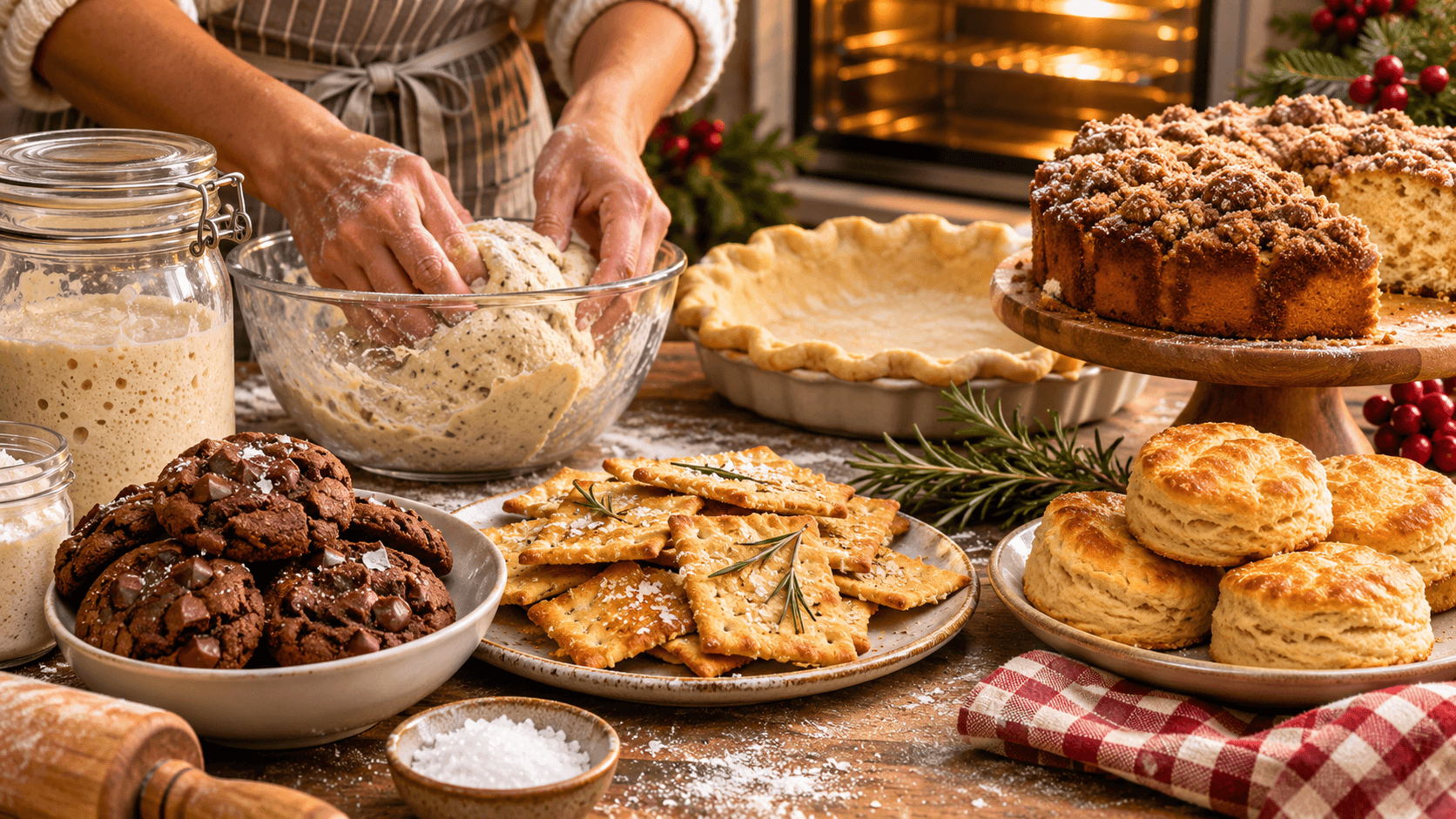
Before you tip another spoonful of sourdough discard into the compost, imagine pulling a tray of chocolate cookies out of the oven. The same jar you maintain for bread can help you prepare holiday snacks, breakfast treats and even the pastry for your December pie.
You don't need to wait for a bubbly starter to peak for many discard-friendly bakes. With a little planning, your next feeding can supply part of the ingredients for five very different holiday favorites.
At a Glance
What Discard Actually Does in Your Dough
The portion removed during routine starter feeding contains flour, water and fermentation products. In a starter maintained at equal weights of flour and water, 100 grams of discard contributes roughly 50 grams of each. That matters when adapting a recipe because extra liquid can make cookie dough spread or pastry become sticky.
Unfed discard is not a dependable replacement for ripe starter when a recipe relies on fermentation for its rise. Many cookies, cakes and biscuits instead use baking soda or baking powder. The discard adds flavor and becomes part of the dough's hydration. Choose a formula intended for unfed starter before experimenting with substitutions.
|
 AI generated photo for American Sourdough Association. |
1. Chocolate Discard Cookies for the Holiday Cookie Box
If your holiday baking list starts with chocolate, try these chocolate sourdough discard cookies. The formula uses 76 grams of unfed starter and makes 16 to 18 cookies. Cocoa, brown sugar and chocolate complement the fermented flavor without requiring the discard to raise the dough.
Baker's tip: Follow the dough chilling instructions rather than judging consistency immediately after mixing. For a busy December, portion the dough ahead and freeze the scoops according to the recipe's directions. Let baked cookies cool completely before packing them so steam doesn't soften their edges.
2. Rosemary Crackers for a Holiday Cheese Board
A batch of thin, savory discard crackers can fill the gap between preparing dinner and welcoming guests. Butter, salt and herbs turn the starter into a snack that belongs beside cheese, olives or a bowl of dip. Rosemary and cracked pepper are a festive combination; use the seasoning quantities in the chosen recipe as your guide.
Even thickness matters more than making every cracker the same shape. Spread or roll the dough as directed, then watch the edges near the end of baking. Thin areas can brown before thicker ones have lost enough moisture. Cool fully on a rack before storing in an airtight container. If the crackers soften, a brief return to the oven may restore some crunch.
|
 AI generated photo for American Sourdough Association. |
3. Buttery Discard Biscuits for a Cozy Breakfast
A warm biscuit can be a welcome change from the usual holiday toast. The buttery sourdough biscuit recipe in King Arthur Baking's discard collection uses the starter in a quick dough rather than asking you to wait through a bread fermentation schedule.
Keep your butter cold and avoid overworking the dough. Cold pieces of butter help create layers as the biscuits bake, while too much mixing can make them tough. Serve with cranberry preserves or alongside leftover holiday soup. For the first batch, resist adding extra flour just because the dough feels slightly tacky; follow the recipe's handling guidance.
4. Sourdough Pie Crust for the Holiday Dessert Table
Discard can also become part of a flaky pie crust, contributing moisture and fermented flavor. Try it with an apple or cranberry filling, or use a savory filling for a family dinner. The crust formula uses starter in place of the usual added water, so its consistency is important.
Chill the pastry before rolling and follow the filling recipe's baking instructions. If the dough cracks at the edges, allow it to soften slightly rather than adding water immediately. If it becomes greasy or overly soft, refrigerate it again. Good pastry rewards patience, not aggressive kneading.
|
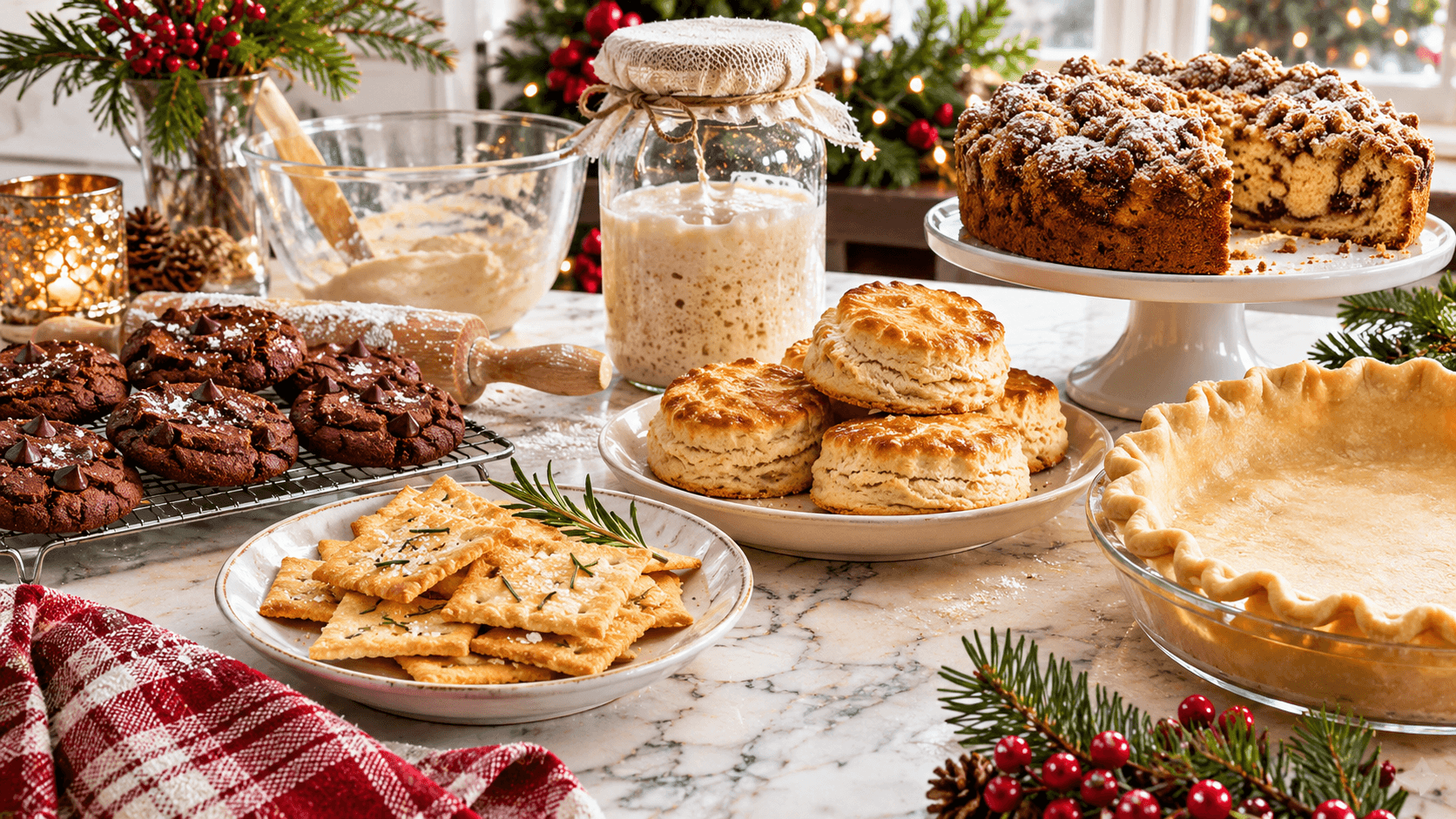 AI generated photo for American Sourdough Association. |
5. Cinnamon Crumb Cake for a Slow Holiday Morning
The sourdough cinnamon crumb cake is an option for a breakfast gathering when you would rather serve one shared bake than stand at the stove. A cinnamon topping complements discard's gentle acidity, and the cake can be sliced into portions for guests.
Measure the batter and topping ingredients separately. Avoid mixing the batter longer than the recipe directs, and check doneness in the center rather than relying on the browned crumbs alone. A cup of coffee and a warm slice can make an ordinary December morning feel special.
Keep Your Discard Jar Ready for Baking
Save discard only once your starter is well established. Keep it in a clean, covered container in the refrigerator if you aren't using it that day, following these discard storage guidelines. Labeling the jar with the date of the oldest addition helps you keep track of what you have.
Never bake with moldy discard, pink or orange discoloration, or a putrid smell. The starter safety guidance recommends throwing away contaminated starter rather than trying to rescue it. Appearance and smell alone cannot guarantee safety; discard questionable material and never taste raw dough.
If you have more discard than you need, adjust the quantities in your starter maintenance routine while keeping the feeding proportions appropriate for your culture. There is no need to create extra discard just to feel obliged to bake with it.
The Bottom Line
Pick one recipe that fits your holiday plans and give it a trial run before serving guests. A healthy discard jar is an ingredient, not an obligation. Whether you make crisp crackers or a tender cake, the goal is to enjoy the baking process and make good use of the starter you already maintain.
|
18 Comments
Join the conversation
Cinnamon crumb cake sounds appealing, but I would probably start with crackers. Savory baking feels more forgiving when I am trying something new.
I am glad the difference between discard and ripe starter is spelled out. I learned that lesson the hard way with a flat loaf.
The pie crust caught my attention more than the cookies. A little tang might work nicely with a sweet filling.
My starter jar fills up quickly in December. Planning a bake around the next feeding might keep more of it out of the compost.
I made discard biscuits once and they were pleasantly tangy. I like seeing them included alongside the sweeter holiday options.
The equal weights example is clear, though not everyone keeps a starter that way. I would check my own feeding ratio before adjusting anything.
Herb crackers would be handy to make ahead for guests. I wonder how long they stay crisp in a tin.
I would be cautious about adding discard to my usual cookie recipe. Starting with one designed for it seems like sensible advice.
Paul JensenAgreed. I'd rather try a tested discard recipe first than risk a whole batch of holiday cookies.
It helps to know the starter does not need to be bubbly for these recipes. Mine is rarely at its peak when I want to bake.
I have used discard in biscuits, but never in a crumb cake. The cinnamon version sounds like a good breakfast for a cold morning.
The note about extra liquid making pastry sticky explains a problem I have had. Weighing the discard sounds worth the extra step.
Chocolate cookies seem like an easy place to start with discard. I am curious how much sourdough flavor comes through after baking.
I appreciate the reminder that unfed discard will not reliably raise bread. It is easy to confuse it with a ripe starter.
Sourdough pie crust is new to me. I would want to try it once before making the pie for a family dinner.
Leah P.A practice run sounds wise. Pie crust is stressful enough when everyone is waiting for dessert.
The explanation of 100 grams of discard being about half flour and half water is useful. I can see why my cookie dough spread last time.
I usually put my discard straight in the compost. Herb crackers sound like a better use for it before the holiday baking starts.