

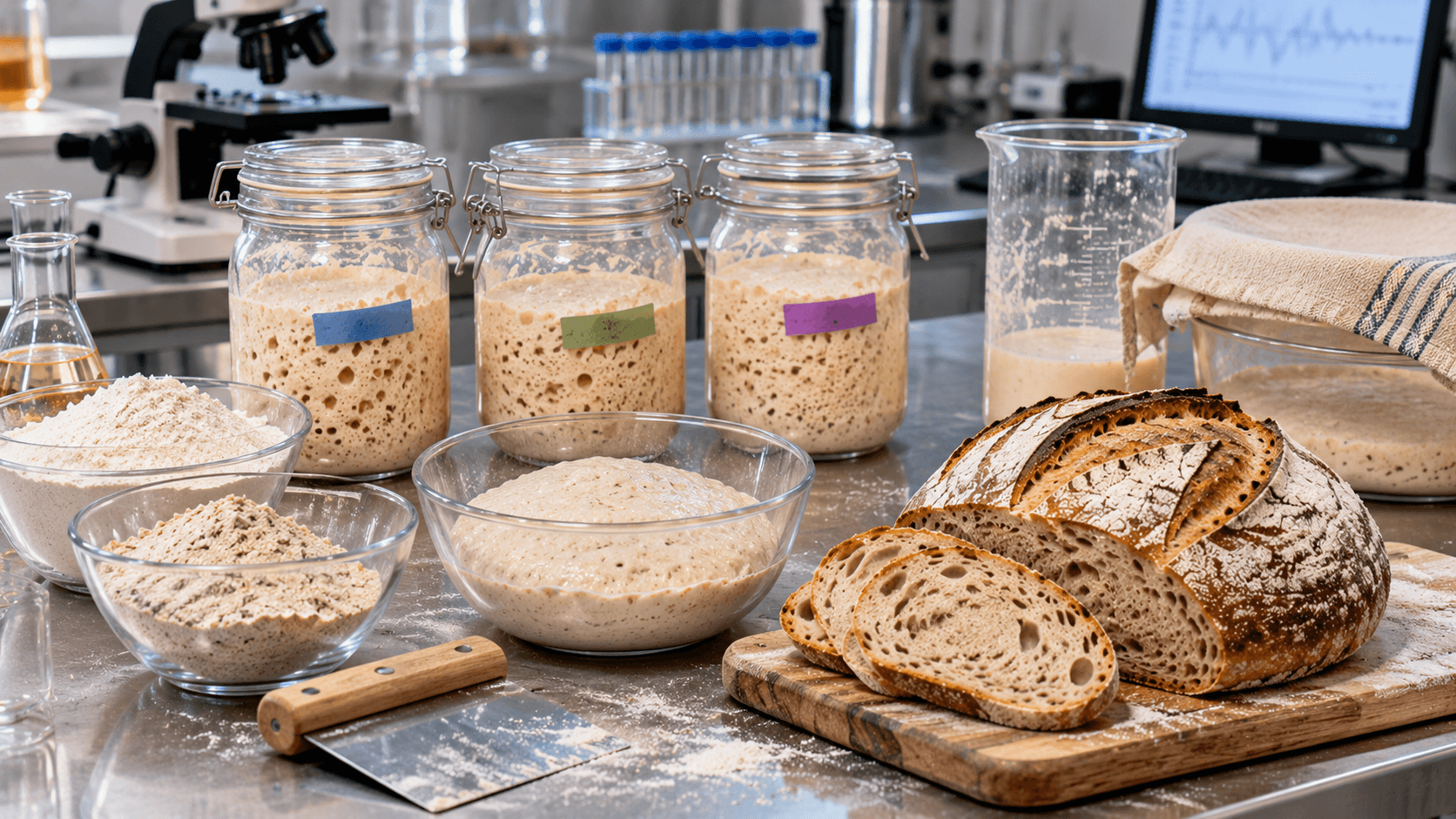
Ever wondered whether the little community living in your sourdough starter changes more than the flavor of your bread? A 2026 study offers an interesting answer: breads made with a carefully chosen mix of sourdough bacteria showed similar laboratory protein-digestibility results to conventional sourdough, even with a shorter fermentation. The biggest difference showed up in the compounds linked to aroma.
So, no, this doesn't mean a special starter makes bread magically easier to digest. But it does show that who's fermenting your dough can matter just as much as how long it sits. Here's what the Food Chemistry study found, and what you can take back to your kitchen.
At a Glance: What Changed in the Bread?
First, the bread held its own on protein digestibility
When the researchers tested how bread proteins broke down in a laboratory digestion model, the loaves made with their selected bacteria performed within the range of ordinary sourdough breads.
That's worth noticing. The team used a deliberately chosen group of lactic acid bacteria rather than relying on an unpredictable mix of starter microbes. Even with a shorter fermentation, the bread showed comparable results in this particular test.
But there's a catch to the wording: “Comparable” does not mean “better.” The published findings don't show that people would digest these loaves more comfortably. They show how the samples behaved in a lab. |
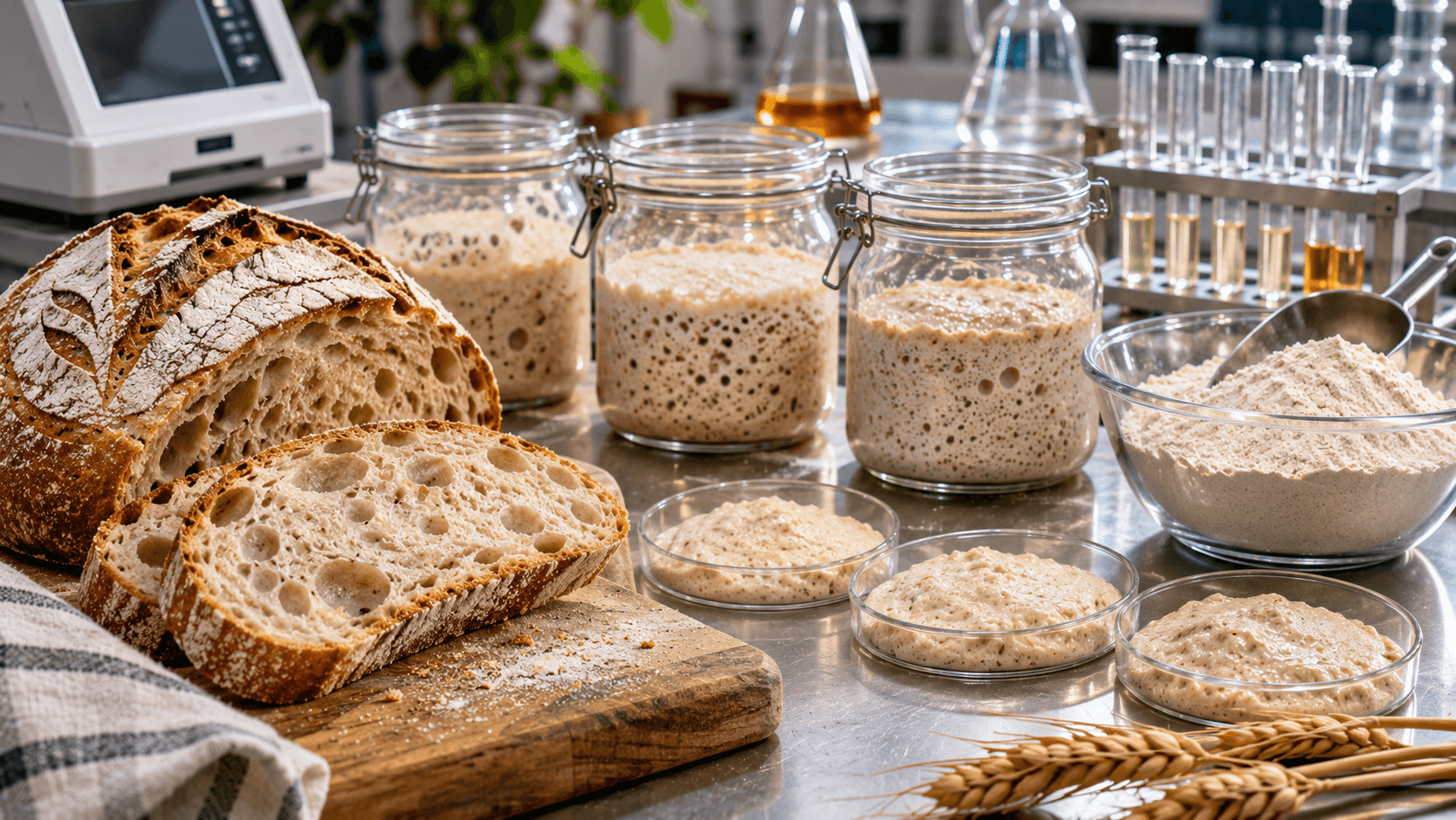 AI generated photo for American Sourdough Association. |
The other bread measurements told a similar story
Protein digestibility wasn't the only thing the team checked. They also looked at amino acids, the building blocks of protein, and other measures used to describe bread's nutritional makeup.
Again, the specially cultured loaves fell within the range of conventional sourdough. The same broad pattern appeared in the bread's predicted glycemic index, an estimate related to how carbohydrates may break down.
For a home baker, the useful takeaway is simple: shorter fermentation didn't automatically mean worse results for the measures tested. That doesn't mean you should rush your next loaf, though. The study's comparison involved a particular culture and controlled baking conditions, not the jar of starter sitting on everyone's counter.
Where the loaves really differed: aroma
Here's the part bakers may find most interesting. While several nutrition-related measurements looked similar, the breads showed different mixes of aroma compounds.
Those are the compounds that help create the familiar smells we associate with fermentation and fresh bread. The selected cultures produced a distinctive pattern that included acetic acid and certain alcohols.
Think of it this way: two loaves can have broadly similar lab measurements yet develop different aroma profiles because their microbes work differently.
One important distinction: the study measured aroma-related chemicals. It didn't prove that the specially cultured loaf smelled better or won a taste test. Different isn't automatically tastier.
And yes, fermentation time was part of the story
The researchers' chosen bacterial mix worked in a shorter fermentation system while delivering several measurements comparable to those of conventional sourdough.
That's an interesting possibility for breadmaking: choosing the right culture may help shape a process without losing particular bread characteristics. Still, a shorter lab process isn't a shortcut that can be copied blindly at home. Your flour, starter, temperature and dough handling all play a role. |
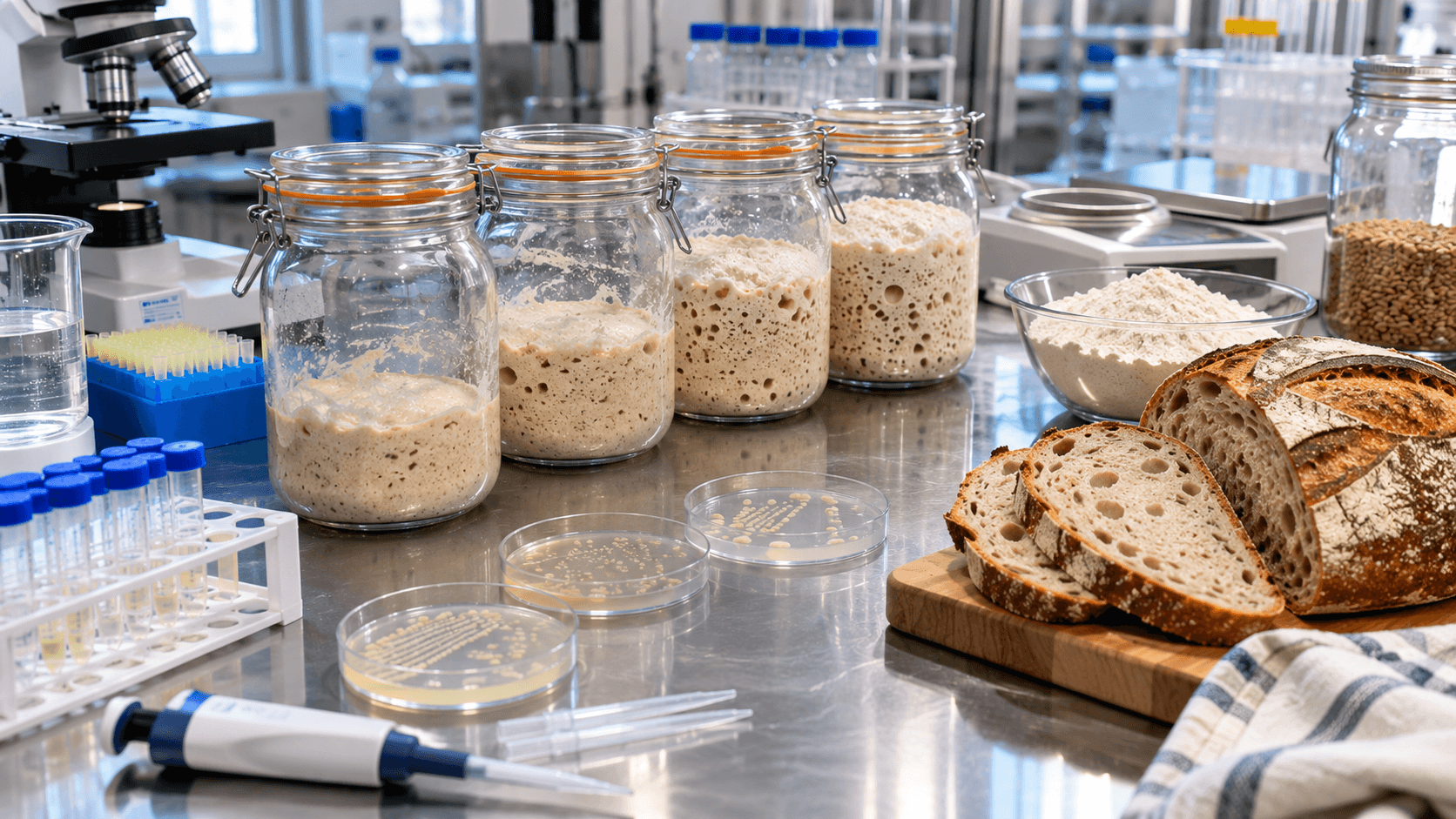 AI generated photo for American Sourdough Association. |
What did they actually bake?
To make the comparison, the team prepared six sourdough breads using different fermentation approaches and bacterial cultures. Some also included a protein-breaking enzyme called protease. They compared these with bread made using baker's yeast.
They then tested protein digestibility, amino acids, predicted glycemic index, and aroma-related compounds. You can explore the study details if you'd like the technical side, but you don't need a lab to understand the big lesson: changing the microbes can change the bread.
What can you try in your own kitchen?
You probably aren't going to build a carefully selected bacterial culture at home, and you don't need to. What you can do is pay closer attention to how your starter and fermentation routine affect the bread you bake.
Try making two loaves with the same flour and recipe, changing just one part of your routine. Perhaps compare fermentation times while keeping dough temperature and starter feeding consistent.
This won't tell you which loaf is more digestible in a medical sense. But it can teach you a lot about your starter, and that's valuable for everyday baking.
The research paper is also a good reminder to be cautious with big claims on bread labels or social media. A loaf's rise, tang or long fermentation time doesn't tell the whole nutrition story. |
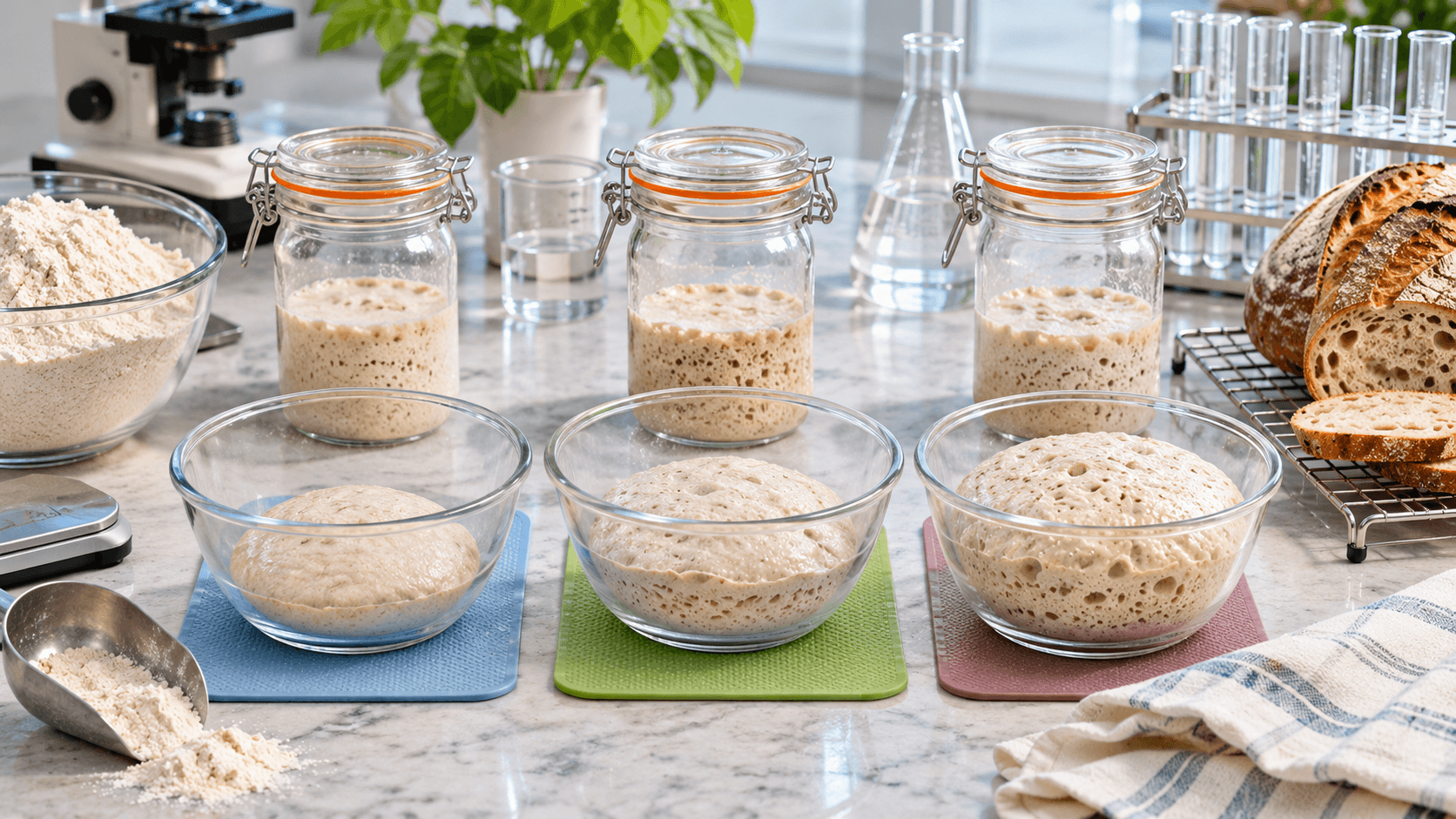 AI generated photo for American Sourdough Association. |
Does this mean sourdough is easier on the stomach?
Not based on this study alone. The researchers measured protein breakdown in laboratory conditions; they didn't ask people to eat the breads and report how they felt. They also didn't measure actual blood-sugar responses in people.
And an important safety note: regular wheat sourdough still contains gluten. Changes in protein breakdown do not make it suitable for someone who needs to avoid gluten because of celiac disease.
Those limits don't make the results uninteresting. They simply keep us from turning a useful breadmaking finding into a health promise the study didn't test.
The American Sourdough Association takeaway
Your starter's microbial mix can influence the bread you bake. In this study, selected bacteria produced loaves with protein digestibility and other lab measurements similar to conventional sourdough, while the aroma-related chemistry took a different path.
For your next bake, pay attention to more than the rise. The scent of your dough, the flavor of the finished loaf, and the way your starter behaves are all part of learning what works in your kitchen. Just leave the medical claims to studies that actually test people. |
30 Comments
Join the conversation
The comparison makes me curious about the conventional sourdough loaves. Starters vary so much, and I wonder how wide that laboratory range was.
I am a little skeptical that aroma compounds tell the whole flavor story. The loaves could smell different and still taste pretty similar once toasted.
Evan BrooksToasting is a good point. I'd be curious whether people could tell the loaves apart in a blind taste test.
I appreciate the home-kitchen takeaway here. Fermentation time is easy for me to change, but choosing specific bacteria is not something I can do with my starter.
I was surprised the amino-acid measures stayed in the conventional range too. It sounds like the shorter process changed less about the bread than I expected.
My starter has been on the counter for years, so the idea of a deliberately selected mix feels very different. I would try the bread for its aroma.
It is refreshing to see a sourdough finding without a miracle claim attached. Similar protein digestibility in a lab is useful information on its own.
The shorter fermentation is appealing for a weekday bake. I would still want to know whether it gives the dough enough time to develop the texture I like.
I wonder whether the flour choice mattered as much as the bacteria in these tests. My whole wheat loaves behave very differently from the ones I make with white flour.
The carefully chosen culture sounds promising for consistent baking. Part of what I enjoy at home, though, is that my starter changes a little with the seasons.
Mei FosterI like that part too. Mine gets noticeably tangier in summer, and I wouldn't want every loaf to come out exactly the same.
I am glad the protein results were kept separate from comfort after eating. Those are easy to mix up when people talk about sourdough.
This makes me want to keep better notes on my own loaves. I change the fermentation time often, then forget which batch had the nicest smell.
My first thought was whether the shorter ferment changes the tang. Aroma compounds are a clue, but I would still want to taste both breads.
The aroma result is the most interesting part to me. I bake for the crust and smell as much as anything the nutrition tests can measure.
I am curious how the selected bacteria would hold up after weeks in a home starter jar. Would the same group still be doing most of the work?
The lab model limitation is an important one. I know people who find sourdough easier to eat, but this test cannot tell us whether these loaves would help them.
I had never thought of my starter as a mix of microbes that could be chosen on purpose. That gives me a new way to think about fermentation time.
Susan MillerSame here. I always assumed a longer rise was the main thing, but apparently the starter itself makes a difference too.
A shorter process sounds useful for a bakery, but I am less convinced it matters in my kitchen. I usually leave dough overnight for the flavor anyway.
The predicted glycemic index staying in the usual range is worth noting. I appreciate that the piece does not turn that into a health promise.
Hannah LeeAgreed. A predicted number from a lab test is a long way from knowing how a slice affects someone after breakfast.
My neighbor and I trade starter, and our breads smell different even with the same flour. The part about which bacteria are fermenting makes sense to me.
I would love to know whether the different aroma compounds made the bread smell better to the bakers. Different on a test result does not always mean tastier.
It is good to see the lab digestion results described carefully. I have heard too many claims that sourdough is automatically easier on everyone's stomach.
The shorter fermentation caught my attention. My starter works slowly in a cool kitchen, and I wonder how much of that result depends on using the selected bacteria.
I like that the aroma changed more than the digestibility measures. As a home baker, I would be curious to smell those loaves side by side.
The distinction between comparable and better is helpful. I would have assumed a shorter fermentation meant less protein breakdown, so the lab results surprised me.
I appreciate the reminder that ordinary sourdough was the comparison. Matching its lab results in less time is interesting, even if it is not a digestive breakthrough.
I’m really glad that distinction stood out! It’s easy for the bigger health claims to overshadow the actual food science, so keeping traditional sourdough as the baseline helps put the time-saving aspect into perspective. Appreciate you chiming in!