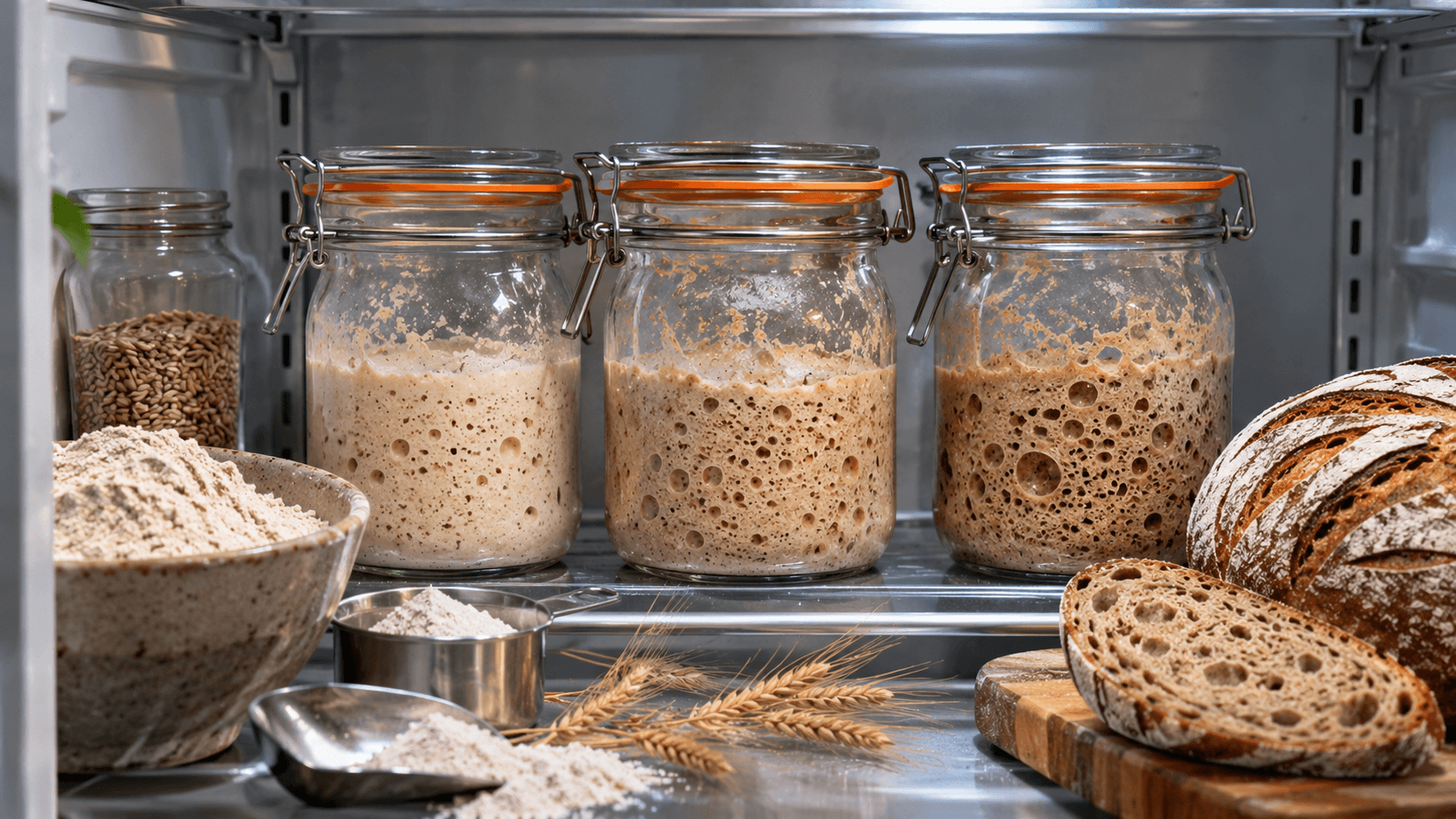
Ever pulled your rye starter from the fridge and wondered whether another couple of days would change your next loaf? A 2026 study compared starters chilled for two, four, and six days. The surprising part: the bread still held up well on several measurements, but loaves made with the six-day starter received the lowest taste ratings.
For anyone who keeps a starter tucked away between bakes, that's worth knowing. The study published in Foods suggests that a loaf can look perfectly respectable while its flavor tells a different story.
At a Glance: What Happened to the Rye Bread?
The biggest takeaway: six days affected taste more than loaf structure
If you've ever baked a loaf that rose nicely but tasted a little different from your usual batch, this result may sound familiar. In the researchers' bread comparison, the longest-refrigerated starter produced bread with the lowest taste-acceptability rating.
Yet the researchers did not see adverse effects on the measured loaf volume, crumb moisture, yield, or baking loss. In other words, the bread's physical measurements didn't tell the whole flavor story.
That doesn't mean six-day-old starter always makes disappointing bread. It means that, in this controlled rye experiment, flavor was the clearest trade-off at the longest storage time. |
 AI generated photo for American Sourdough Association. |
What was happening inside the starter?
A starter doesn't become chemically frozen in time just because it's in the refrigerator. During the cold-storage comparison, acidity and fermentation-related compounds shifted, and ethanol increased as storage time lengthened.
You don't need to measure ethanol at home to appreciate the lesson: your starter may behave differently after a longer rest. Aroma, activity after feeding, and the flavor of the finished loaf are all worth noticing.
Here's another interesting detail. The mature sourdough's acidity and pH did not mirror every change measured in the refrigerated starter. That's a reminder that what happens in the jar isn't always reflected in exactly the same way once you've mixed and fermented your dough. The study's starter and dough results make that distinction clear.
So, is four days the sweet spot?
The researchers highlighted 96 hours, four days, as a useful reference point for their rye sourdough system. For a baker who normally feeds a starter, chills it, and bakes later in the week, that's a practical interval to compare with your usual routine.
But it's not a magic deadline. The study's discussion doesn't establish that every rye starter tastes best on day four, or that a starter must be thrown away on day six.
Think of four days as a starting point for your own comparison, not a universal starter rule. Your flour, feeding schedule, starter culture, and refrigerator temperature may all differ from the tested setup.
Why your fridge routine matters
Home refrigerators can fluctuate, and a starter's condition before chilling matters too. A well-maintained culture and one that's been neglected for weeks are not interchangeable. If you need a refresher on keeping a starter, the sourdough guide covers everyday maintenance and feeding basics.
The study focused on rye starter stored at a steady 4°C. It wasn't a test of every wheat or mixed-flour culture, nor a guarantee that a starter stored longer is safe or unsafe. |
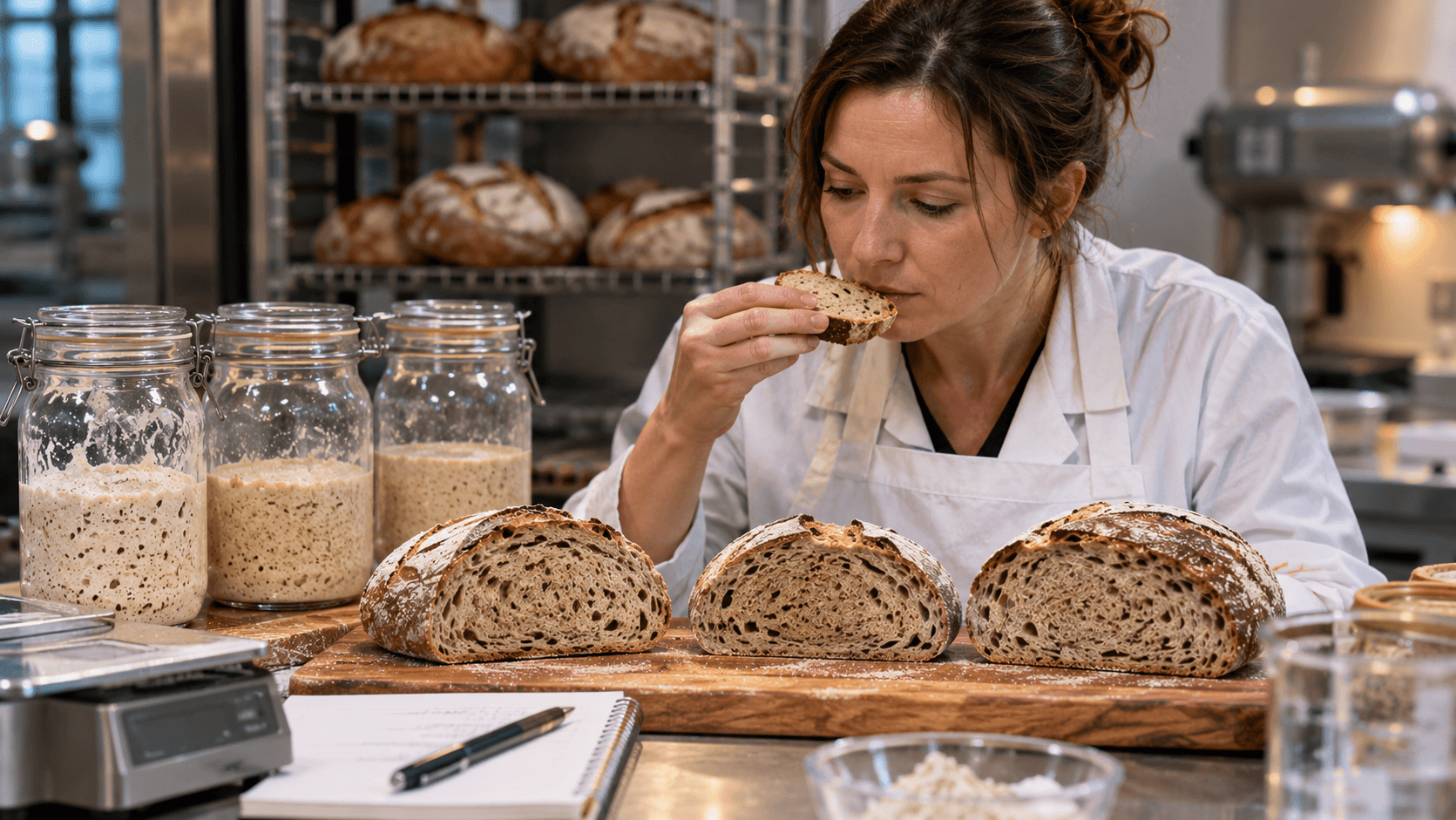 AI generated photo for American Sourdough Association. |
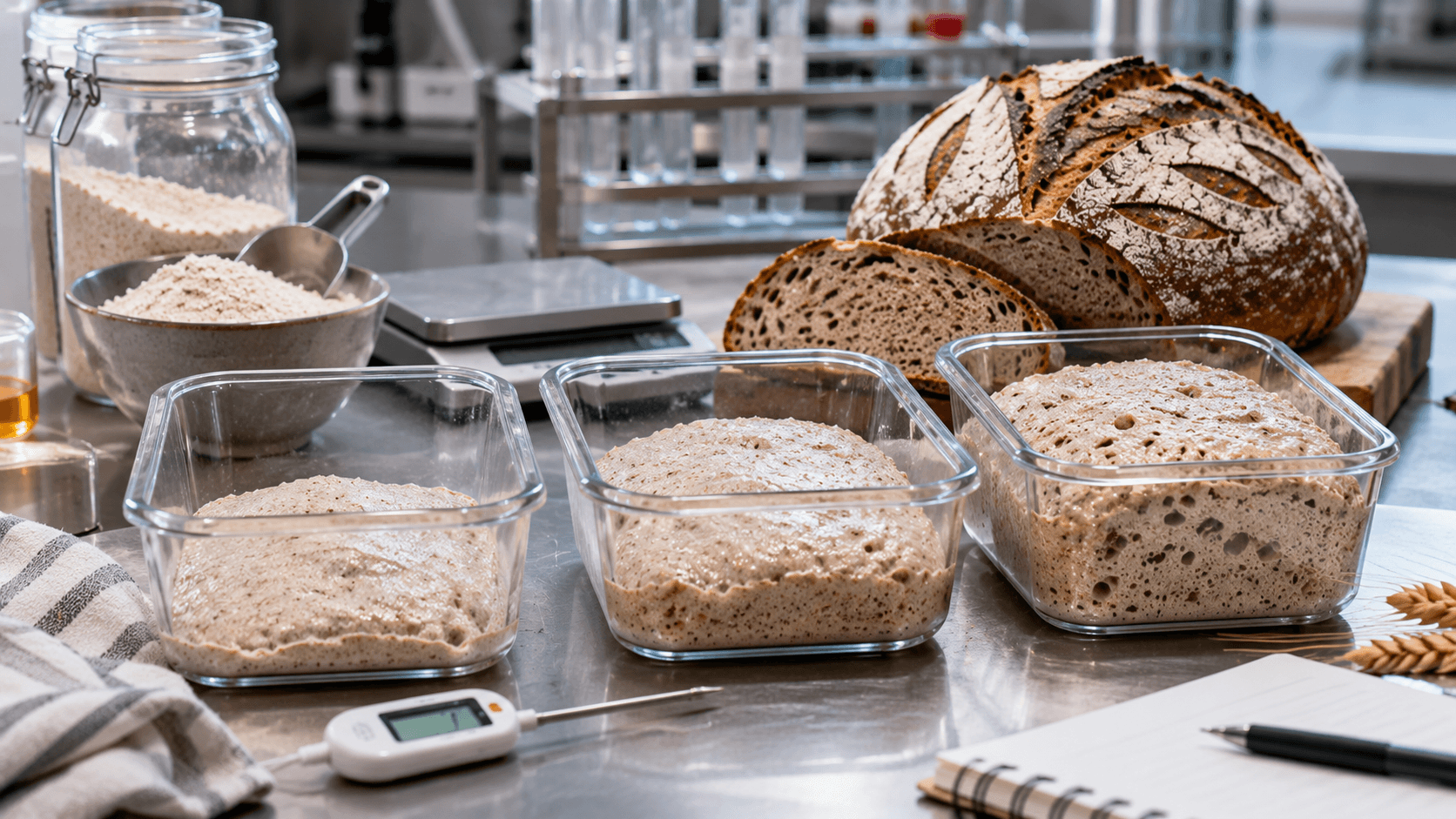
Try a two-, four- and six-day starter comparison
Curious whether you can taste the difference? You don't need lab equipment. A simple side-by-side baking project can help you understand how your own rye starter responds to time in the fridge.
Start with a healthy, recently fed starter. Prepare comparable portions and keep your flour, hydration, feeding ratio and dough recipe as consistent as you can. Then compare batches after different refrigerated rests.
One bake can be an accident; repeated results are more useful. If one loaf tastes different, try the comparison again before blaming storage time alone.
Keep the experiment about baking quality, not food safety. If you notice mold or suspicious discoloration, follow starter troubleshooting and discard guidance rather than tasting the culture.
What if your rye loaf still tastes great after six days?
Then you've learned something useful about your own routine. The study doesn't say all six-day starters produce poor bread. It reports a difference in taste acceptability among the specific loaves tested.
It's also possible that your preferred flavor differs from that of a tasting panel. Use the published results as a clue, then let careful, repeatable baking guide your personal schedule. |
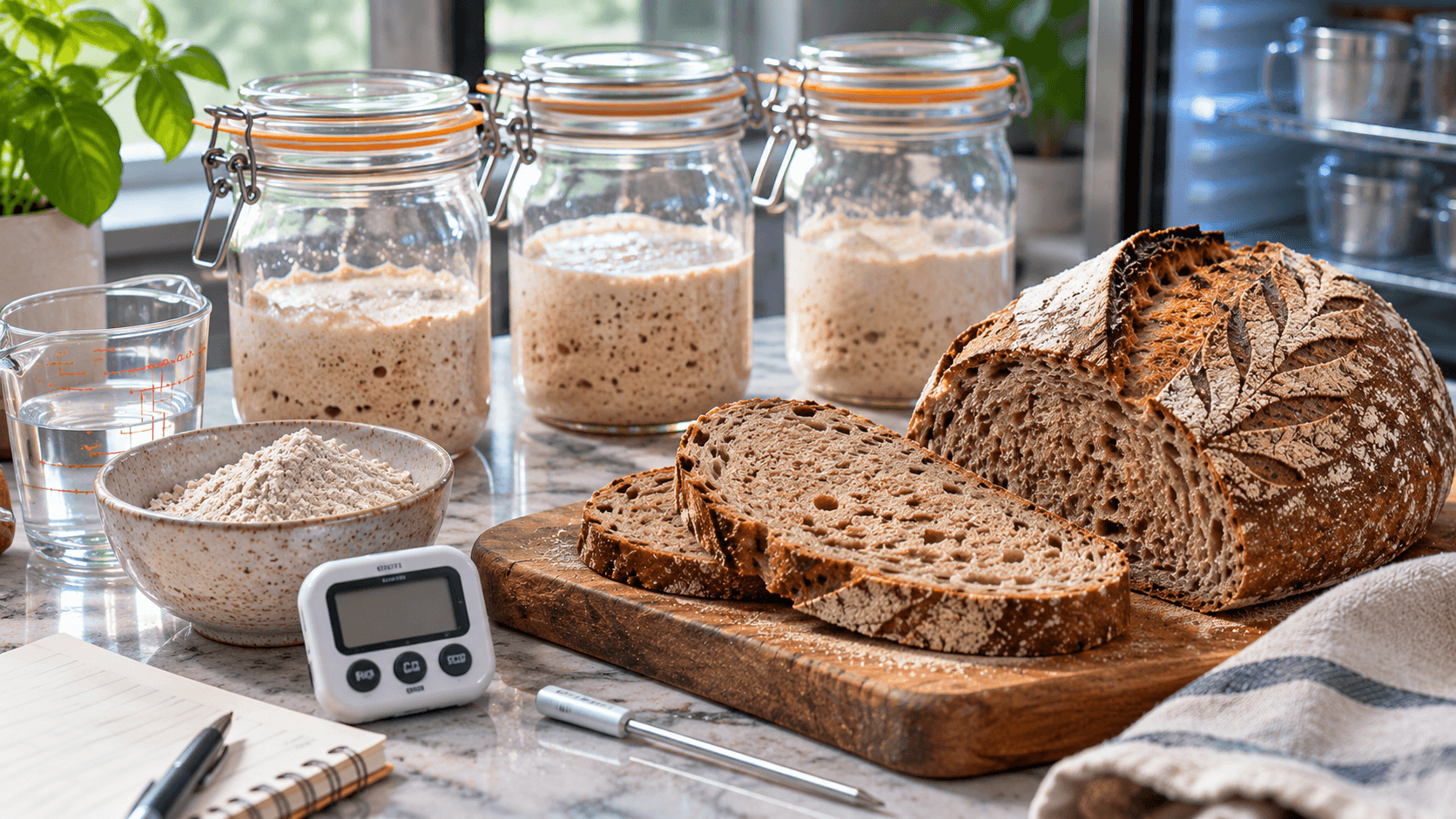 AI generated photo for American Sourdough Association. |
What the study does, and doesn't settle
The full rye sourdough paper compared starters refrigerated at 4°C for 48, 96, and 144 hours. It found changes in starter chemistry, relatively stable measured bread-production characteristics, and the lowest taste acceptability after the longest storage period.
It did not set an expiration date for all starters. Nor did it test every rye flour, every feeding method, or the warmer, variable temperatures that can occur in a home refrigerator.
So there's no need to overhaul a routine that already gives you flavorful, reliable loaves. But if your bread tastes different after a longer refrigerated rest, storage time is a sensible variable to investigate.
The American Sourdough Association takeaway
Watch the flavor, not just the rise. In this experiment, rye bread made with starter stored for six days scored lowest for taste acceptability, even though several measures of loaf structure remained unaffected.
Four days may be a useful point to check in with your starter, but your own baking notes matter more than a one-size-fits-all schedule. Next time you open the fridge, pay attention to how the starter smells, how it responds to feeding and, above all, how the bread tastes. |
49 Comments
Join the conversation
I would have liked more detail on what tasters disliked about the six-day loaf. Was it too sour, or was there another flavor coming through?
My weekend baking schedule often puts the starter at four days in the fridge. It is nice to see that period tested rather than only fresh starter.
I appreciate the distinction between bread quality and starter safety. The six-day result gives me something to test with my rye starter, not permission to ignore an old jar.
My kitchen fridge temperature shifts whenever it gets crowded. The 4 degree setting seems important here, and I would not expect my results to match perfectly.
It is reassuring that the six-day starter still made bread with acceptable volume in these conditions. I would check the flavor before serving that loaf to guests, though.
I am a little surprised the taste dropped at six days while the other bread measures stayed steady. It shows why the usual loaf measurements do not tell everything.
Rye can have such a strong flavor already that I might miss a small change. I would want to taste the loaves side by side before changing my routine.
The 48, 96 and 144 hour points are easy to picture in a baking schedule. I would be curious whether the flavor change happens gradually or mostly near day six.
I have been trying to keep better notes on my bakes. Fridge time is one more thing to write down when a loaf tastes different from the last one.
Sam WhitakerSame here. I started writing the date on the jar lid because I could never remember how long it had been in the fridge.
More ethanol after longer storage sounds familiar from the smell of my rye starter. I had never thought to compare that with the finished bread's taste.
I appreciate the reminder that this was a storage experiment, not a safety test for an old starter. Those are easy things to mix up.
My partner likes a tangy rye loaf, so I wonder if we would rate the six-day bread differently. Lower taste acceptability does not always mean everyone will dislike it.
The 39-degree fridge setting caught my eye. Mine runs a little warmer, so I would not expect the exact same result after six days.
I am a little surprised that bread yield held up after the longer storage. It makes the lower taste rating more worth watching, since appearance might not give it away.
It is reassuring that moisture and baking loss held up in the test. Still, taste is the part that would decide whether I bake with that starter again.
George H.Exactly. If the flavor is off, a good crumb won't save it for me.
The warning about neglected cultures matters. A study ending at 144 hours does not tell me what to do with the jar I forgot for several weeks.
Renee FosterExactly. Six days and several weeks are very different situations. I wouldn't use this study to make a call on an old jar.
I wonder whether feeding the starter before baking would change the six-day taste result. That is usually my first step after taking it out of the fridge.
Nina R.I'd like to know that too. I always feed mine after taking it out, so I'm curious whether the taste difference would stick around.
The point about acceptable-looking bread rings true. I have made loaves that rose beautifully but had a flavor nobody at home really liked.
I bake rye on Sundays, so the two-day and six-day comparison is practical for me. It would be interesting to see if my usual recipe follows the same pattern.
I like that the results separate changes in the starter from changes in the bread. A jar can smell different without every measure of the finished loaf getting worse.
My starter lives at the back of the fridge, where it is coldest. The stated temperature helps me see whether my own setup is close to what they tested.
I would hesitate to call six days too long based on one rye sourdough system. Still, it is a useful nudge to taste the loaf rather than judge the rise alone.
The steady crumb moisture and baking loss are interesting, but flavor is the part my family comments on. I might plan rye baking a little earlier in the week.
I have served rye bread that rose nicely but tasted sharper than expected. It never occurred to me that the time my starter spent in the fridge might be part of it.
Four days is about how long my starter sits between feedings. I am glad the comparison includes that middle point rather than jumping straight from fresh to six days.
Taste acceptability sounds a bit subjective to me, though that is what matters when the bread reaches the table. I would love to know what flavors the tasters disliked.
I usually smell the jar before deciding whether to bake. The note about ethanol increasing with longer storage helps explain why it smells stronger after a few days.
Chris MorganThat stronger smell always makes me pause too. Have you noticed a difference in the bread's flavor when the jar smells that way?
I like the reminder that this was a specific rye starter. My wheat starter behaves differently, so I would be careful about applying the six-day result to every loaf.
This gives me a good reason to bake two rye loaves with the same recipe, one after two days and one after six. My family can judge the taste.
Omar K.A family taste test sounds fun. I wonder if anyone will notice a difference without knowing which loaf is which.
The bread volume staying about the same surprised me. I had assumed a starter that tasted different after six days would also give me a flatter loaf.
My fridge runs warmer than 39 degrees, especially near the door. I wonder how much that would change the results for someone keeping a jar at home.
I appreciate that the study compared two, four and six days at the same temperature. That makes the flavor result easier to understand without treating every forgotten starter as ruined.
I tend to leave my starter in the fridge from one weekend to the next. Six days giving the lowest taste rating makes me curious whether I would notice it at home.
The difference between a good rise and good flavor is useful to know. I usually judge my rye loaf by how it looks, so I may pay closer attention to taste.
Four days is about how long my starter usually waits between bakes. I would like to try a two-day batch beside it and see what changes.
The unchanged bread volume surprised me. I would have expected the six-day starter to make a flatter loaf, so I am glad they measured taste too.
I would be careful applying this to every starter. Rye behaves differently from the wheat starter I keep, but the comparison is still useful.
Ben KellerAgreed. My wheat starter handles a week in the fridge pretty well, but I wouldn't assume rye tastes the same after that long.
I like that they compared two, four, and six days at the same fridge temperature. It makes the taste result easier for a home baker to think about.
My rye starter often sits in the fridge for almost a week. The lower taste rating at six days has me curious about my next loaf.
Rye starters are definitely resilient, so it makes total sense that you usually get away with a week! It’s always fascinating how those extra couple of days shift the acidity and flavor profile. Definitely report back on how your next loaf turns out—I’d love to hear if you notice a difference!
The difference between a good rise and good flavor is helpful to know. I usually judge my rye loaf by how it looks, so I may pay closer attention to taste.
Maria G.Same here. A loaf can look great and still taste a little too sharp, especially the next day.