
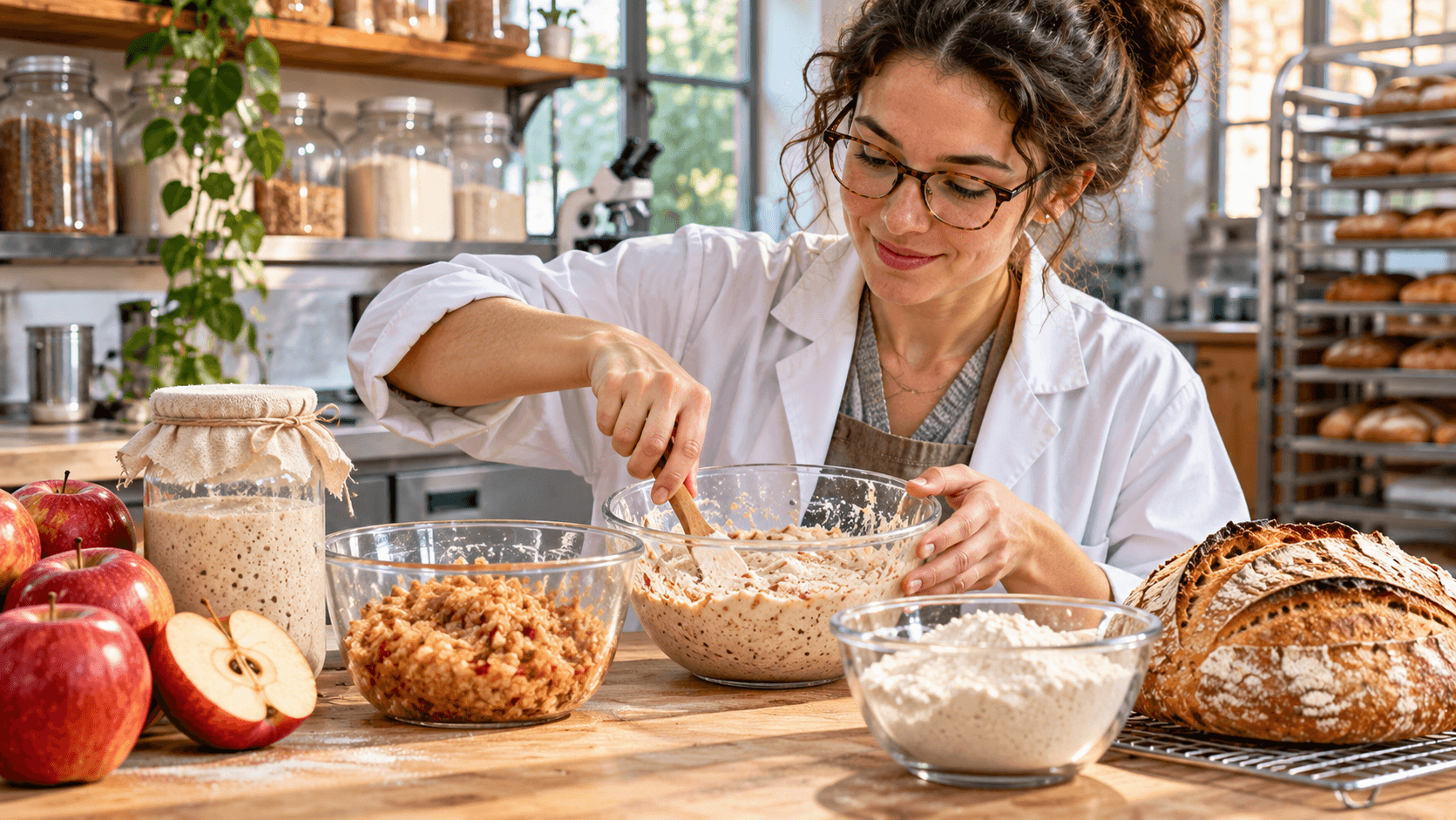
Could the pulp left behind after pressing apples help bread stay mold-free longer? An October 20 study in European Food Research and Technology explores apple pomace as a fermented bread ingredient. The reported results come with a trade-off familiar to sourdough bakers: smaller loaves and firmer crumb.
For anyone who loves experimenting with dough, the interesting question is whether an upcycled ingredient can offer useful properties without sacrificing the kind of bread you enjoy eating.
At a Glance
What Is Apple Pomace?
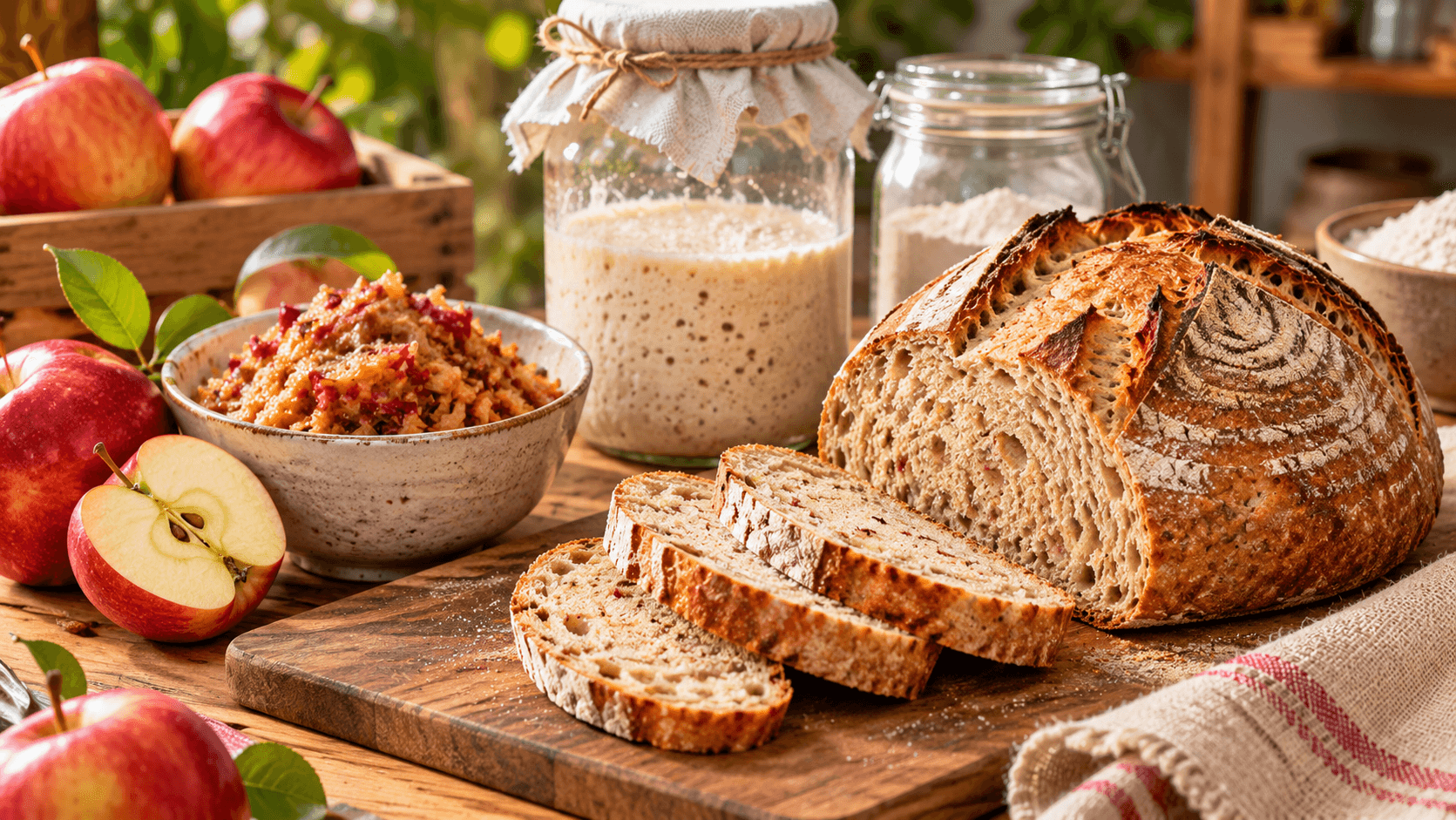
Apple pomace contains the solid material left after juice production, including pulp and peel. Finding food-grade uses for this by-product could make better use of material that might otherwise be discarded. Its fiber and other components also make it behave differently from wheat flour in dough. |
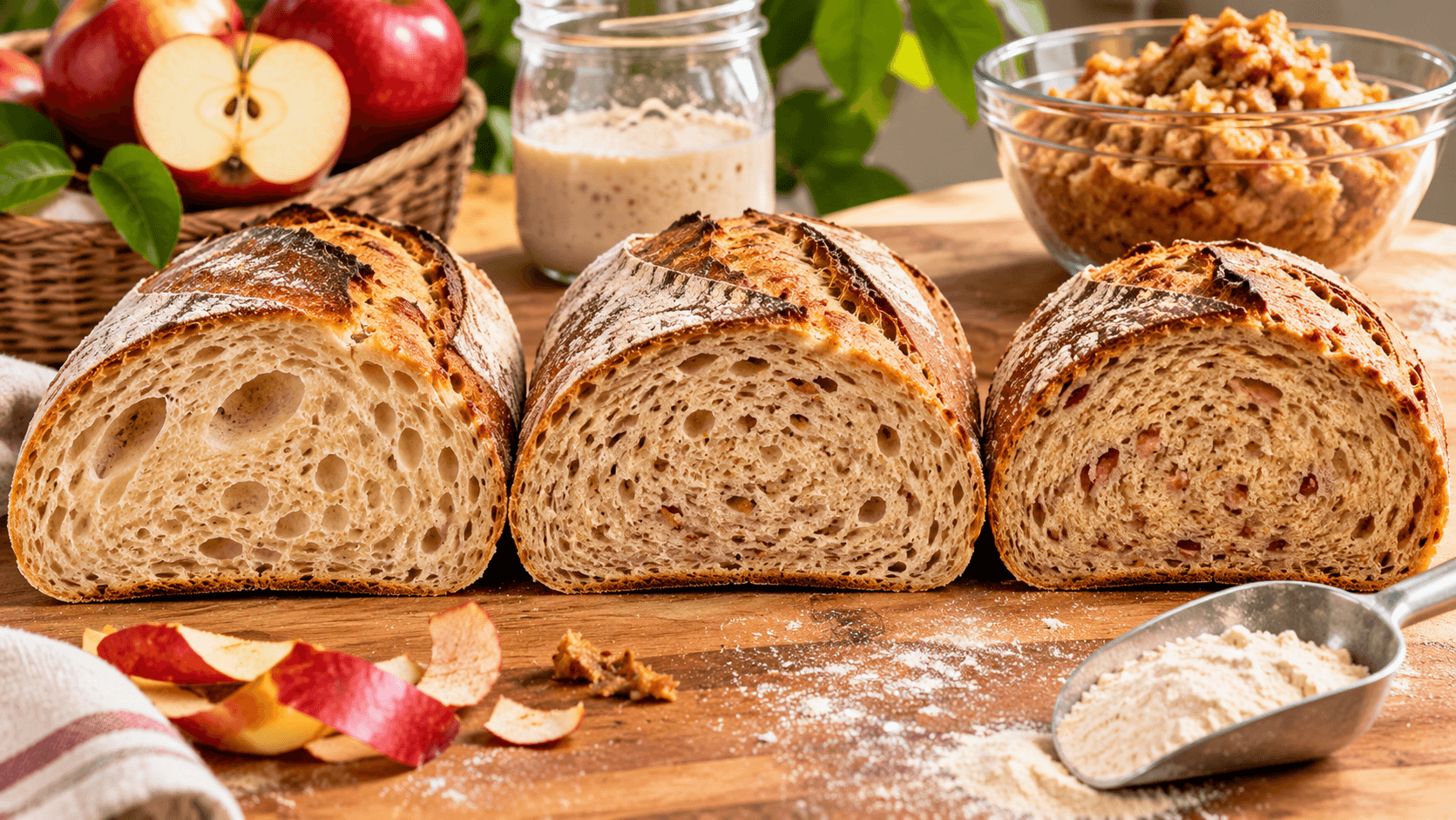 AI generated photo for American Sourdough Association. |
What the Study Found
The research paper describes fermentation using Lactiplantibacillus plantarum, a lactic acid bacterium. Fermented and unfermented apple additions were compared in wheat bread at 15% and 20% replacement levels.
Both additions reportedly extended mold-free shelf life under the experimental conditions. Fermentation offered an additional limited effect on early fungal surface growth, while loaf volume decreased and crumb firmness increased, particularly at the higher replacement level.
Better preservation does not automatically mean better bread. The reported results indicate that the ingredient's benefits and effects on texture need to be considered together. Further optimization is needed.
Type III sourdough is generally a processed sourdough ingredient, often dried, rather than a living starter used as the sole leavening agent. Do not assume the study's fermented ingredient behaves like the starter you feed every week.
Apple flavor, crumb softness and rise are separate qualities. The supplied research findings do not establish that the bread tastes better, offers a health benefit or stays safe for a particular number of days in a home kitchen. |
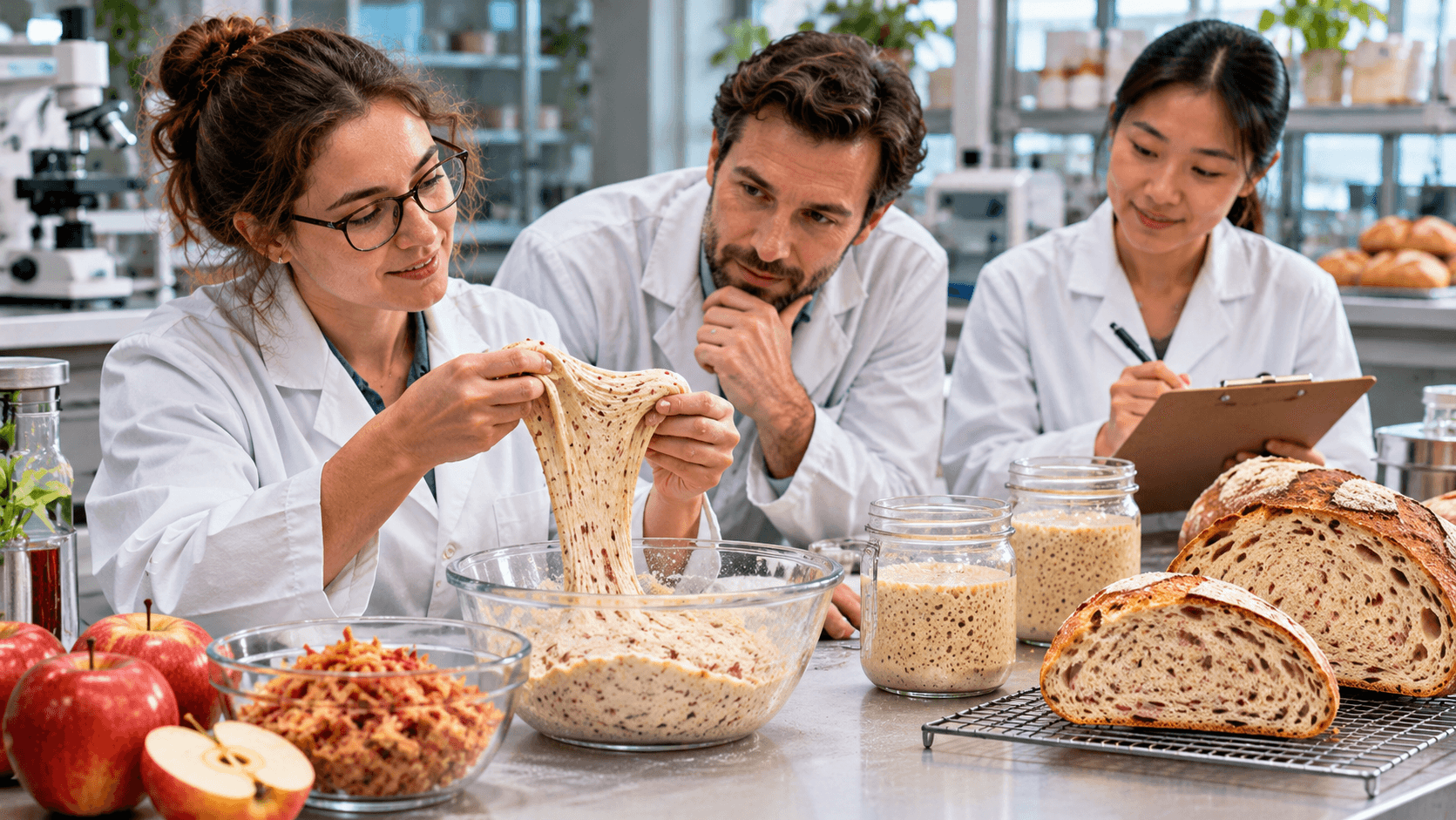 AI generated photo for American Sourdough Association. |
Why Loaf Volume and Crumb Matter
If you have ever added whole grains or fruit ingredients to a familiar dough, you may have noticed that the dough no longer handles the same way. Fiber can affect water distribution, and replacing wheat flour can reduce the proportion of gluten-forming proteins. These are plausible baking considerations, not proof of the mechanism behind this particular study.
Start with a familiar sourdough formula when evaluating a new food-grade ingredient. A consistent baseline helps you notice whether a change affects dough strength, expansion or the cooled crumb.
Do not add extra water simply because an ingredient contains fiber. Follow a validated formula for that ingredient, and use its specified hydration and handling instructions. The sourdough baking guide is useful for understanding ordinary fermentation and dough development.
Think about the bread you actually want. A firmer loaf might suit toast differently from a soft sandwich loaf. A smaller loaf is not necessarily a failed bake, but it may be a poor fit for the texture you intended.
Decide which baking result matters most before judging a new ingredient. Record observations of dough handling, rise and texture separately so you can understand the trade-offs. |
 AI generated photo for American Sourdough Association. |
A Baker-Friendly Checklist for Future Experiments
Before trying apple pomace in bread, look for a validated recipe using a specified food-grade ingredient. The original research is a starting point for understanding the experiment, not instructions to ferment kitchen scraps.
Change one variable at a time when following a tested variation. It is easier to interpret the result when your flour, starter routine and baking equipment remain consistent. Refer to established sourdough techniques when troubleshooting the baseline loaf.
What About Bread Storage?
The reported mold-free shelf-life result applies to the study conditions. It is not a guarantee of household storage safety. Follow USDA guidance on moldy food and discard the entire loaf if bread develops mold rather than cutting away the visible patch.
The Takeaway
Apple pomace is an intriguing candidate for upcycled bread ingredients. The study's findings suggest preservation potential alongside texture compromises. For home bakers, the useful lesson is to balance crumb, rise and ingredient quality, and wait for a validated formula before trying this particular ingredient in your next bake. |
22 Comments
Join the conversation
Using the peels and pulp from juice production makes sense to me. I hope future testing looks at how much preparation the pomace needs before baking.
Thanks for raising that. How the pomace is prepared would be important to understand before this becomes practical for home bakers.
I'm skeptical that a longer mold-free period would make up for smaller loaves in my kitchen. We usually finish a loaf before mold is an issue.
A firmer crumb might actually work well for toast. I'd be interested to see whether the pomace bread holds up better after a few days.
I appreciate the clear warning that the study isn't a validated household recipe. It saves home bakers from expecting the same results with wet apple pulp.
Our local cider press ends up with plenty of pulp during apple season. If this works at a bakery scale, it could be worth exploring here.
That’s a compelling local use for a seasonal by-product. Bakery-scale testing would need to weigh the shelf-life benefit against the smaller, firmer loaves.
The difference between fermented and unfermented apple pomace is the part I'm most interested in. It would be nice to see photos of both loaves.
My sourdough sometimes comes out dense already, so the smaller loaves worry me. Still, using apple scraps instead of throwing them out has appeal.
We hear you: reduced loaf volume may be a tough sell if you’re already working toward a lighter sourdough. Making better use of the leftover pulp is appealing, but the bread still has to be enjoyable.
Tom P.Same here. Maybe a smaller amount would be easier to work into a home sourdough recipe.
I'd like to know how the fermented pomace tasted compared with the unfermented version. Shelf life is helpful, but flavor would decide it for me.
We press apples every fall, so finding a use for the leftover pulp caught my attention. I appreciate the reminder that this isn't a home recipe yet.
Thank you! It’s an interesting use for pressing leftovers, but the study’s fermented ingredient isn’t a validated home-baking recipe.
The 15% and 20% replacements seem fairly high to me. I wonder if a smaller amount would keep more of the loaf's volume.
That’s a good question. The study tested 15% and 20% replacement, so we can’t tell from these results whether a smaller amount would preserve more volume.
The longer mold-free shelf life sounds useful, but a firmer crumb gives me pause. Texture matters a lot in the bread I make at home.
We agree, texture matters. The longer mold-free shelf life came with a firmer crumb, so it’s a trade-off rather than an unqualified win.
Dave ThompsonI agree. Longer shelf life is nice, but I'd want to taste a slice before trading away a soft crumb.
I like the idea of using pulp left after pressing apples. I would be curious whether the apple flavor comes through in the finished bread.
Maria G.I wondered that too. A little apple flavor could be nice in a breakfast loaf.
We’d be curious about that too. The results highlighted here don’t establish how noticeable an apple flavor is in the finished bread.