
Conny Jo
Nov 19, 2026
NOVEMBER 19, 2026✦WEEKLY EDITION✦ ISSUE # 2 |
The Baker’s Bench A gathering place for better baking. YOUR WEEKLY SOURDOUGH EDITION |
🌾 FROM THE STARTER JAR
✨ Hey, Fellow Bakers!
What if your next sourdough experiment starts with kombucha, a different bag of whole-wheat flour, or a few extra days in the fridge?
This week at The Baker’s Bench, we’re exploring three newly published reads: kombucha-based sourdough, flour particle size, and cold-stored rye cultures.
There’s also a simple kitchen test, a practical discard idea, and a reminder that the best bake notes are the ones you can repeat. Pull up a stool. 🥖 |
🧠 THINK YOU KNOW SOURDOUGH?
What does “hydration” measure in a bread formula?
👇 Answer at the bottom. |
🗓️ Your Week, in 10 Seconds 🔬 The science: A five-day kombucha starter experiment challenges what we think we know about building a culture.
🌾 The kitchen test: See why whole-wheat flour fineness could change your next loaf, then try a two-loaf comparison.
❄️ The fridge question: Does a longer cold rest change rye bread’s flavor? Explore the 48-, 96-, and 144-hour findings.
🍳 The weekend bake: Put extra starter to work with easy skillet sourdough discard flatbreads, no oven required. |
 |
| 💬 9 Comments |

🫙 Can a kombucha culture become a bread-ready sourdough in just five days? In a 2026 Food Science & Nutrition study, researchers inoculated wheat flour with liquid kombucha and developed a mature culture for experimental baking. The resulting bread was broadly comparable to conventional sourdough in loaf volume, crumb structure, and sensory acceptance.
🔬 There was another intriguing finding: the kombucha bread showed higher measured phenolic content and antioxidant capacity. But laboratory antioxidant readings are not proof of health benefits, and the five-day method isn't guaranteed to work with commercial bottled kombucha.
🥖 For your kitchen: Keep your reliable starter as a control, record temperature and feedings, and treat this as a fermentation experiment, not a shortcut. Curious about the precise method and what the study actually tested? Explore the five-day kombucha study. Read More... |
9 readers are talking about this | Top first |
PN | Priya N. · 1 week ago I am curious how much the results depend on the black tea culture they used. A bottle from the grocery store might behave quite differently.
|
| 💬 26 Comments |
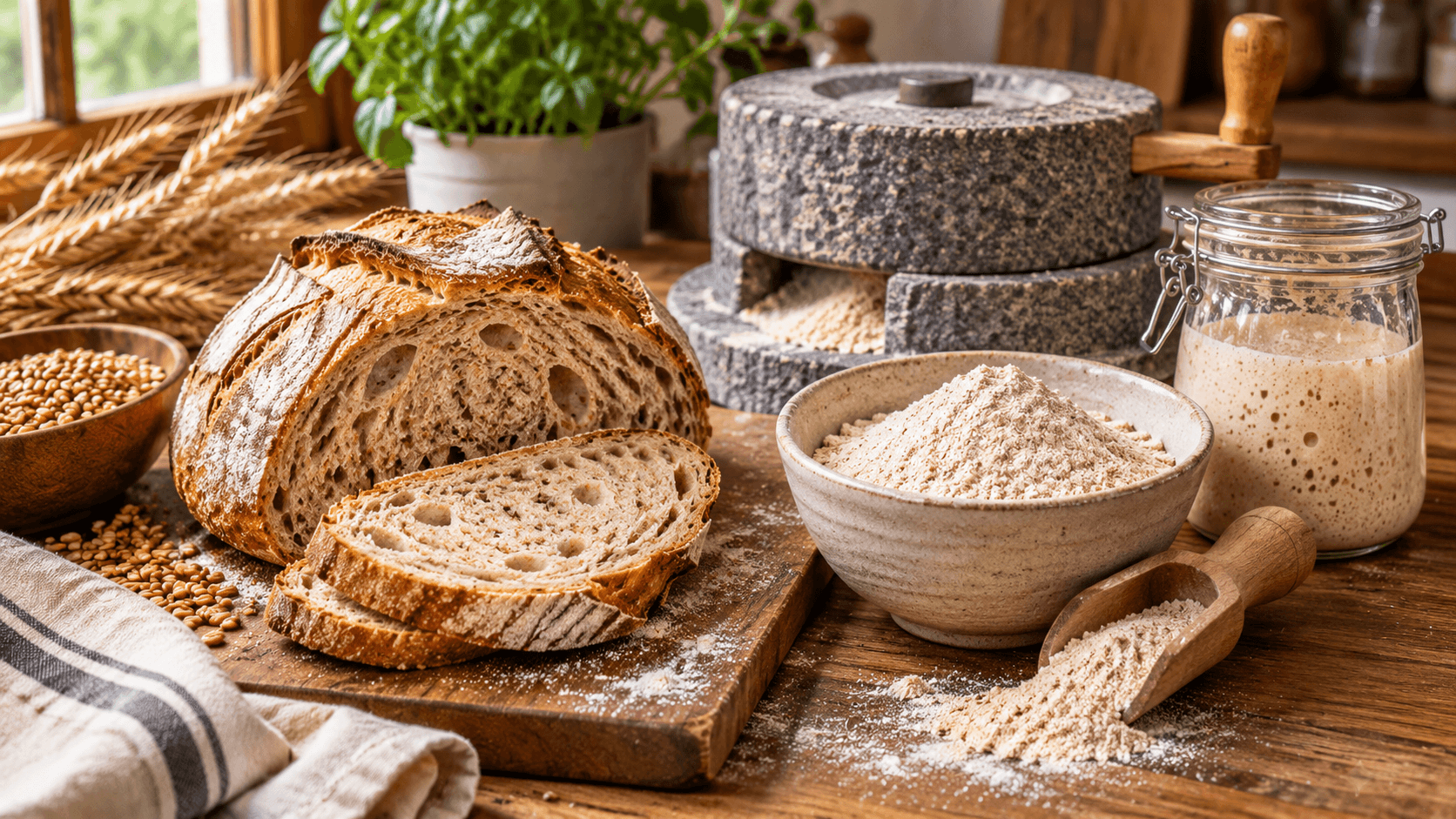
🌾 Could the grind of your whole-wheat flour be holding back your loaf? A 2026 study published in LWT compared wheat classes, flour particle sizes, and fermentation times. Under the researchers' tested conditions, finer flour was associated with 13.48% more bread volume and 23.23% less hardness.
📊 Those figures aren't a promise for every home bake. Wheat type and fermentation time mattered too, and finer flour can change dough handling and water absorption. The surprise isn't simply that fine is better; it's how several variables work together.
👩🍳 Try this: Bake two small loaves with coarser and finer whole-wheat flour, keeping the formula and dough temperature as consistent as possible. Compare rise, softness, and crumb after cooling. See the results and the two-loaf test. Read More... |
26 readers are talking about this | Top first |
OP | Owen Patel · 1 week ago I would still start with the wheat I like the taste of. A taller loaf is nice, but flavor matters more to me than a soft crumb.
|
| 💬 40 Comments |
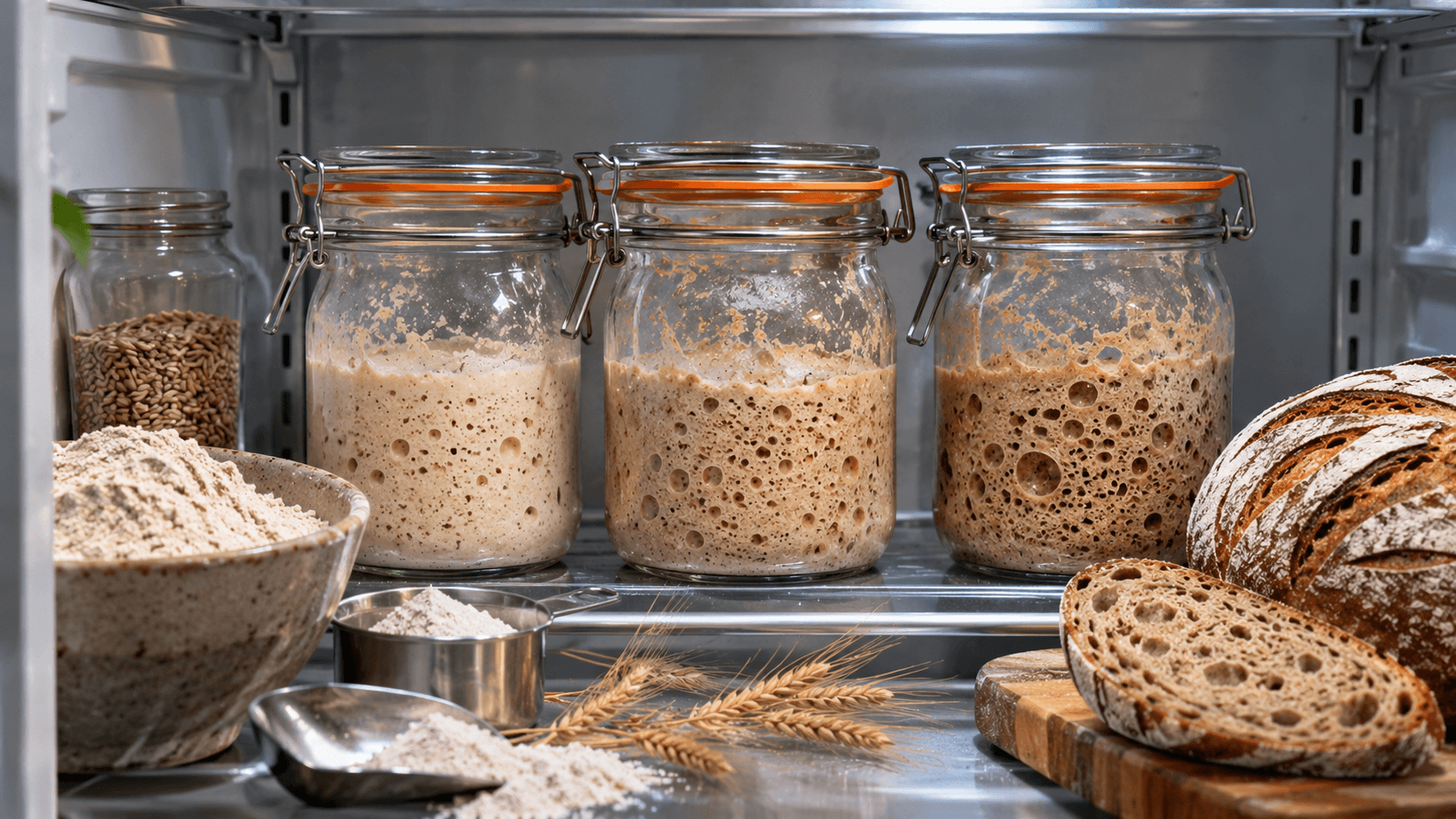
❄️ Does leaving rye sourdough in the fridge longer change the bread, or just your schedule? A 2026 study in Foods compared starters refrigerated at 4°C for 48, 96, and 144 hours. Bread-production measurements remained relatively stable across several tests, but loaves made with the six-day starter received the lowest taste ratings.
🧪 As storage time increased, the starter's chemistry changed too. That doesn't establish a universal six-day limit: the study used specific rye cultures and controlled conditions, not every home refrigerator or feeding routine.
🍞 For your next bake: Note how long your starter rests cold, how it smells and behaves after feeding, and most importantly, how the finished loaf tastes. A good rise doesn't tell the whole flavor story. Compare the two-, four-, and six-day findings. Read More... |
40 readers are talking about this | Top first |
SW | Sam Whitaker · 1 week ago I have been trying to keep better notes on my bakes. Fridge time is one more thing to write down when a loaf tastes different from the last…
|
🧪 Starter Science: Three Variables Worth Tracking
Change one thing, not five. A starter’s behavior can shift with flour type, temperature, feeding ratio, and time. When everything changes at once, it’s hard to tell what made a difference.
For your next bake, keep the recipe steady and compare one variable:
Start with the starter-monitoring research for context. A notebook is more useful than a perfect-looking jar. |
✨ Quote Of The Day |
“The best sourdough experiment is one you can repeat, and one you’ll still enjoy eating.” — The Baker’s Bench |
 |
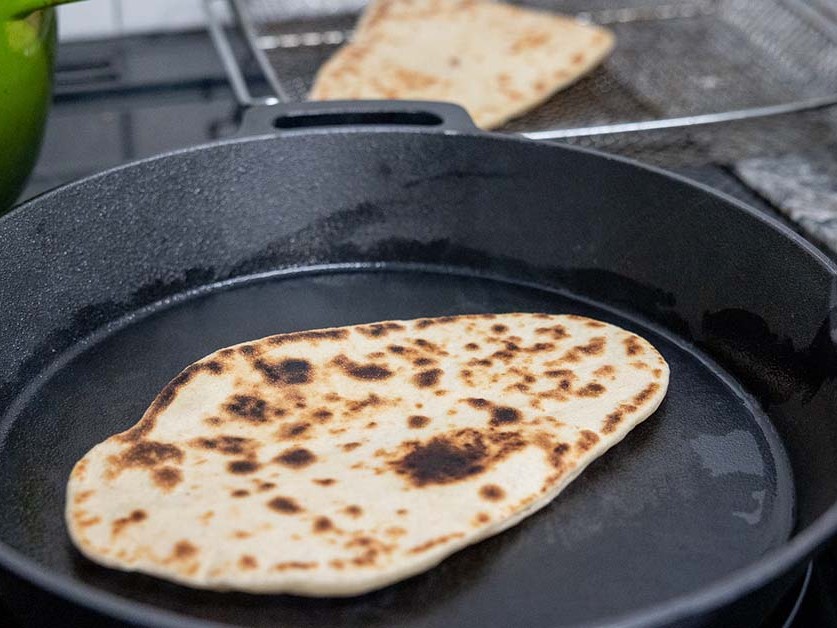
🍽️ Skillet Sourdough Discard Flatbreads
Illustrative photo: Cultures for Health. The recipe below is The Baker’s Bench's own simple variation.
🥖 Warm, flexible flatbreads without turning on the oven. A little sourdough discard adds tang to these quick skillet breads. Serve with soup, hummus, or a swipe of garlic oil.
⏱️ Time: About 30-40 minutes 🍞 Makes: 4 small flatbreads
🧂 Ingredients
👩🍳 How to Make Them
💡 Baker’s tip: If the dough springs back while rolling, let it rest another five minutes. For extra inspiration, see this sourdough flatbread guide.
Food-safety note: For more starter-care guidance, see this Baking’s sourdough guide. Don't use discard from a newly established or contaminated starter; discard any starter with mold or unusual discoloration. |
 |
🙌 This Week’s Technique: A Better Two-Loaf Test
Wondering whether finer flour changes your crumb? Make two small doughs using the same formula and starter percentage, water, salt, dough temperature, and fermentation schedule. Change only the whole-wheat flour grind.
Take photos at mixing, shaping, and slicing. Compare dough feel, rise, loaf volume, and crumb texture, not just the size of the holes. Whole-wheat flours can absorb water differently, so write down any handling differences.
The 2026 whole-wheat study is the inspiration, not a guarantee that one flour will win in your kitchen. Small, controlled changes make the lesson clearer. |
💡 Interesting Facts |
💡 Interesting Fact: In baker’s percentages, flour is always 100%. A dough with 750 g water for 1,000 g total flour has 75% hydration, even if it uses several types of flour. |
 |
Gear & Kitchen Finds · Retail recommendation |
King Arthur Baking |

Essential Digital Scale |
| ★★★★★ |
| $29.95 |
⚖️ For repeatable bakes: Weigh flour, water, and starter instead of relying on cup measurements. The tare function makes it easy to measure each ingredient in the same bowl, especially helpful when comparing two flour grinds. See the scale details. |
|
| View Product |
Gear & Kitchen Finds · Retail recommendation |
King Arthur Baking |

Standard Dough-Rising Bucket |
| ★★★★★ |
| $9.95 |
📈 See the rise, not just the clock: A translucent dough bucket with volume markings helps you track bulk fermentation. Its lid and easy-grip handles are useful when checking two test doughs side by side. Explore the rising bucket. |
|
| View Product |
Gear & Kitchen Finds · Retail recommendation |
King Arthur Baking |

Petite Sourdough Crock |
| ★★★★★ |
| $26.95 |
🫙 A little jar with a useful view: This one-pint clear crock has rise markings and a loose-fitting lid, so you can follow a smaller starter's activity without maintaining a huge batch. Handy for regular feedings and reducing discard. View the starter crock. |
|
| View Product |
💬 For Your Baking Group Chat
Send this: “If you could change just one thing in your next loaf, flour grind, starter timing or fridge rest, which would you test first?”
Compare results with a friend, then read our whole-wheat flour breakdown before picking a variable. |
 |
📸 Photo: GAIL’s Bakery — Dr. Vanessa Kimbell with a sourdough loaf.
👩🍳 Baker Spotlight: Dr. Vanessa Kimbell 🌾 What if better bread begins with more than a perfect rise? Dr. Vanessa Kimbell, founder and course director of The Sourdough School in England, brings together hands-on sourdough teaching, fermentation research, and an interest in diverse grains.
🥖 Her approach encourages bakers to think about flour variety, long fermentation, and the people sharing the loaf, not just how dramatic the crumb looks. It's a useful reminder that baking is both a craft and a series of thoughtful choices.
💡 Try this: Add one new whole grain to a familiar formula and jot down how the dough feels, smells, and tastes. Read more about Vanessa's baking philosophy. |

📸 Bake of the Week |
 Illustrative whole-wheat sourdough loaf. Photo: Plötzblog (ploetzblog.de). |
🍞 Bake of the Week: The Rustic Rye Boule
🌾 Deep flavor, a sturdy crust, and a slice made for soup. This week we're celebrating rye sourdough: a loaf that may have a tighter crumb than wheat bread but rewards patient fermentation with a rich, distinctive taste.
🔍 What to notice: The crust color, the crumb's moisture, and how the flavor changes from the first slice to the next day. Rye dough doesn't behave like a high-gluten white dough, so judge it by its own texture and character, not giant air holes.
📝 Try this on your next bake: Record when you last fed your rye starter and how long it spent in the refrigerator. Compare the loaf's aroma and taste with your usual routine. The 2026 rye starter-storage study offers a good reason to pay attention to flavor as well as rise.
📸 Show us your bake: Reply with a photo of your crust and crumb, plus one detail that made this loaf different.
Photo: Wikimedia Commons, “Sourdough bread 001.jpg” - 70% rye / 30% wheat sourdough. Image source and license. |

🥖💛 Until the Next Bake
Every loaf teaches us something, even the ones that spread a little more than planned. This week’s stories gave us plenty to think about: kombucha as a sourdough culture, the surprising role of whole-wheat flour fineness, and how cold storage can affect rye bread flavor.
🌾 One small challenge for the week: Change just one thing in your next bake. Try a different flour, note your starter’s time in the fridge, or make a batch of skillet discard flatbreads. Keep the rest familiar, and see what you learn.
📸 We’d love to hear from you. Hit reply with a photo of your loaf, a baking question, or one tiny victory worth celebrating. A beautifully blistered crust counts. So does finally remembering to feed the starter!
Until next week, may your starter be lively and your kitchen smell like fresh bread. 🫶
|
💡 Answer to Trivia Question: The weight of water relative to the total flour weight, expressed as a percentage. For example, 750 g water and 1,000 g flour equals 75% hydration. |